
The Disarmed Country
A church that agrees its nation's gross vices are merely "social issues" has surrendered the field, and is now told, by Dr. Joel Biermann and Dr. Jordan Cooper, that wanting it back is unreasonable.

The companion to this essay, “The Disarmed Sanctuary,” argued that Dr. Joel Biermann’s counsel to leave the gathering of the saints undefended does not remove the gun from the divine service but simply changes whose finger is on the trigger. Place the burden on the policeman rather than the parishioner for the sake of external optics…
In his June 2026 conversation with Dr. Jordan Cooper, Biermann scales the same instinct to the nation and, once again, the church is expected to present itself for an extinction event in well-mannered silence, with Cooper’s strong agreement.
You cannot legislate morality—you can only legislate against immorality!
Pr. Adrian Rogers, former president of the Southern Baptist Convention
Giving Up Without a Fight
Christians are not called to wield the magistrate’s sword, but they are also not required to roll over and accept the culture’s reclassification of one sin after another as a “social issue”. Every vice has become one of those social issues to be avoided in polite company, mere matters of public policy and private taste, all in the political precinct where the pulpit is told to have no voice. Having ceded the territory and forgoing most of the opportunities to defend it, the conceders have now gone so far as to declare encroaching vices as unassailable secular dogma rather than the outcome of legislative decisions and deliberate subversion.
This is functional Christian quietism. Although Biermann disavows Christian quietism and calls it “always wrong”, it’s meaningless if the net result is the same. This is exactly what a selective and overly polite two-kingdoms doctrine produces. The burden of restraint and accommodation always falls on the faithful so that the new or intensifying vice is received as an immovable fact of life you have to get along with via winsome witness. The degeneracy ratchet turns only one way without a release lever, so that every vile sin becomes just a harmless peccadillo in the eye of a non-judgmental society. Dare to resist it, and you will be cast as a dangerous zealot demanding to a Christian national coup.
Breaking Fences
Since the spasm of pre-WWI federal power concentration1 and the devastating socio-economic effects of the Great War itself, the church has been retreating from every attack on restraining regimes. What the church was willing to give up, the state was willing to take up or give to its enemies.
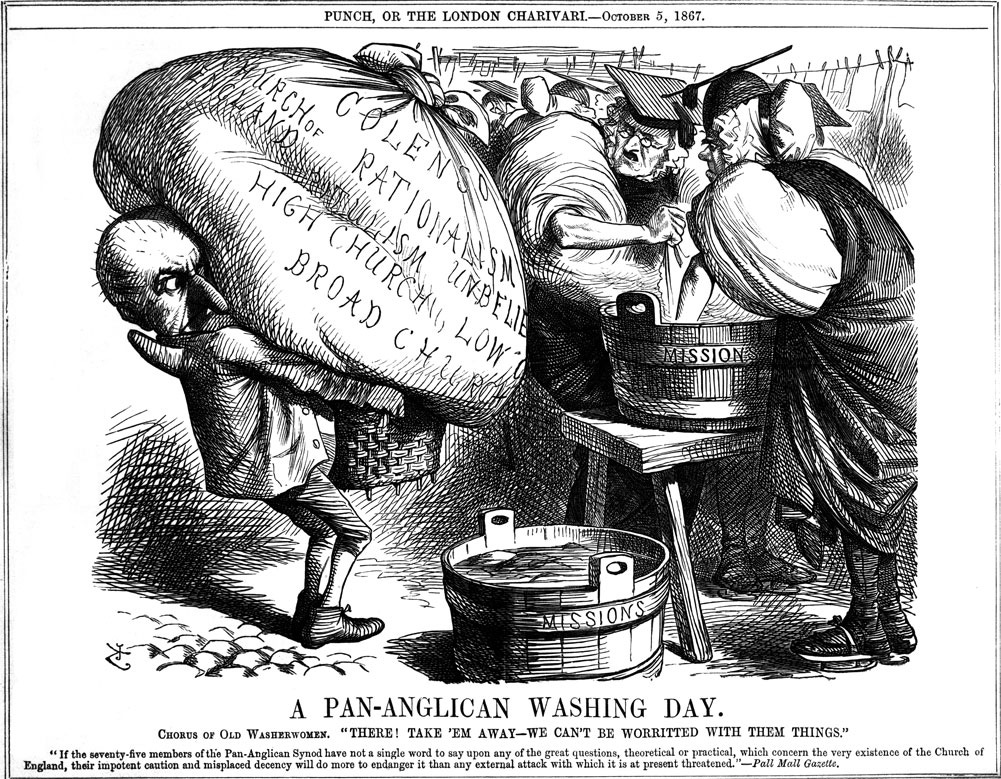
Let’s start with contraception, which has proved to be a force multiplier for Western, but especially American evil. For nineteen centuries, the Christian church was unapologetically opposed to contraception for the simple reason that it opposed God (Isaiah 66:9). Then, the Anglican bishops gathered at Lambeth in 1930 to ask, “Did God really say?”2 Within a generation, the Protestant world walked through the newly opened pasture gate to a world that disconnected sex from childbearing and childrearing, leaving Rome the lone holdout.
American law followed in 1965, when the Supreme Court in Griswold v. Connecticut invented a marital “right to privacy” to void a contraception statute.3 That privacy discovery proved to be the perfect start to a long and steep slippery slope. The Court extended it, with an assist from the ever-malleable Fourteenth Amendment, to unmarried individuals in Eisenstadt v. Baird in 1972, built abortion on it in Roe v. Wade the next year, struck the sodomy statutes with it in Lawrence v. Texas in 2003, and completed the long march through morality by using it to codify same-sex marriage in Obergefell v. Hodges in 2015.
Contraception became the preferred battering ram for deviants and Christophobes, and the Court has said as much in its own citations, although not in those words, because the Justices are always very polite and rather jejune in their opinions.
In 1969, California became the first state to enact a modern no-fault divorce law, thanks to Governor Ronald Reagan signing the Family Law Act. The law took effect on January 1, 1970, and allowed divorce based on “irreconcilable differences” without proving adultery, cruelty, abandonment, or other fault. The infection spread rapidly from California, as such things do, and made easy entry into the Lutheran Midwest bastions.4
When Roe v Wade came down in 1973, organized evangelical opposition was slow and divided. Sustained opposition arrived many years after the deed had become a constitutional fact and the country had developed its customary industrial-scale response to any problem, so that at least ~70 million babies have been killed in the womb or shortly after birth since 1973. That somnolence was quietism in its purest form, leaving the killing of the unborn as a Roman Catholic controversy, not a Christian doctrine. The Missouri Synod’s record is only mildly more creditable, taking eleven years for the Commission on Theology and Church Relations to produce Abortion in Perspective.
As the privacy cases dismantled restraint and curbed enforcement, commercial vice filled the vacuum. The state replaced the restrainer with the dealer; just consider gambling. In living memory, it was widely regarded as criminal and thoroughly disreputable. Then, New Hampshire opened its lottery in 1964, and the states followed one another into the ‘business’ (for the benefit of the schools, you know). Then came the Indian Gaming Regulatory Act of 1988, which legalized casino gaming across most of the country. When the Supreme Court struck the federal ban on sports wagering in 2018, the final barrier fell, which is why no man can now watch a game without being sold a parlay on every pathetic iteration of sportsball. The United States went from deliberately and carefully restraining vice to nationalizing it. For the churches, that kid with a serious gambling addiction on his smartphone is just a category of unfortunate social policy you are prohibited from opposing.
Drugs tell the same story, although more starkly, because here the state has moved from controlling medicine to licensing vice to becoming a dispenser of lethal recreational drugs. The arc runs from mid-century criminalization, through the manufactured opioid epidemic of OxyContin from 1996, into marijuana legalization in Colorado in 2012, and on to decriminalization experiments such as Oregon’s Measure 110 in 2020. Now we have “supervised injection sites”, where the government is the dealer, furnishing the dope, the needle, and a friendly attendant who wants to ensure your overdose is hepatitis B free. New York City opened the first such sites in 2021; Providence followed in 2025; San Francisco and Philadelphia run their own; and Denver has been quietly catching up in its desperate desire to be Mountain L.A.. The fruit of the right to private obliteration is visible on the sidewalks of those cities, where drug addiction-rooted homelessness has risen dramatically in concert with government destruction of standards of living taken for granted even 25 years ago.
Pornography traveled the same road from the margin to the center of American life. Playboy in 1953 began the mainstreaming, the Supreme Court loosened the obscenity standard in Roth v. United States in 1957 and again in Miller v. California in 1973. The Post Office, video cassettes, and the internet removed every barrier of restraint, shame, and access, and OnlyFans in 2016 finished the work by turning the sale of sexual performances into ordinary, monetized, tax-paying “content.” What was once considered utterly shameful and subject to imprisonment is now a career discussed without embarrassment. The church in America has just shrugged; it’s a private matter, after all.
That last development reaches prostitution. Statutes against selling sex for money remain on the books in nearly every state. However, OnlyFans has easily skirted around the statutes because the laws forbid physical contact, but the platform sells titillation without the contact. Now, OnlyFans and its competitors sell sexual performance on demand, lawfully and openly in all fifty states, banked and declared on tax returns. Commercialized sex work is now a de facto nationally normalized enterprise.
The Moving Goalposts
Set against this century of fences coming down, the counsel offered by Dr. Biermann deserves scrutiny. In his June 2026 conversation with Dr. Cooper, Biermann observes that the United States is a pluralistic democracy, that the pluralism is, in his words, “baked in now.” Who were the bakers, Dr. Biermann, and where did they source their recipes of chaos and annihilation?
He says it’s pointless to want laws restraining public blasphemy or vice “unless one can win the votes”, which he doubts. We cannot, he says, make America a Christian nation. Cooper never resists the diagnosis but settles into it, treating the post-Christian future as “inevitable” and the present secularity as where the country is simply headed, the characteristic posture of a whole handwringing class of churchmen who bewail the secularizing of the culture while refusing to see that the culture was surrendered. It was surrendered in no small part by the very ivory tower silence they now pretend is prudent realism.
Their arguments have the ring of pious humility, and that’s the trap. The whole of it rests on treating the present secular and vice-saturated condition of the nation as a fixed and neutral baseline, the reality from which a sober theologian must reason forward. But that baseline was and is not a given. It is an artifact of the Christian church's weasel behavior in refusing to fight a manufactured Weimar condition of total (but very private) public degeneracy. The pluralism Biermann calls baked in was prepared by Satan’s cooks, and they did it all within living memory. The churches that might have objected agreed that the oven and its contents belonged to Uncle Sam.
What Biermann calls “Christian Nationalism” was once simply the moral ecology of America and the West: a general, common-sense knowledge that vice was destructive and could and would not be tolerated. The church could function and flourish on its side of the Two Kingdoms without any concern to tell the magistrates how to do their jobs. There was an innate understanding that the web of a shared heritage, law, custom, and reputation allowed a people to sustain a shared morality that enabled gospel proclamation rather than having to combat a culture engineered to contradict and mock God.
The naïve two-kingdoms purist imagines only two possibilities: coercion through the state or faithful witness in a hostile context. He congratulates himself on choosing the second without considering a third thing: the loss of what was once normal and wholesome through sheer negligence and obtuseness.
Biermann has rightly said that Christian quietism is always wrong. However, his counsel produces functional quietism, which is the placid acceptance that the moral and ethical field belongs primarily to the most aggressive agents of the secular state, leaving the church to witness amid the ruins of a civilization it once built.
Conclusion
The disarmed country is the disarmed sanctuary writ large, and it fails in the same way. Just as the congregation guarded by an imported policeman is contradicting its claims of total Sermon on the Mount obedience, the nation that files its sins under social policy is securing a rotten future for its children. The church pretends it can enter a neutral public square to speak its mind boldly when, in reality, the square was long ago captured by vicious enemies who laugh and mock its ineffective, sporadic appearances.
No Synod should have men who counsel acceptance of that result, and it should reject any theology that receives a post-Christian America and West as the fixed horizon of Christian action.
Thought, study, mortification, sacrifice: it is such notions as these that should be impressed upon the young—who differ from the young of other times merely in having a different middle-aged generation behind them. You will never attract the young by making Christianity easy; but a good many can be attracted by finding it difficult: difficult both to the disorderly mind and to the unruly passions. T.S. Eliot, Thoughts After Lambeth
✝
Sources
Joel Biermann and Dr. Jordan B. Cooper, A Conversation with Joel Biermann on Disagreeing Well, Lutheran Unity, and Two Kingdoms (YouTube, June 5, 2026), including the exchange on pluralism, Christian nationalism, and the limits of imposing morality on a secular nation.
LCMS Commission on Theology and Church Relations, Abortion in Perspective (1984), Christians and Procreative Choices: How Do God’s Chosen Choose? (1996), and Christian Faith and Human Beginnings: Christian Care and Pre-Implantation Human Life (2005), the last containing the warning against the habituated exclusion of human lives.
Griswold v. Connecticut (1965); Eisenstadt v. Baird (1972); Roe v. Wade (1973); Lawrence v. Texas (2003); Obergefell v. Hodges (2015), the privacy line from contraception through same-sex marriage.
The commercial record: New Hampshire’s lottery (1964), the Indian Gaming Regulatory Act (1988), and the fall of the federal sports-wagering ban (2018); OxyContin’s marketing (1996), recreational marijuana in Colorado (2012), Oregon’s Measure 110 (2020) and its reversal; the first United States supervised consumption sites in New York City (2021) and Providence (2025); the obscenity decisions in Roth (1957) and Miller (1973) and the platform economy of OnlyFans (2016).
Companion essay: “The Disarmed Sanctuary” (Ad Crucem News).
Year of ratification:
1906 — Pure Food and Drug Act — Established federal regulation of food and medicines.
1906 — Meat Inspection Act — Federal inspection of the meatpacking industry.
1906 — Hepburn Act — Expanded federal regulation of railroads.
1908 — Aldrich–Vreeland Act — Emergency currency system; established the National Monetary Commission that led to the Federal Reserve.
1913 — Sixteenth Amendment — Authorized a federal income tax without apportionment among states.
1913 — Revenue Act of 1913 — Implemented the modern federal income tax.
1913 — Seventeenth Amendment — Direct election of U.S. senators.
1913 — Federal Reserve Act — Created the Federal Reserve System.
1914 — Clayton Antitrust Act — Strengthened antitrust enforcement and restricted certain business practices.
1914 — Federal Trade Commission Act — Created the Federal Trade Commission to police unfair methods of competition and unfair or deceptive trade practices.
The Lambeth Conference: Resolution 15
The Life and Witness of the Christian Community - Marriage and Sex
”Where there is clearly felt moral obligation to limit or avoid parenthood, the method must be decided on Christian principles. The primary and obvious method is complete abstinence from intercourse (as far as may be necessary) in a life of discipline and self-control lived in the power of the Holy Spirit. Nevertheless in those cases where there is such a clearly felt moral obligation to limit or avoid parenthood, and where there is a morally sound reason for avoiding complete abstinence, the Conference agrees that other methods may be used, provided that this is done in the light of the same Christian principles. The Conference records its strong condemnation of the use of any methods of conception control from motives of selfishness, luxury, or mere convenience.
Voting: For 193; Against 67.”
An 1879 Connecticut statute declared illegal “any drug, medicinal article, or instrument for the purpose of preventing conception.”
No-Fault Divorce Adoption by State
Year States
1969 California (effective Jan. 1, 1970)
1971 Iowa, Kansas, Oklahoma
1972 Florida, Nebraska, Oregon
1973 Colorado, Michigan, Washington
1974 Arizona, Illinois, Minnesota, Montana
1975 Alaska, Delaware, Hawaii, Indiana, Nevada
1976 Connecticut, Kentucky, Mississippi, Missouri, New Hampshire, Ohio
1977 Maine, Wisconsin, Wyoming
1978 Georgia, North Carolina, Pennsylvania, Tennessee, Texas, Utah
1979 Idaho, New Mexico
1980 Arkansas, Maryland, Massachusetts, North Dakota, Virginia, West Virginia
1981 Alabama, Louisiana, Rhode Island
1983 New Jersey
1985 South Dakota
1987 Vermont
2000 South Carolina
2010 New York
Your clarion call to the Western Church reminds me of that old Gary Larsen cartoon where a herd of cows are grazing in a field and one raises her head and declares "Hey, wait a minute! We're eating GRASS!"
As I reflect on the circumstances that lead to the enrollment of any saint into the "white robed army of the martyrs," I'm struck by the fact that, for the most part, Western "disciples of Christ" aren't really struggling under anything like the precursors necessary to join that army. We wouldn't dare to be offensive or to call out perverse moral behaviors for fear that we might be offensive or to lead people to conclude that God was anything other than a loving kindly old gentlemen that always offers us peppermints and hugs. I'm ashamed to see myself in the crowd of sheep that have watched the perverse parade you so beautifully catalog march by without so much as a whisper.
Jesus said “Behold, I am sending you out as sheep in the midst of wolves, so be wise as serpents and innocent as doves. Beware of men, for they will deliver you over to courts and flog you in their synagogues, and you will be dragged before governors and kings for my sake, to bear witness before them and the Gentiles. When they deliver you over, do not be anxious how you are to speak or what you are to say, for what you are to say will be given to you in that hour. For it is not you who speak, but the Spirit of your Father speaking through you. Brother will deliver brother over to death, and the father his child, and children will rise against parents and have them put to death, and you will be hated by all for my name’s sake. But the one who endures to the end will be saved."
It's happening in China. It's happening in Africa. It's happening in the Middle East. Why is it not happening in Europe and America?
Jesus said "You are the salt of the earth, but if salt has lost its taste, how shall its saltiness be restored? It is no longer good for anything except to be thrown out and trampled under people’s feet."
We say that sin is caustic and destructive. We hear our Lord say that it is better to gouge out an eye or cut off a hand rather than going to hell intact. But we watch with bland acceptance as fellow human beings are destroying themselves in sin and say absolutely nothing.
Forgive us Father. Have mercy. Rouse us out of sinful sleep to light the lamps and sound the alarm to a dying and benighted world that the Kingdom of God is at hand! It'll likely get us killed, but that's what you called us to do!
The Bible is clear. In 1 Peter 3: 14 it teaches that God establishes Government to punish vice and promote virtue. A Government is legitimate to the degree that it fulfills this divine mandate. Modern secular government eats away at its legitimacy when it protects vice and punishes virtue.