
What Do We Really Know About the Causes and Consequences of the Iran War?

1. The Proximate Cause
The United States and Israel launched an attack on Iran on February 28, 2026. Tehran and other cities were targeted, destroying military and government infrastructure, and killing Supreme Leader Ayatollah Ali Khamenei, among many other senior government officials. (Wikipedia; Al Jazeera)
The Trump administration has offered multiple proximate causes, which shifted frequently in the days and weeks following the strikes:
Justification #1: Preempting an Iranian Attack on U.S. Forces
Secretary of State Marco Rubio told reporters on March 2 that the U.S. knew Israel was going to strike Iran. It was feared that this would precipitate Iranian retaliation against American forces in the region. Therefore, the U.S. struck pre-emptively. (State Dept. transcript; Al Jazeera) Pentagon briefings to Capitol Hill, however, stated that Iran was not planning to attack unless struck first. (CNN)
Justification #2: Iran Was About to Attack Israel and “Others”
The following day, President Trump contradicted Rubio, claiming he had “forced” Israel’s hand and that Iran was about to launch its own preemptive strikes. He said it was his “opinion” that Iran was going to attack first. No U.S. intelligence assessment supported this claim. (Roll Call; JTA)
Justification #3: Iran Nuclear Program
Trump administration officials cited Iran’s enrichment of uranium to 60% purity to claim that Iran was “a week away” from having nuclear weapons-grade material. (PolitiFact) This was contradicted by the IAEA, the U.S. intelligence community, and independent nuclear experts. (Scientific American; PBS) See Section 4.
Justification #4: Iran’s Treatment of Protesters
Mass protests started in Iran in January after a the national currency devaluation. Iranian security forces carried out massacres, with death toll estimates ranging from 3,117 (Iran’s own admission) to over 36,500 (opposition claims). (Amnesty International; NPR; Iran International) Trump threatened military action in response and cited the killings as a justification for strikes.
Justification #5: Iran’s Missile Program
The administration cited Iran’s ballistic missile capabilities as a threat to the U.S. homeland. This was contradicted by the 2025 federal government threat assessment, which found Iran was years away from developing a missile capable of reaching the United States. (FactCheck.org; PBS)
Justification #6: Decades of Terrorism and Proxy Warfare
Trump also cited Iran’s long history of supporting groups that killed Americans across the Middle East. This is the broadest and most historically grounded rationale, though it represents a standing grievance rather than an imminent trigger. (NPR) Notably, this framing omits a parallel history of American actions against Iran — from the 1953 CIA coup to the 1988 shootdown of a civilian airliner — that constitutes Iran’s own casus belli narrative (see Section 2a).
2. Root Causes
2a. The Deep History: Iran’s Grievances Against the United States
The American framing of U.S.-Iran hostility typically begins with the 1979 Islamic Revolution and the hostage crisis. The Iranian framing begins 26 years earlier.
The 1953 CIA Coup (Operation Ajax)
On August 19, 1953, the CIA and MI6 orchestrated the overthrow of Iran’s democratically elected Prime Minister Mohammad Mosaddegh. The coup, codenamed TP-AJAX by the CIA and Operation Boot by MI6, was triggered by Mosaddegh’s nationalization of Iran’s oil industry, which had been controlled by the Anglo-Iranian Oil Company (later BP). CIA-funded agents fomented street unrest, bribed military officers, and ran a media disinformation campaign. Mosaddegh was arrested and placed under house arrest until his death. (Wikipedia; CIA — Confirmed Role in 1953 Coup; History.com)
This was the first time the CIA orchestrated the overthrow of a democratically elected government. It reinstalled the Shah, Mohammad Reza Shah Pahlavi, whose authoritarian rule, maintained with the help of SAVAK, his U.S.- and Israeli-trained secret police, lasted until the 1979 revolution. In Iranian political memory, 1953 is the origin point for the conflict: the moment the United States and United Kingdom collapsed Iranian democracy to control Iranian oil. The 1979 revolution and the hostage crisis are, in the Iranian narrative, direct consequences of the 1953 coup.
In 2013, the CIA officially acknowledged its role. Secretary of State Madeleine Albright acknowledged in 2000 that the coup was “clearly a setback for Iran’s political development” and that it is “easy to see now why many Iranians continue to resent this intervention by America in their internal affairs.”
U.S. Support for Iraq During the Iran-Iraq War (1980-1988)
During the eight-year Iran-Iraq War, the United States provided intelligence, weapons, and diplomatic support to Saddam Hussein’s Iraq, including satellite imagery of Iranian troop positions and tacit acceptance of Iraq’s use of chemical weapons against Iranian soldiers and civilians. An estimated 100,000 Iranians were casualties of Iraqi chemical attacks. (Foreign Policy)
Iran Air Flight 655 (July 3, 1988)
On July 3, 1988, the USS Vincennes shot down Iran Air Flight 655, a scheduled civilian passenger flight from Tehran to Dubai, killing all 290 people on board — including 66 children. The aircraft was on a normal commercial flight path, in its assigned airway, continuously ascending after takeoff from Bandar Abbas. The crew of the nearby USS Sides had correctly identified it as a commercial flight. (Wikipedia; Britannica; U.S. Naval History and Heritage Command)
The United States never formally apologized. A settlement was reached in 1996, with the U.S. “expressing deep regret” and paying $61.8 million to the victims’ families, but the crew of the USS Vincennes was awarded Combat Action Ribbons. The commanding officer, Captain William C. Rogers III, was later awarded the Legion of Merit. In Iran, this is remembered not as an accident but as an act of impunity, and it is compared with the American outrage over the Soviet downing of Korean Airlines flight 700 and the Russian-backed militia missile that brought down Malaysia Airlines flight 17.
The 2026 Minab School Attack
The consequences of the current war have already added to the grievance ledger. On February 28, 2026, the first day of Operation Epic Fury, the Shajareh Tayyebeh girls’ elementary school in Minab, Hormozgan province, was destroyed by a missile strike, killing at least 150 schoolchildren, mostly girls between seven and twelve years old. (Wikipedia; UNESCO/UN News; Al Jazeera)
Investigations by the New York Times, NPR, BBC Verify, and others concluded that a U.S. Tomahawk cruise missile was responsible. (NPR; NPR — Video Evidence; Snopes) The school had once been part of an IRGC naval base but had been walled off from the military facility sometime between 2013 and 2016, suggesting the U.S. was operating from outdated target lists that did not reflect a decade-old change in the building’s use. (Al Jazeera)
Amnesty International called it an “unlawful strike” and demanded accountability. (Amnesty International) UN experts strongly condemned the attack and called for an independent investigation. (OHCHR)
President Trump said it could have been anyone’s missile.
The Pattern
None of this excuses Iran’s own record of supporting proxy militias, hostage-taking, or targeted killings. But Justification #6 — “decades of terrorism and proxy warfare” — presents only one side of the story. From the Iranian perspective, the United States overthrew their democracy (1953), armed their enemy with chemical weapons (1980s), destroyed a civilian airliner (1988), and killed schoolchildren with at least one, and possibly two, cruise missiles using outdated targeting data (2026). Any honest accounting of the “root causes” of this conflict must include both columns.
The 1979 Revolution and Hostage Crisis
The Islamic Revolution and the 444-day embassy hostage crisis severed U.S.-Iran relations and created a permanent adversarial posture. Every subsequent U.S. administration has treated Iran as a hostile state. But as the timeline above makes clear, the hostage crisis was itself a reaction to 26 years of accumulated grievance: the coup, the Shah, SAVAK.
2b. Israel’s Security Doctrine
Israel has long regarded a nuclear-capable Iran as an existential threat. Prime Minister Netanyahu repeatedly described a nuclear-armed Iran as unacceptable. Rubio’s initial (and quickly walked-back) admission that the U.S. struck because it knew Israel was going to act reveals the depth of this driver: the U.S. acted at least in part to get ahead of an Israeli strike and control the escalation. (The Intercept; Axios)
It should be noted that Israel, suspected of having nuclear weapons, has refused to enter into any nuclear monitoring or arms control regimes.
2c. The Collapse of the JCPOA
The 2015 Joint Comprehensive Plan of Action constrained Iran’s enrichment, redesigned the Arak reactor, and imposed extensive IAEA monitoring in exchange for sanctions relief. (Arms Control Association) When the Trump administration withdrew from the deal in 2018, Iran gradually resumed enrichment, eventually reaching 60% purity and accumulating over 400 kg of enriched material by mid-2025. (IAEA via ISIS) The JCPOA withdrawal removed the diplomatic framework that had been containing the nuclear program, creating the very conditions later cited as justification for military action.
2d. Regional Power Competition
Iran’s network of allied militias and proxy forces across Iraq, Syria, Lebanon, and Yemen (often called the “Axis of Resistance”) challenged U.S. and Israeli strategic interests across the Middle East. The weakening of Hezbollah and other Iranian proxies in 2024-2025 arguably made Iran more vulnerable and created a window of opportunity. (International Crisis Group)
2e. Domestic Political Dynamics
The January 2026 protests represented the most serious internal challenge to the Islamic Republic since 1979. The regime’s brutal crackdown — and the international outcry it generated — created political space for military action that might not have existed otherwise. (Amnesty International; UK House of Commons Library)
3. Contradictions from American Officials
The administration’s public statements about the war have been marked by serial contradictions, often within hours of each other, and sometimes between the president and his own cabinet. (CNN; NBC News; Foreign Policy)
3a. “Imminent Threat” vs. U.S. Intelligence
DNI Tulsi Gabbard (March 2025 congressional testimony): The intelligence community “continues to assess that Iran is not building a nuclear weapon and Supreme Leader Khamenei has not authorized the nuclear weapons program he suspended in 2003.” (ODNI transcript; PBS)
President Trump (responding to reporters): “I don’t care what she said.” He asserted Iran was “very close” to having a nuclear bomb, aligning with Netanyahu’s position rather than that of his own intelligence director. (CBS News; Axios; MSNBC)
3b. Why the U.S. Struck: Rubio vs. Trump
Secretary Rubio (March 2): “We knew that there was going to be an Israeli action, we knew that would precipitate an attack against American forces.” (State Dept.)
President Trump (March 3): “No, I might’ve forced their hand” — referring to Israel. Trump claimed Iran was about to attack independently. (Roll Call)
House Speaker Mike Johnson corroborated Rubio’s version, stating the war happened because “Israel was determined to act with or without American support,” leaving the U.S. in fear of retaliation against their forces. (Keith Woods, Substack, March 11, 2026) Since both statements made explicit that the U.S. had gone to war for Israel, the administration backtracked.
These two explanations are mutually exclusive. Rubio described a reactive U.S. posture (getting ahead of Israeli action). Trump described an independent Iranian threat. The administration cycled through at least four different explanations in under 10 days. (Foreign Policy; CNBC)
3c. “War Won” vs. “Just Begun”
President Trump (CBS interview): “I think the war is very complete, pretty much.” (CBS News)
Department of Defense (posted on X roughly simultaneously): “We have Only Just Begun to Fight.” (CNN; MSNBC)
3d. Regime Change: Yes or No?
VP Vance: “We are not at war with Iran, we’re at war with Iran’s nuclear programme.” Defense Secretary Hegseth: Also stated the goal is not regime change. (Washington Post)
President Trump: Contradicted both on social media, posting “If the current Iranian Regime is unable to MAKE IRAN GREAT AGAIN, why wouldn’t there be a Regime change???” (CNN; NBC News)
3e. Steve Witkoff’s “One Week” Claim
Trump envoy Steve Witkoff claimed Iran was “probably a week away from having industrial-grade bomb-making material.” (PolitiFact) Nuclear experts widely disputed this, noting the distinction between enriched material and a deliverable weapon. Scientific American reported that experts said Iran was “nowhere close to a nuclear bomb.” (Scientific American) The IAEA director general stated the agency did not see “a structured program to manufacture nuclear weapons.”
3f. Iran’s Capabilities: Destroyed or Not?
Trump stated Iran has “no navy, no communications, no air force” and “they’ve shot everything they have to shoot,” but elsewhere described these capabilities as merely “greatly diminished” rather than gone. (CNN; ABC News)
3g. “Obliterated” in June 2025 to “Imminent Threat” in February 2026
Perhaps the single most damaging contradiction in the administration’s case spans the eight months between the two rounds of strikes.
On June 21, 2025, Trump delivered a televised address announcing the results of Operation Midnight Hammer (joint U.S.-Israeli strikes on Iranian nuclear sites). He declared: “Iran’s key nuclear enrichment facilities have been completely and totally obliterated.” (White House) Four days later, the White House published an article titled “Iran’s Nuclear Facilities Have Been Obliterated — and Suggestions Otherwise are Fake News.” (White House)
A U.S. intelligence assessment concluded the strikes did not destroy the core components of Iran’s nuclear program and likely only set it back by months, not years. A separate July 2025 Pentagon assessment put the setback at roughly two years. (NBC News; CNN)
Then, on February 26, 2026, just eight months later, Trump envoy Steve Witkoff claimed Iran was “probably a week away from having industrial-grade bomb-making material.” (PolitiFact) Two days later, Trump launched Operation Epic Fury, citing an “imminent nuclear threat” as justification. (White House)
Arms control experts noted there was a lack of evidence that Iran was even rebuilding the program after the June 2025 strikes. (FactCheck.org).
3h. The Joe Kent Resignation: The Case Against the War from Inside the Administration
On March 17, 2026, Joe Kent, the director of the National Counterterrorism Center and a Trump appointee, posted his resignation letter publicly. He became the first senior official to break ranks with the administration over the war. Kent is a former U.S. Army Special Forces officer and Gold Star husband whose wife, Shannon Kent, was killed by ISIS in Syria in 2019. He is not a liberal critic or an anti-war activist by background, he is a combat veteran and MAGA loyalist who ran for Congress with Trump’s endorsement.
His letter is significant because it confirms, from inside the intelligence community, many of the contradictions documented in this dossier:
On the absence of an imminent threat: “Iran posed no imminent threat to our nation, and it is clear that we started this war due to pressure from Israel and its powerful American lobby.” (Axios; CBS News)
On Trump being misled: “Early in this administration, high-ranking Israeli officials and influential members of the American media deployed a misinformation campaign that wholly undermined your America First platform and sowed pro-war sentiments to encourage a war with Iran.” (CNN; Al Jazeera)
On the “echo chamber”: “This echo chamber was used to deceive you into believing that Iran posed an imminent threat to the United States, and that should you strike now, there was a clear path to a swift victory.” (Washington Post)
On the Iraq parallel: “This was a lie and is the same tactic the Israelis used to draw us into the disastrous Iraq war that cost our nation the lives of thousands of our best men and women.” (NPR)
Trump responded by saying it was “a good thing” Kent resigned, calling him “very weak on security.” (CBS News)
3i. Trump Says Israel Acted Unilaterally
Trump states that “Israel, out of anger for what has taken place in the Middle East, has violently lashed out at a major facility known as South Pars Gas Field in Iran.” He says: “The United States knew nothing about this particular attack, and the country of Qatar was in no way, shape, or form, involved with it, nor did it have any idea that it was going to happen. Unfortunately, Iran did not know this, or any of the pertinent facts...” He warns that if Qatar’s LNG facility is attacked again, he “will not hesitate to retaliate”, but notably threatens Iran for retaliating, not Israel for the unauthorized strike.


4. Iran’s Nuclear Program: 10 Bombs?
4a. Origins: Atoms for Peace (1957–1979)
Iran’s nuclear program began with American support. In 1957, Iran and the U.S. signed a civil nuclear cooperation agreement under President Eisenhower’s “Atoms for Peace” program. The Tehran Research Reactor (TRR), a 5 MW pool-type reactor, went critical in 1967, supplied by the United States. Under the Shah, Iran announced plans for 23,000 MW of nuclear capacity to free up oil and gas for export. (Columbia K=1 Project; Wikipedia — Nuclear Program of Iran)
4b. Tehran Research Reactor: Medical Isotopes
The TRR has been used to produce medical isotopes, primarily molybdenum-99, which decays into technetium-99m, used in millions of diagnostic procedures worldwide for cancer and heart disease. Originally fueled with highly enriched uranium (HEU), it was converted in 1987 to use fuel enriched to 19.75%, low-enriched uranium. Iran’s stated need to enrich to ~20% was tied to producing fuel for this reactor when it could not procure it internationally due to sanctions. (NTI — Tehran Research Reactor)
IAEA inspections have confirmed medical isotope production at the TRR.
4c. Bushehr Power Reactor: Civilian Electricity
The Bushehr nuclear power plant, a 1,000 MW pressurized-water reactor, was started by Germany in 1975, abandoned after the revolution, and completed by Russia. It connected to the Iranian grid in 2011. It uses Russian-supplied fuel enriched to 4.5%, and spent fuel is returned to Russia. (World Nuclear Association)
The power plant operates under IAEA safeguards.
4d. Covert Enrichment: Natanz and Fordow
In 2002, Iranian dissident groups revealed the existence of an undeclared uranium enrichment facility at Natanz and a heavy-water production facility at Arak. In 2009, Obama revealed a second secret enrichment site at Fordow, buried inside a mountain. These facilities were undeclared, which constituted a violation of Iran’s IAEA safeguards obligations and fueled legitimate suspicion. (Iran Watch — History of Iran’s Nuclear Program; Arms Control Association — Timeline)
After the U.S. withdrew from the JCPOA in 2018, Iran progressively resumed enrichment:
Exceeded the 3.67% enrichment limit set by the JCPOA
Enriched to 20% (claimed for TRR fuel)
Enriched to 60% purity (no known civilian application at this level)
Accumulated over 400 kg (specifically 408.6 kg as of May 17, 2025) of 60%-enriched uranium (ISIS — Iran’s 60% HEU stockpile)
The IAEA estimated Iran’s breakout time, the time to produce enough fissile material for one weapon, had shrunk from over one year (under the JCPOA) to approximately one week by late 2024. (Bulletin of the Atomic Scientists)
Evidence category:
Secret facilities: Hard evidence of concealment and safeguards violations
Enrichment to 60%: Hard evidence IAEA-verified, no civilian justification at this level
Weaponization: No evidence of active weapons program (see below)
4e. AMAD Project: Weapons Research (1999–2003)
The IAEA’s December 2015 assessment (GOV/2015/68) concluded that Iran conducted “a range of activities relevant to the development of a nuclear explosive device” prior to the end of 2003, as a coordinated effort. The AMAD Project, led by physicist Mohsen Fakhrizadeh, included:
Warhead design work (reportedly based on a Pakistani design)
High-explosive testing and implosion detonator development
Manufacturing weapon components with surrogate materials
Integration studies for fitting a warhead to the Shahab-3 missile
(Wikipedia — AMAD Project; Arms Control Association — IAEA Investigations)
However, the IAEA also concluded that these activities “did not advance beyond feasibility and scientific studies” and found “no credible indications of activities in Iran relevant to the development of a nuclear explosive device after 2009.” (IAEA GOV/2015/68)
On December 15, 2015, the IAEA Board of Governors voted unanimously to close the investigation into Iran’s past weaponization work. (IAEA press release; Foreign Policy)
Evidence category:
Pre-2003 weapons research: Hard evidence confirmed by IAEA
Post-2003 continuation: No evidence per IAEA (investigation closed 2015)
4f. Arak Heavy Water Reactor: The Plutonium Route
The Arak reactor represented a potential plutonium pathway to a weapon. In its original configuration, it could have produced enough plutonium for 1-2 weapons per year. Under the JCPOA, Iran removed the reactor’s calandria and filled it with concrete (verified by IAEA in January 2016). The reactor was redesigned to reduce plutonium output from 11 kg/year to about 1.2 kg/year, and all spent fuel was to be shipped out of the country. (NTI — Arak Nuclear Complex)
Evidence category: Hard evidence that Iran agreed to and implemented constraints on the plutonium route.
4g. What U.S. Intelligence Has Consistently Said
Across multiple administrations and spanning nearly two decades, the U.S. intelligence community has maintained a consistent assessment:
2007 NIE: “We judge with high confidence that in fall 2003, Tehran halted its nuclear weapons program.” (CIA official record; Iran Watch)
2019-2024 Annual Threat Assessments: “Iran is not currently undertaking the key nuclear weapons-development activities necessary to produce a testable nuclear device.” (ODNI 2025 ATA PDF) Note: this specific phrase was removed from 2024 and 2025 reports, a change flagged by the Foundation for Defense of Democracies. (FDD)
2025 Annual Threat Assessment: The intelligence community continued to assess that Iran was not building a nuclear weapon and Khamenei had not reauthorized the program suspended in 2003. (ODNI testimony transcript)
DNI Gabbard (responding to questions): Reiterated that Iran was not building a nuclear weapon. Trump dismissed her: “I don’t care what she said.” (PBS; CBS News)
Evidence category: Hard evidence — multiple classified assessments across administrations, publicly summarized, all reaching the same conclusion: no active weapons program.
4h. The Critical Distinction: Capability vs. Intent
The heart of the matter is the difference between capability and intent:
Capability: Iran had undeniably developed the technical capacity to enrich uranium to levels approaching weapons-grade. With 400+ kg of 60%-enriched uranium and advanced centrifuges, breakout time had shrunk to as little as one week for enough fissile material for a single device. (ISIS)
Weaponization steps not taken: Producing fissile material is only one step. Building a deliverable weapon requires metallurgy (shaping enriched uranium into a pit), implosion device engineering, weapon miniaturization to fit a missile warhead, and extensive testing. There is no evidence Iran was conducting any of these activities as of early 2026. (CRS; Scientific American)
Intent: Every U.S. intelligence assessment from 2007 through 2025 concluded that Iran’s leadership had not made the decision to build a weapon. This stands as the most consistent and repeatedly affirmed intelligence finding of the past two decades. CIA Director William Burns stated in October 2024: “We do not see evidence today that the Supreme Leader has reversed the decision that he took at the end of 2003 to suspend the weaponization program.” (NBC News; CBS News)
Nuclear experts quoted by Scientific American put it bluntly: Iran was “nowhere close to a nuclear bomb.” (Scientific American)
5. Summary Evidence Table
6. From Enriched Uranium to a Deliverable Weapon: What It Actually Takes
6a. The Seven Steps
Building a nuclear weapon from enriched uranium requires completing a series of discrete technical stages, each presenting its own engineering challenges. The Congressional Research Service and nuclear physicists have outlined these steps:
Step 1: Producing Weapons-Grade Fissile Material (Enrichment) Uranium must be enriched to approximately 90% U-235 (”weapons-grade”) for a standard implosion device. Iran had enriched to 60%, a significant achievement, but a further enrichment step remained. The IAEA estimated that with its existing centrifuge capacity, Iran could produce enough weapons-grade HEU (roughly 25 kg) for a single device in approximately one to two weeks. CIA Director Burns confirmed this timeline in October 2024. (CBS News)
This is the step that “breakout time” measures. It is only the first step.
Step 2: Conversion to Metallic Form (Metallurgy) Enriched uranium hexafluoride gas (UF6), the form in which uranium emerges from centrifuges, must be converted to uranium metal, which is not trivial. It requires specialized casting and machining to produce a metallic “pit”, which is the core of the weapon. Iran has no known uranium metallurgy facilities for weapons-grade material. The IAEA has reported no evidence of such work. (CRS)
Step 3: Weapon Core Fabrication The metallic pit must be machined to precise tolerances and shaped into the geometry required by the weapon design (a sphere for implosion weapons, a cylinder for gun-type). This requires specialized tooling, clean-room environments, and experience with the material’s toxic and radiological properties. (CRS)
Step 4: Implosion System Design and High-Explosive Lens Fabrication For an implosion-type weapon (the design that can be miniaturized to fit on a missile), conventional high-explosive “lenses” must be designed and fabricated to create a precisely symmetrical shock wave that compresses the fissile core to supercriticality. This is among the most technically demanding aspects of weapons design. The AMAD Project conducted feasibility studies on implosion design before 2003, but the IAEA assessed these did not advance beyond the study phase. (IAEA GOV/2015/68)
Step 5: Weapon Assembly and Integration All components (the pit, the implosion system, neutron initiators, tampers, and casing) must be assembled into a functioning device. This requires systems integration expertise and extensive testing of non-nuclear components.
Step 6: Miniaturization for Missile Delivery A weapon must be made small and light enough to fit inside a missile warhead, and robust enough to survive the extreme forces of reentry. Iran’s Shahab-3 missile can carry a payload of roughly 750-1,000 kg. The first nuclear weapons (Hiroshima and Nagasaki) weighed 4,000-4,700 kg. Miniaturization is a separate engineering challenge that typically requires nuclear testing. Pakistan, for instance, conducted six nuclear tests before achieving a deliverable warhead design. (Bulletin of the Atomic Scientists)
Step 7: Testing and Validation Every state that has developed nuclear weapons (with the possible exception of Israel and South Africa) has conducted full-scale nuclear tests to validate their designs. An untested weapon is an uncertain weapon. Iran has conducted no nuclear tests.
6b. Timeline Estimates
The CRS assessed that, at the time of the JCPOA, Iran would need approximately one year to complete all weaponization steps beyond fissile material production. (CRS) More recently, CIA Director William Burns stated in October 2024 that while breakout time had shrunk to “a week or a little more,” the remaining weaponization steps “could take as much as a year.” (CBS News; NBC News)
This means the actual timeline from decision to deliverable weapon was approximately 12 months, not “one week.”
6c. The Gun-Type Alternative Weapon: Simpler but Strategically Useless
A gun-type weapon (like the Hiroshima bomb) is far simpler to build — it does not require implosion engineering or sophisticated testing. Theoretically, Iran could build a crude gun-type device with its existing 60%-enriched uranium without further enrichment to 90%.
However, gun-type weapons are enormously heavy and bulky. The Hiroshima bomb weighed over 4,000 kg. Such a device cannot be delivered by any missile in Iran’s arsenal. It could only be delivered by aircraft or truck. A gun-type device has no strategic military value against a state with air defenses. As Scott Horton has argued on the Lex Fridman Podcast #473, this makes the gun-type route essentially useless as a military deterrent.
In late 2024, U.S. intelligence reportedly assessed that Iran may have been exploring a cruder gun-type design, but acknowledged it would be undeliverable by missile. (CRS — November 2024 update)
6d. What Iran Did Not Do
As of the February 2026 strikes, there was no evidence that Iran had:
Enriched uranium beyond 60% to weapons-grade 90%
Converted any enriched uranium to metallic form
Fabricated a weapon pit or core
Built or tested an implosion system
Assembled a weapon prototype
Miniaturized a design for missile delivery
Conducted any nuclear test
(Scientific American; CRS; ODNI)
This represents the entire weaponization process. Enrichment is the necessary precondition, but the engineering work to turn enriched material into a bomb is where most nuclear weapons programs require years or decades of development.
7. The Scott Horton Framework: Challenging the Evidentiary Basis
Scott Horton, director of the Libertarian Institute, editorial director of Antiwar.com, and host of The Scott Horton Show, has been one of the most detailed and persistent critics of the case for war with Iran. His arguments deserve a dedicated section because they systematically challenge the evidentiary foundations of the nuclear threat narrative. His research is compiled across decades of journalism, his book Hotter Than the Sun: Time to Abolish Nuclear Weapons (2022) (Libertarian Institute), and a widely viewed 4-hour debate with Mark Dubowitz on the Lex Fridman Podcast #473 (June 2026).
7a. The “Latent Deterrent” Argument
Horton’s central thesis is that Iran maintained a latent nuclear deterrent, not a weapons program. In his formulation, Iran deliberately demonstrated that it had mastered the fuel cycle and could build a weapon, without actually building one. This is functionally identical to the posture of Germany, Japan, and Brazil, all of which have the technical capacity to produce nuclear weapons but choose not to. (The American Conservative; Lex Fridman Podcast #473)
The strategic logic is that a latent capability deters attack (because an adversary must account for the possibility of rapid weaponization) without incurring the costs and risks of actually building a weapon (international isolation, preemptive strikes, arms races).
Evidence assessment: This interpretation is consistent with the intelligence record. Every U.S. NIE from 2007 through 2025 concluded that Iran had not decided to build a weapon, even as it expanded enrichment capacity. The IAEA confirmed no structured weapons program. Iran’s behavior, enriching to 60% but stopping short of 90%, accumulating material but not converting it to metal, matches the latent deterrent model concept.
7b. “Smoking Laptop” and Questions of Fabrication
Horton has highlighted what he calls the “smoking laptop” — a laptop computer allegedly stolen from Iran and provided to Western intelligence agencies in 2004, which purported to contain evidence of nuclear weapons design work. Horton argues this evidence was fabricated. (The American Conservative)
The documented facts:
Source: German intelligence identified the laptop’s source as the Mujahedin-e-Khalq (MEK), an Iranian opposition group then listed as a terrorist organization by the U.S. State Department. (Antiwar.com — Gareth Porter)
Israeli connection: PBS Frontline reported that intelligence was “laundered” through Iranian opposition groups, especially the NCRI (MEK’s political wing), to get it to the IAEA. A 2009 investigation tied the documents to Israel. (PBS Frontline)
CIA skepticism: CIA analysts initially speculated that a third country, such as Israel, had fabricated the evidence, though they eventually “discounted that theory.”
IAEA resolution: In its February 2008 report, the IAEA declared satisfactory resolution of the issues raised by the laptop documents. (Antiwar.com — Sahimi)
Evidence assessment: The provenance of the laptop documents is thoroughly contested. The chain of custody ran through a designated terrorist organization with an established pattern of providing intelligence to Western agencies. Whether the documents were fabricated, authentic, or a mix is an unresolved question, but it is fair to say the evidentiary chain was compromised from the start.
7c. Khamenei’s Nuclear Fatwa: Sincere or Strategic?
Horton has pointed to Supreme Leader Khamenei’s fatwa against nuclear weapons as evidence of Iran’s intentions. The fatwa, first publicly referenced in October 2003 and formally presented at the IAEA in August 2005, declared the production, stockpiling, and use of nuclear weapons to be forbidden under Islamic law. (Wikipedia — Ali Khamenei’s Fatwa)
Arguments for sincerity:
Iran’s experience with Iraqi chemical weapons during the Iran-Iraq War (1980-88) created genuine institutional revulsion toward WMD. Iran suffered an estimated 100,000 chemical weapons casualties but chose not to retaliate in kind, even when it had the capacity to do so. (Foreign Policy)
The fatwa was cited by multiple U.S. administrations as a factor in their intelligence assessments.
Iran’s behavior over 20+ years was consistent with the fatwa: it never crossed the enrichment threshold to weapons-grade, never built weapon components, never tested a device.
Arguments against relying on it:
Iran’s former chief nuclear negotiator admitted the fatwa was introduced as a diplomatic tactic during negotiations. (Atlantic Council)
Fatwas are not immutable in Shia jurisprudence — they can be modified or reversed by the issuing authority based on changed circumstances. (Norwich University)
The fatwa’s existence was never independently verified as a formal written religious ruling.
With Khamenei’s death in the February 2026 strikes, the fatwa’s status became a matter of debate. (The National)
Evidence assessment: The fatwa’s sincerity is ultimately unknowable. But Horton’s broader point stands regardless: the behavioral evidence, what Iran actually did and did not do over 20 years is consistent with the fatwa whether or not the fatwa itself was the reason. Iran’s restraint was real and documented, whatever its motivation.
7d. The JCPOA Withdrawal as the Root of the Crisis
Horton places particular emphasis on the causal chain from the U.S. withdrawal from the JCPOA in 2018 to the conditions cited as justification for war in 2026:
2015: JCPOA signed. Iran limited to 3.67% enrichment, 300 kg stockpile. Breakout time: 12+ months. Arak reactor redesigned. IAEA monitoring in place. (Arms Control Association)
2018: Trump withdraws from JCPOA and reimposed sanctions. Iran was in full compliance per 12 consecutive IAEA reports. (Bulletin of the Atomic Scientists)
2019-2020: Iran gradually resumes enrichment in response, eventually reaching 60%.
2024-2025: Iran’s stockpile grows to 400+ kg at 60%, breakout time shrinks to ~1 week. (ISIS)
2026: Administration cites Iran’s enrichment level as justification for preemptive strikes. (Washington Post)
Horton’s argument: the United States created the very conditions it then cited as justification for war. The enrichment that shrank breakout time happened because the JCPOA was abandoned, not despite it. Iran was demonstrably contained under the original deal. The administration that destroyed the containment mechanism then pointed to the resulting escalation as proof that containment was impossible.
Evidence assessment: Hard evidence. The timeline is documented, the IAEA compliance reports are public, and the causal sequence is direct and uncontested. This is the strongest element of the anti-war case.
7e. The Iraq Parallel
Horton has drawn extensive parallels to the Iraq War (Lex Fridman Podcast #473; The American Conservative):
Element Iraq (2003) Iran (2026) WMD claims Active WMD program (false) Imminent nuclear weapon (unsupported) Intelligence assessment CIA expressed doubts; ignored DNI said no weapons program; dismissed President vs. intelligence Bush overrode CIA on aluminum tubes Trump overrode Gabbard on nuclear status Evidence sourcing Iraqi defectors, Curveball MEK, smoking laptop, Israeli intelligence Shifting justifications WMD → terrorism → democracy → humanitarian Nuclear → preemption → protests → terrorism Regime change goal Stated, then denied, then restated Denied by Vance/Hegseth, implied by Trump
8. The Negotiators Who Didn’t Bring a Nuclear Expert
One of the most consequential details of the path to war is the composition of the U.S. negotiating team itself. In the final rounds of talks with Iran, negotiations whose failure directly preceded the February 28 strikes, the United States was represented by Steve Witkoff (a real estate lawyer and Trump fundraiser serving as special envoy) and Jared Kushner (Trump’s son-in-law). Neither has a background in nuclear physics, nonproliferation, or arms control. (Wikipedia — 2025-2026 Iran-US Negotiations; Responsible Statecraft)
According to a senior Middle East diplomat with knowledge of the Geneva talks, Witkoff and Kushner chose not to include nuclear technical experts in the negotiating sessions. (MS Now — Diplomats Claim Witkoff Undermined Talks) When challenged on this, Witkoff defended the decision by saying he had “read quite a bit about it.” (Keith Woods, Substack, March 11, 2026) Beyond the absence of nuclear experts, Witkoff reportedly did not bring a diplomat knowledgeable of previous agreements and negotiations with Iran, did not take notes during the sessions, and did not understand Iranian proposals. (Keith Woods)
The Arms Control Association described the U.S. team as “ill-prepared for serious nuclear negotiations,” noting that Witkoff’s failure to learn the nuclear file and surround himself with the necessary technical expertise was “a diplomatic disservice to U.S. and international nonproliferation goals.” (Arms Control Association)
8a. The Tehran Research Reactor Confusion
The consequences of this expertise gap became publicly visible in Witkoff’s post-strike briefings. On February 28 and March 3, Witkoff told reporters there was “subterfuge” at the Tehran Research Reactor (TRR) and claimed it was being used to stockpile uranium fuel “to bring it towards a weapons-grade enrichment level.” (MS Now — Nuclear Experts Undercut White House)
Multiple nuclear scientists pointed out this was technically nonsensical. Elena Sokova, executive director of the Vienna Center for Disarmament and Non-Proliferation, called the administration’s claims “confusing and misleading” with “technical errors,” noting flatly that “research reactors are not capable of doing enrichment of uranium.” (MS Now) The TRR is a 5 MW pool-type research reactor used for medical isotope production (NTI). It does not enrich uranium — it consumes enriched uranium fuel. These are fundamentally different processes. Confusing them is roughly analogous to confusing an oil refinery with a car engine.
The IAEA confirmed it maintained continuous accountancy and monitoring of TRR fuel assemblies and had raised no recent concerns about misuse.
Evidence assessment: Witkoff’s statements about the TRR contain demonstrable technical errors, which is hard evidence that the lead negotiator did not understand the basic infrastructure he was negotiating over.
8b. The “10 Bombs” Dispute
A central element of the administration’s case was Witkoff’s claim that Iranian Foreign Minister Abbas Araghchi had “boasted” during negotiations that Iran possessed enough enriched uranium to make 10-11 nuclear bombs. (CBS News)
Araghchi’s account differs sharply. He stated that he told the Americans Iran had 440 kg of 60%-enriched material (a figure publicly available in IAEA reports), and that, by the Americans’ own experts’ calculations, if enriched further, this could theoretically yield material for roughly ten devices. But Araghchi said the point of this statement was to demonstrate the scale of the concession Iran was offering: Iran was prepared to give up, dilute, and downblend this entire stockpile to lower enrichment levels as part of a deal. (WION News; LBC)
In Witkoff’s telling, this was a threat, but in Araghchi’s telling, it was a negotiating offer. The distinction is enormous and, ultimately, lethal.
Araghchi later went further, suggesting that Witkoff and Kushner had a “lack of enough knowledge” during the talks. A Persian Gulf diplomat with direct knowledge of the negotiations corroborated this, telling reporters that Witkoff’s public descriptions of Iran’s pre-war offer were false. (MS Now)
Critically, the Omani foreign minister who mediated the talks traveled to Washington and told J.D. Vance and U.S. media that the negotiations had made “substantial, momentous, and unprecedented progress”, a characterization that directly contradicts the administration’s claim that talks had broken down. (Keith Woods)
Yet what Trump relayed to the press was that Witkoff told him Iran’s message was “essentially, in a real nutshell: We want to continue to build nuclear weapons.” None of the mediators present reported this. (Keith Woods) This suggests the information was distorted somewhere between Iran’s actual offer and what reached the president’s ears — a distortion with consequences measured in lives and global economic disruption.
Evidence assessment: The factual dispute is unresolved. Both sides have given their accounts, but no transcript of the closed-door session has been released. However, the broader pattern is circumstantial evidence of a negotiating breakdown driven at least in part by the U.S. team’s technical illiteracy: a lead negotiator who confused a research reactor with an enrichment facility, who did not bring subject-matter experts, and who may have misunderstood the nature of Iran’s offer.
8c. The Structural Problem
This matters because the decision to go to war was, by multiple accounts, significantly influenced by what Witkoff and Kushner reported back to Trump about the state of negotiations. (La Voce di New York; The New Republic) If the negotiators misunderstood what Iran was offering, or mischaracterized a concession as a threat, then the information that reached the president was distorted at the point of collection.
The JCPOA negotiations (2013-2015), by contrast, involved teams of nuclear physicists, career nonproliferation diplomats, Department of Energy scientists, and intelligence analysts, led by Secretary of State John Kerry and Energy Secretary Ernest Moniz (a nuclear physicist from MIT). The 2026 talks were led by a real estate developer and the president’s son-in-law, without technical support. (Arms Control Association)
As Keith Woods framed the dilemma: “either the war was sparked by America’s representatives being totally ignorant of nuclear enrichment while negotiating a nuclear deal, and no one along the way picking up their error, or alternatively, they actively misled Trump to lead to war with Iran on Israel’s behalf. So that’s either gross negligence and incompetence or high treason.” (Keith Woods)
Whether the talks could have succeeded with a better-prepared team is unknowable. But the absence of nuclear expertise at the table, in negotiations whose failure led directly to war, is documented.
A broader indicator of preparedness: in January 2026, the U.S. withdrew its four Avenger-class minesweepers from the Middle East, vessels that had been forward-deployed for nearly four decades, and sent them to be decommissioned in Philadelphia. They arrived in Philadelphia on the day Iran began laying mines in the Strait of Hormuz. (Keith Woods)
9. A Note on Historical Parallels
Multiple analysts have drawn comparisons between the 2026 Iran war and the 2003 Iraq war. (Al Jazeera; NPR) The parallels include: shifting justifications offered after the fact, claims of imminent WMD threat contradicted by intelligence agencies, a president dismissing his own intelligence community’s assessments, and the conflation of capability (enrichment) with intent (weaponization). As with Iraq, the gap between what the intelligence community assessed and what political leaders claimed publicly is now a matter of documented record.
10. The Religious Framing: Purim, Amalek, and Dispensationalist Theology
The war with Iran began on February 28, 2026. Purim began at sundown on March 2. The proximity was not coincidental in the minds of many participants and supporters, and the religious framing that followed from both Israeli officials and American evangelical leaders raises serious questions about whether theological commitments, rather than security analysis, may have shaped the decision to go to war.
10a. The Purim Timing
Purim commemorates the Book of Esther, in which the Persian official Haman plots to annihilate the Jews of the Achaemenid Empire, but Queen Esther intervenes, and the decree is reversed, resulting in the killing of Haman and his sons. The holiday is set in ancient Persia, the civilization from which modern Iran traces its historical identity. (New Arab; JTA)
When Supreme Leader Khamenei was killed in an Israeli airstrike on the Shabbat before Purim, the parallel was immediately seized upon. Israeli Prime Minister Netanyahu made it explicit in his first public address after the strikes began: “Twenty-five hundred years ago, in ancient Persia, a tyrant rose against us with the very same goal, to utterly destroy our people. Today as well, on Purim, the lot has fallen, and in the end this evil regime will fall too.” (WION News; JTA)
10b. The Amalek Invocation
More troubling than the Purim parallel is the invocation of Amalek, the biblical enemy of the Israelites whom God commands to be utterly destroyed (1 Samuel 15:3). Netanyahu stated: “In this week’s Torah portion, we read ‘Remember what Amalek did to you.’ We remember and we act.” (The Nation; TRT World)
National Security Minister Itamar Ben-Gvir, a far-right extremist, declared there had been a “great miracle…like on Purim” and that “they will all end like Haman,” and used Amalek comparisons when discussing the war. (Al Jazeera)
10c. Ambassador Huckabee and Christian Zionist Dispensationalism
Mike Huckabee, a former Baptist pastor, former governor of Arkansas, and Trump’s ambassador to Israel, is the first evangelical Christian to serve in that post. He is an adherent of dispensational premillennialism, a theological framework holding that the return of Jews to the land of Israel fulfills Old Testament prophecies that must precede the Rapture, the Tribulation, Armageddon, and the Second Coming of Christ. (Al Jazeera; Forward)
In this theology, supporting Israel is not a policy preference, it is a divine obligation. Adherents cite Genesis 12:3: “I will bless those who bless you, and whoever curses you I will curse.” This verse is interpreted as a binding commandment that the United States must support Israel unconditionally or face divine punishment. (Religion News Service)
In an interview with Tucker Carlson, Huckabee suggested Israel has a God-given right to land stretching from the Euphrates River to the Nile, which would encompass Lebanon, Syria, Jordan, and parts of Saudi Arabia, stating “It would be fine if they took it all.” (NBC News; Slate)
10d. “Anointed by Jesus”: End-Times Rhetoric in the U.S. Military
The religious framing was not confined to politicians and diplomats. The Military Religious Freedom Foundation (MRFF) reported receiving over 200 complaints from service members across more than 40 units spanning at least 30 military installations, Army, Navy, Air Force, Marine Corps, and Space Force. (MRFF; Military.com)
The complaints described commanders telling troops that the war with Iran is “part of God’s divine plan” and that Trump was “anointed by Jesus to light the signal fire in Iran to cause Armageddon and mark his return to Earth.” One NCO reported that a commander cited the Book of Revelation at length, describing the imminent return of Jesus Christ, “with a big grin on his face.” (Middle East Eye; HuffPost)
10e. The Information Campaign: “Replacement Theology” as a Silencing Mechanism
As criticism of the war and its religious framing grew, particularly from Catholic intellectuals, Catholic integralists, and Christians holding non-dispensationalist eschatologies (amillennialism, postmillennialism, covenant theology), a parallel information campaign emerged on social media to discredit these critics by collapsing all theological disagreement with dispensationalism into a single accusation: “replacement theology,” which was then immediately linked to antisemitism.


The mechanism works as follows: dispensationalism holds that ethnic Israel and the Church are distinct entities with separate means of salvation, and that God’s covenant with the Jewish people requires unconditional political support for the modern state of Israel. The majority of Christian history has held some version of “fulfillment theology” or “covenant theology,” in which the Church is understood as the continuation of Israel’s covenant rather than its replacement. Dispensationalism labels all of these positions “replacement theology” and treats them as inherently anti-Jewish. (Salon; Jacobin)
The Ted Cruz Episode: On or around March 15, 2026, Senator Ted Cruz endorsed a lengthy social media post by the account “Insurrection Barbie” that described Catholic integralism as a “foreign” ideology carried out by “parasitic” actors executing a “ten-year project” to replace evangelical Protestant political theology within the Republican Party. Cruz called it “the best & most comprehensive explanation of what we’re fighting.” (Mediaite; Daily Caller; The Conservative Brief)
The post was condemned as an “anti-Catholic screed” by Catholics across the political spectrum, including former Trump administration officials, Daily Wire correspondents, and Obama-Biden alumni. (Mediaite)
“Christ is King” as Antisemitism: Cruz also stated in a CBN News interview that the phrase “Christ is King”, a foundational Christian confession dating to the earliest Church, was being used as “code” for antisemitism. (Gateway Pundit; Times of Israel; US News)
This produced extraordinary backlash from Christians who pointed out that “Christ is King” (Christus Rex) is a liturgical declaration affirmed by every Christian denomination on earth, and that labeling it antisemitic effectively declares orthodox Christian theology to be hate speech. Catholic Answers, the largest Catholic apologetics organization, produced a direct response. (Catholic Answers; Townhall)
The Broader Pattern: Pro-Israel media outlets published pieces framing Catholic integralists and anti-war Christians as vectors of antisemitism, while simultaneously defending dispensationalist theology as the only legitimate Christian position on Israel. (HonestReporting; Juicy Ecumenism — Part I; Juicy Ecumenism — Part II; Joshua Fund) A Times of Israel blog post explicitly framed Catholic integralism as a “protofascist” threat to American Jews. (Times of Israel)
The effect, whether coordinated or emergent, is a rhetorical system in which:
Dispensationalism (a 19th-century theological innovation originating with John Nelson Darby in the 1830s) is treated as the default Christian position on Israel.
The historical Christian positions held by Catholics, Orthodox, and most Protestants for 1,900 years are labeled “replacement theology.”
“Replacement theology” is declared antisemitic.
Therefore, any Christian who opposes the war on theological grounds, or who simply holds the eschatology their tradition has always held, can be dismissed as an antisemite.
This is a silencing mechanism. It converts a theological disagreement (how to read Old Testament covenant promises) into a moral accusation (hatred of Jews), making it socially dangerous to articulate the majority Christian position on eschatology in public. As Salon noted, the “ancient prophecy” being invoked to justify the war is in fact “a modern invention”, dispensationalism was unknown to the Church for its first 1,800 years. (Salon)
The timing is notable: this intra-Christian information campaign intensified in the same weeks the Iran war was under the heaviest public criticism, suggesting its function — intentional or otherwise — was to fracture potential opposition along sectarian lines and to make the theological case against war unspeakable by associating it with antisemitism.
None of this proves that religious motivations caused the war. The causal drivers documented in this dossier — Israeli strategic doctrine, the JCPOA collapse, the Witkoff negotiating failure, domestic political dynamics — operate independently of theology. But the religious framing matters for two reasons: first, it helps explain why certain actors were predisposed to war rather than diplomacy (if destroying Iran is God’s plan, negotiation is not just unnecessary but sinful); and second, it makes de-escalation harder (you cannot negotiate a ceasefire with Amalek).
11. Cascading Effects: First, Second, and Third Order
Wars have consequences beyond the battlefield. The Iran war’s effects are already cascading through the global economy, the international order, and U.S. strategic positioning in ways that may ultimately prove more damaging than any threat Iran posed before the strikes.
11a. First-Order Effects (Immediate and Direct)
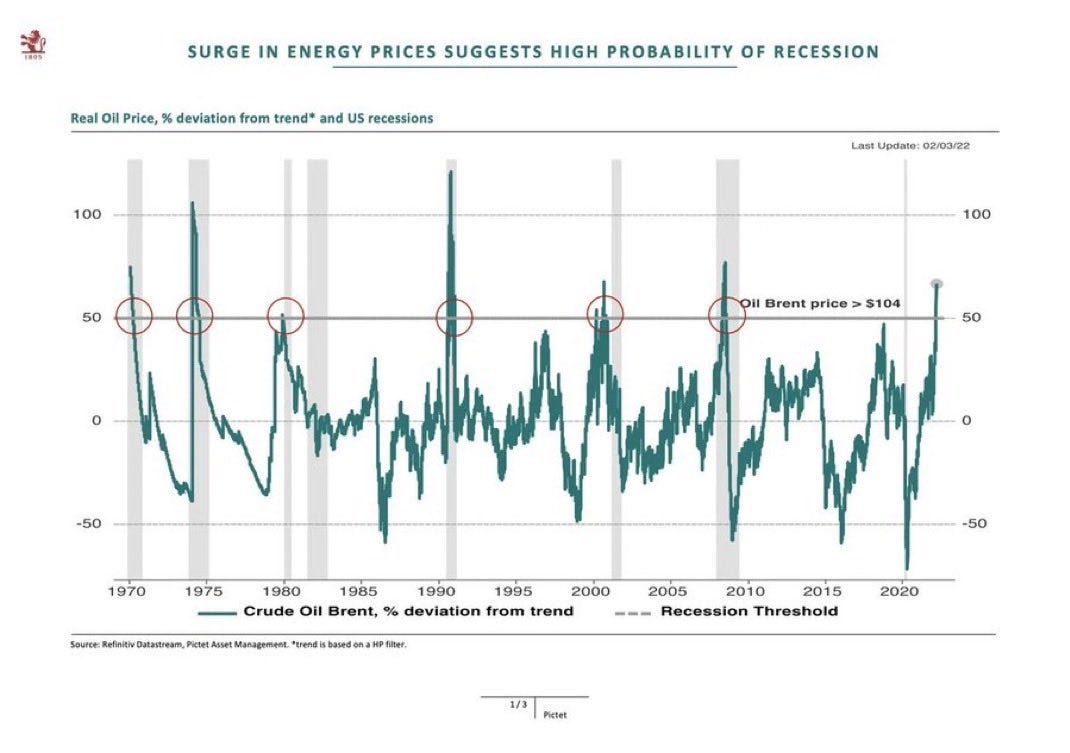
Energy price shock: Brent crude surged from a pre-war price of approximately $65-70/barrel to over $126/barrel at its peak, a near-doubling. As of mid-March 2026, prices remain above $100/barrel. Natural gas prices have more than doubled in Europe. (CNBC; Goldman Sachs; Al Jazeera)

Strait of Hormuz closure: Approximately 20% of the world’s daily oil supply and significant volumes of LNG transit the Strait. Tanker traffic dropped ~70%, with over 150 ships anchored outside to avoid risk. Iran’s IRGC declared “not a litre of oil” would pass. (Wikipedia — 2026 Strait of Hormuz crisis; Al Jazeera)
Shipping insurance collapse: Protection and indemnity insurers removed war risk coverage for the Strait, making the economic risk too high for ship owners to transit. Major shipping firms suspended operations entirely. Without insurance, commercial shipping through the Strait is effectively impossible regardless of military conditions. (Wikipedia — 2026 Strait of Hormuz crisis)
Gasoline prices: U.S. gas prices surged approximately 60 cents per gallon (~20%) within the first two weeks of the war. In the first week alone, the average price rose 48 cents/gallon. (CBS News; Washington Post)
U.S. minesweeping capacity: As Keith Woods noted, the U.S. withdrew its four Avenger-class minesweepers from the Gulf in January 2026 and decommissioned them. Iran has an estimated 5,000+ mines it could deploy. During the 1991 Gulf War, Iraq laid roughly 1,200 mines and it took coalition forces over 2 months to clear them. (Keith Woods)
Gulf state infrastructure attacked: Iran retaliated against Bahrain, Kuwait, Qatar, and the UAE, striking at or near U.S. military assets hosted by these countries. At least one person was killed in Abu Dhabi. All four countries temporarily closed their airspace. (NPR; Al Jazeera)
11b. Second-Order Effects (Weeks to Months)
Fertilizer shock and spring planting crisis: More than 30% of global nitrogen fertilizer exports, along with key components like sulphur (a byproduct of oil and gas processing), typically transit the Strait of Hormuz. With the Strait effectively closed, the U.S. market is approximately 25% short of normal fertilizer supplies for spring application. Individual farmers report fertilizer cost increases of 40%. The timing is catastrophic — the disruption hits during the narrow window for Northern Hemisphere spring planting, when delays of even weeks translate directly into reduced crop yields. (Carnegie Endowment; IFPRI; Live Science; AgWeb; ABC News; American Farm Bureau)
U.S. inflation reversal: February 2026 CPI was 2.4% — but this captured only the pre-war period. Analysts project CPI could rise to 3.5% by year-end if the conflict persists, reversing two years of progress on inflation. Food prices were already rising 3.1% annually before the war; disrupted fertilizer supply will accelerate this. (CBS News; CNN; Center for American Progress; TIME)
Gulf state trust collapse: Gulf states that host U.S. military bases told CNBC the Iranian attacks created a “huge trust gap” that will last years. The UAE recalled its ambassador to Israel. Qatar, Kuwait, Bahrain, and the UAE all condemned Iran’s attacks on their territory but also signaled fury at being drawn into a war they had tried to avoid — several had denied the U.S. base and airspace access before the strikes. (CNBC; Atlantic Council; Soufan Center; Al Jazeera)
Russia sanctions relief: The Trump administration temporarily lifted sanctions on Russian oil shipments in an effort to calm markets and replace disrupted Iranian supply — directly financing Russia’s war in Ukraine with higher prices and restored market access. (Washington Post; Axios)
11c. Third-Order Effects (Months to Years)
Russia as strategic beneficiary: Russia emerged as an early winner of the war. Higher oil and gas prices directly fund Russia’s war in Ukraine. The U.S. is diverting military resources and attention from Europe and Asia to the Gulf, reducing pressure on Moscow. Russia also benefits from the general chaos — a distracted America with depleted strategic reserves and frayed alliances. As NPR reported, Putin “is pleased to see how Washington is forced to transfer forces from Asia to the Middle East.” (TIME; NPR)
China’s real-time intelligence windfall: China is treating the Iran war as a live laboratory for studying U.S. military capabilities. Bloomberg reported that China’s military is closely studying the operation, collecting multi-spectral imagery, electronic intelligence, and real-time data on U.S. platforms including the F-35, F-22, and the new stealth Tomahawk variant. China has also provided Iran with advanced radar systems, transitioned Iranian military navigation to China’s encrypted BeiDou-3 constellation, and used its satellite network for signals intelligence — meaning every U.S. sortie generates data for Chinese analysts. Western officials assess this is accelerating China’s preparations for a potential Taiwan contingency, with the PLA targeting readiness by 2027. (Bloomberg; Jerusalem Post; Newsweek; Al Jazeera; SpecialEurasia)
U.S. force posture degradation in Asia: The redeployment of carrier strike groups, air assets, and munitions to the Gulf directly weakens U.S. deterrence in the Indo-Pacific — the theater the Pentagon’s own National Defense Strategy identifies as the priority. Every Tomahawk fired at Iran is one fewer available for a Taiwan contingency. Every carrier in the Gulf is one not in the Philippine Sea. (Wikipedia — 2026 US Military Buildup)
Gulf basing realignment: The Atlantic Council assessed that “the Gulf that emerges from the Iran war will be very different.” Gulf states that host U.S. bases were attacked by Iran specifically because of those bases. The calculus that made hosting U.S. forces a net security benefit has been inverted — the bases made them targets rather than protecting them. It is reasonable to expect reduced willingness to host U.S. forces at the same scale going forward, which would structurally degrade U.S. power projection capability in the region for a generation. (Atlantic Council; Middle East Council on Global Affairs)
Global food price transmission: The fertilizer shock does not stay in American fields. Reduced U.S. crop yields ripple through global commodity markets. Countries dependent on U.S. grain exports — particularly in Africa and the Middle East — face food price spikes and potential shortages. The CFR described this as “the Iran war’s hidden front.” (CFR; The Conversation)
Strategic Petroleum Reserve depletion: The U.S. released oil from the SPR to calm markets, further drawing down reserves that were already at historically low levels after Biden-era releases. This reduces the cushion available for future crises. (Al Jazeera)
Probable recession: Sustained high energy prices usually precede recessions
11d. The Compounding Problem
These effects do not operate in isolation, they compound. Higher oil prices increase fertilizer costs, which increase food prices, which increase inflation, which increases the political cost of continuing the war. Simultaneously, the war finances Russia, educates China, alienates Gulf allies, depletes strategic reserves, and weakens U.S. positioning in Asia. Each week the Strait remains closed, these feedback loops tighten.
The pre-war threat assessment was that Iran had enriched uranium it was not weaponizing. The post-war reality is a global energy crisis, a food security emergency, inflation reversal, strategic intelligence exposure to America’s primary peer competitor, the financing of Russia’s war effort, and the potential loss of the Gulf basing architecture that underpins U.S. power projection. Whether the cure is worse than the disease is no longer a hypothetical question.
Sources (Master List)
Al Jazeera — How Trump’s 2026 Iran War Script Echoes the 2003 Iraq Playbook
Al Jazeera — Rubio Suggests Timing Influenced by Israeli Plans
Amnesty International — Massacre Demands Global Diplomatic Action
Antiwar.com — Iran Nuke Laptop Data Came from Terror Group (Gareth Porter)
Antiwar.com — Iran, the IAEA, and the Laptop (Muhammad Sahimi)
Arms Control Association — IAEA Investigations of Iran’s Nuclear Activities
Arms Control Association — Timeline of Nuclear Diplomacy with Iran
Arms Control Association — U.S. Negotiators Were Ill-Prepared
Axios — Rubio’s War Remarks Blow Open MAGA Elites’ Israel Split
Bulletin of the Atomic Scientists — Timeline of Iran’s Nuclear Program
Bulletin of the Atomic Scientists — How Quickly Could Iran Build Its First Weapon?
CBS News — CIA Director Burns on Misjudgments in Middle East
CBS News — Witkoff Says Iran Claimed Enough Uranium for 11 Bombs
CIA — Confirmed Role in 1953 Coup (National Security Archive)
CIA — 2007 NIE on Iran’s Nuclear Intentions and Capabilities
Common Dreams — U.S. Commanders Want to Make War as ‘Bloody’ as Possible for End Times
Daily Caller — Ted Cruz Catholics Article(https://www.commondreams.org/news/iran-armageddon-military)
Congressional Research Service — Iran and Nuclear Weapons Production
Cornell Chronicle — End-Times Rhetoric in U.S. Military ‘Didn’t Infiltrate, Was Invited In’
CounterPunch — Biblical Bloodlust: Huckabee, Cyrus, and the Greater Israel Fantasy(https://www.congress.gov/crs-product/IF12106)
FactCheck.org — Assessing Trump’s Claims on Iran’s Capabilities
FDD — U.S. Intelligence Punts Again on Iran Weaponization Threat
Foreign Policy — CIA Files Prove America Helped Saddam as He Gassed Iran
Foreign Policy — Trump’s Iran War Justifications Keep Changing
Forward — How Christian Zionism Explains Huckabee’s Expansive View of Israel’s Borders(https://foreignpolicy.com/2014/10/16/when-the-ayatollah-said-no-to-nukes/)
Gateway Pundit — Ted Cruz Suggests “Christ is King” is Antisemitic
History.com — CIA-Assisted Coup Overthrows Government of Iran
HonestReporting — Rise of the ‘Anti-Zionist’ Christian Influencer
HuffPost — Soldier Details Chilling Messaging About ‘God’s Plan’ in Iran
IAEA — GOV/2015/68: Final Assessment on Iran’s Nuclear Programme (PDF)
JTA — Death of Iranian Leader Before Purim Revives Book of Esther Parallels
Keith Woods — “This is Becoming a Complete Disaster” (Substack, March 11, 2026)
La Voce di New York — How Flawed Assessments of Witkoff and Kushner Unleashed the War
Juicy Ecumenism — Catholic Influencers’ Antisemitism Problem, Part I
Juicy Ecumenism — Catholic Influencers’ Antisemitism Problem, Part II
Lex Fridman Podcast #473 — Iran War Debate: Scott Horton vs. Mark Dubowitz
Mediaite — Ted Cruz Condemned for Endorsing Anti-Catholic Screed
Middle East Eye — US Troops Told Iran War ‘Anointed by Jesus’ to Bring on Armageddon
Military.com — Military Officers Accused of Framing Iran War as Biblical Mandate
Military.com — Lawmakers Want DOD Investigated for Biblical ‘Armageddon’ Claims
MRFF — Complaints of Commanders Telling Troops Iran War is ‘Part of God’s Divine Plan’
MS Now — Nuclear Experts Undercut White House Claims About Iran Reactor
NBC News — CIA Says No Evidence Iran Has Decided to Build a Nuclear Weapon
NBC News — Outcry After Huckabee Suggests Israel Has God-Given Right to Middle East Land
NBC News — Trump Said He ‘Obliterated’ Iran’s Nuclear Program. Now He’s Threatening to Bomb Again.
Norwich University — Khamenei’s Nuclear Fatwa: Religious Ruling or Political Strategy?
NPR — Pentagon Probe Points to U.S. Missile Hitting Iranian School
NPR — Video Appears to Show U.S. Cruise Missile Striking Iranian School
NPR — Iran Expert: Trump’s War of Choice Has Morphed into War of Necessity
NPR — What the Trump Administration Says About Why It Went to War
New Arab — Is the Timing of US-Israel War Significant to Judaism?
New Arab — The Imperial War Against Iran: The Trap of Religious Framing
PBS — America’s Spies Say Iran Wasn’t Building a Nuclear Weapon
PBS Frontline — Report Ties Dubious Iran Nuclear Docs to Israel
PolitiFact — Are Iran Nuclear Sites ‘Totally Obliterated,’ as Trump Said?
Religion News Service — Conservative Christians Interpret Iran Conflict Through Biblical Prophecies
Responsible Statecraft — Not So Diplomatic: Witkoff, Kushner, and Trump’s March to War
Roll Call — Trump Claims He ‘Forced’ Israel, Contradicting Rubio
Salon — The Ancient Prophecy Behind the Iran War Is a Modern Invention
Scientific American — Iran Was Nowhere Close to a Nuclear Bomb
Slate — Tucker Carlson’s Mike Huckabee Interview About Israel(https://www.scientificamerican.com/article/iran-was-nowhere-close-to-a-nuclear-bomb-experts-say/)
The American Conservative — Scott Horton Debunks Iran War Propaganda
The Intercept — Rubio Admits America Is Fighting Israel’s War
The Conservative Brief — Cruz Endorses Attack Calling Catholics “Parasitic Foreigners”
The Nation — Israel Is Using Its Genocidal Gaza Playbook on Iran
The New Republic — Trump Went to War Because Jared Kushner Is a Fool
US News — ‘Christ is King’ Becomes a Loaded Phrase in US Political Debates
U.S. Naval History and Heritage Command — USS Vincennes Tragedy
Times of Israel — US Right-Wing Schism Over Antisemitism Puts ‘Christ is King’ at Center
Times of Israel — The Coming Protofascist Catholic-Integralist Threat to US Jews (Blog)
TRT World — From Armageddon to Amalek: How Religious Rhetoric Resurfaces in Iran War
UK House of Commons Library — Iran Protests: International Response
White House — Iran’s Nuclear Facilities Have Been Obliterated (June 25, 2025)
Washington Post — Joe Kent Resigns in Opposition to Iran War
Washington Post — In Their Words: How Statements Evolved and Conflicted
WION News — ‘Purim Prophecy’: Why Netanyahu Is Framing Iran War as a Religious Crusade
Source generation: Anthropic Opus 4.6
Also interesting to note that while Hegseth has been pacifying MAGAists with promises of a lethal and masculine military with a no-dresses policy, it seems like our American dead so far have had a statistically high percentage of women. 2/6 of the KC-135 crew were women. Possibly one of the pilots of the safely-ejected F-15s was a woman. Woman involved in general missile strike deaths.
I honestly had no idea we had so many women so forward, doing active combat ops and in forward basing.
Was this percentage of women killed in Iraq/Afganistan?
It's wicked we're facilitating this and Americans are cheering it and celebrating their own dead daughters as war heroes.
Surprised you didn't include Hegseth's speech about rebuilding the third temple. I'm sure you've seen it before.
https://nitter.net/ky_statesman/status/2034618641904279755
Interesting video: https://www.youtube.com/watch?v=AsusLOXvhI4
Original presentation: https://www.youtube.com/watch?v=pTz8YEHIRuM I'd like to find the source publication, but I'm not going to dig into it now.
Then there's this bit from Fox: https://www.youtube.com/watch?v=a_ng4-0ImxE
Latest Hegseth press conference: https://www.youtube.com/watch?v=sy78U3MBwlE Sounds like he's slurring some of his words. Either substances or he's dead tired/stressed while still trying to do schtick.