
Recovering the Pastor as Seelsorger: a Crucial Weapon for Spiritual Warfare Within the Three Estates
Presentation from the Texas Confessional Lutherans Conference, September 2025

LECTURE 1
When the COVID lockdowns and restrictions started spilling out in Feb of 2019, and churches were expected to follow along, a bishop of a confessional synod who, without much hesitation went along with the mandates, dismissed concerns of theologically compromising and tried to encourage members by stating that even though they couldn’t have the sacrament or go to church, they could still read their catechisms at home, and that was good enough in the mean time. He concluded by saying that no one should be tempted to interpret the pandemic spiritually. He has since apologized for that statement admitting that in hindsight one could approach events of COVID spiritually and that theological factors should have been more at play.
Another prominent clergy who operated at synodical levels from the same synod said that, in trying to navigate these unchartered waters spiritually, “this was no time for theological theatrics, and let’s be practical.” To date, I don’t believe he has apologized.
It is sinful to not approach any aspects of the Christian life spiritually. There is no secular sphere in the mind of God.
It’s a bizarre and dangerous affair to believe that there is a neutral aspect to Christian living that does not require the faithful to approach it with a theological lens. In other words, that there are parts of life that God doesn’t really have any business poking His nose into. I praise God for my Wyoming District since this attitude is less of a problem there. When COVID hit, and the left hand wanted to tell the right hand how to operate in their churches, this district told the government to back off and got away with it. I would suspect that nobody here disagrees that for Christians there really isn’t something called “secular”. Since again, that would imply God is not interested in some dimension of Christian life. Pastors can’t fully carry out the duties of their ministry when it comes to individual care-giving of members, unless we disagree that all aspects of life have a spiritual side to them.
The question is not “if” but “how” the Church is to be a voice in the three estates, as an institution, but mainly through the lives of each of her members as they continue to work out their salvation with fear and trembling (Phil 2:12) within the three estates. The first estate, church, is an easy one. Obviously, the church and pastors have a huge say when it comes to Christian living in that sphere. But how to behave in the second estate of private life gets a little more controversial: “is it really my pastor’s business how I run my family? After all, I’m the head of the house, and, so, do I really need pastoral oversight there?”. And when it comes to the third estate, public and civil life, things heat up even more (raised at several district conventions last year), as we saw with the COVID battles: how Lutheran laity and clergy were expected to behave or not behave in the public square. For here’s where it gets complicated when addressing this new, foreign-to-Lutheran dubious term “Christian nationalism”. As we’ll hear later, it’s a term created by the enemies of the true Faith. Therefore, it’s poor scholarship to embrace a definition of this term from malignantly secularist sources that have clear agendas to muzzle the Christian voice in the public sphere by weaponizing a word. By labelling Christians who are actively seeking to preserve and advance the interests and the mission of the Church through both speaking the truth in civil society and cultivating Christian culture in the public sphere, as “Christian Nationalists” (i.e. as some kind of radicals, Millenialists, Christian jihadists), they terrify humble servants of Christ out of obeying God’s commands when it comes to the Left hand kingdom. I don’t mean to offend any of you by raising this topic, but its hardly an escapable subject any more, and the way it has been handled over the last several years has caused a lot of spiritual damage, since pastoring in the third estate requires some discussion on how a deep separation of church and state is not possible nor desirable for pastoral care, or for general society. But in the wake of Christian nationalism as a gaslighted word that seeks to attack Christian activity in the public square, I believe I need to address that it some detail, and will get there during my later parts of this presentation.
God cares about all aspects of Christian living. It follows that His representatives, as ambassadors and shepherds, should too. They are, after all, His presence and voice, not only in the midst of the congregation, but also in the lives of each individual Christian entrusted to their care. In Luke 10:16 when our Lord says “He who hears you hears Me, he who rejects you rejects Me, and he who rejects Me rejects Him who sent Me”, He is not just speaking to Christians in general (although there is an application to the laity in terms of evangelism; when lay people talk about Jesus to unbelievers, they are the voice of God to them). But these words were firstly directed to the apostles and in apostolic office, which pastors hold today. It’s not meant as dictatorial or domineering, but part of clergy responsibility to properly and thoroughly “feed His sheep” as Jesus instructed pastors in John 21, as the ultimate expression of love for God. Jesus not only uses the word “sheep” in general, but also “lamb” indicating the intimate one-on-one nature of pastoral ministry, in which every single Christian is the lost sheep and counts to God. Yet the distinction in Greek between “arnion” and “probaton” appears to be one between the immature and mature Christians. Pastoral caregiving to a congregation is not normally practical or possible because the levels of Christian maturity and Biblical literacy fluctuate from one person to the next. Some need milk and others solid food. Pastors are always compelled to provide care on a one-to-one basis. Feeding of spiritual lambs doesn’t happen in a trough, but, in individual servings.
Most clergy would agree in principle, but application is where the controversy begins. Many argue that it is not the job of the church to pry into family life or poke around into the political views of members (A famous Canadian prime Minister said: “There’s no place for the state in the bedrooms of the nation”). But when it comes to God and the Church, this is not true. We don’t like such paternalism because it infringes upon our private lives and personal opinions which is where the most intense spiritual war happens. Demonic possession or oppression often scares people into the arms of Jesus, so that the devil is best to remain undercover, taking on the form of angel of light, or, as C.S. Lewis writes, just convincing people he doesn’t exist, except, maybe, as a laughable pointy-tailed cartoon character. He is more dangerous in the subtle ways that he convinces us that God’s word has little to say about the intricacies of our lives. The devil is in the details. We like to think the greatest spiritual battles involves stuff like exorcisms, as we find Jesus and apostles delivering demons. And yet Jesus says to the disciples amazed at His miracle-working abilities, “you think that’s great? That’s nothing. Blessed are you that your names are written in heaven. Salvation is the greater miracle.” Or regarding the paralytic, “bodily healing is easy, forgiveness of sins is the hard part.” “Yet all things are possible with Christ”.
The enemies of the Church have the greatest effect on the inside, and no Church Body is spared them, as we see with Judas, in our Lord’s inner circle. Now let’s close that circle even further, and let’s bring it really close to home: to our own hearts. We are our worst enemies. My heart is more of a threat to me than an anti-Christ, or a Judas could ever be. And my heart’s state is evidenced in the decisions I make within the three estates. We all need help in making those choices. The Holy Spirit helps, but He does not normally work directly. He works through means. Means include the pastoral office. That means pastors.
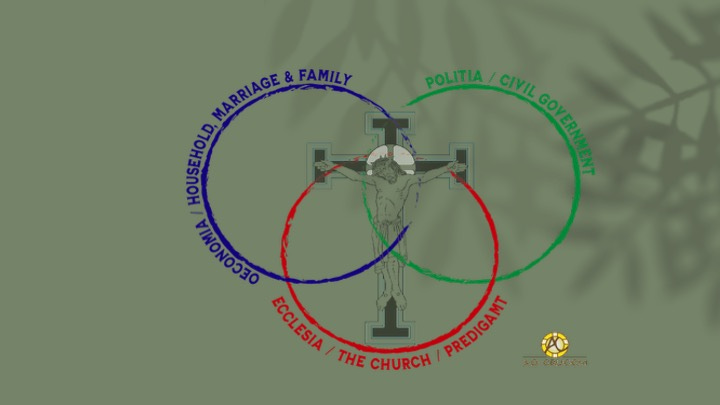
So, in all of the three estates, or life in both of the Two kingdoms -- however you want to categorize it -- Christians are called to see the world through a lens of the Holy Scriptures, a hermeneutic which requires pastoral involvement as the main interpreters by 1. skill, 2.training and, 3. authority. Pastors have a responsibility to then help their members interpret life spiritually with the Word of God as their guide. To deprive Christians of interpreting all of life spiritually (like the bishop who said there was nothing spiritual about the pandemic), cripples their ability to believe and behave like Christians. It also deprives them chances to pray and give thanks for all things. All episodes of suffering undergone by Christians should be interpreted spiritually. God is using it all for individual good and often for the common good. Without sounding like a Calvinist determinist, nothing is random. So when we are punished for our sins, we repent. When we suffer for other reasons, we lean more on Christ. Both lead to a strengthening of faith and deeper trust in and love of God.
This may seem obvious to many, but it needs to be stated anyways; especially in the post-pandemic days, when as a Church we confess our sins and find ways to improve, so that we don’t make the same mistakes again when we are tempted to act like the world in dealing with problems of a national or globalist level, instead of handling apparent “secular” things spiritually. It is also particularly applicable due to recent debates over soft antinomianism, which seems to question traditional tactics and strategies of Christian witness, such as historical methods of participating in the world around us (like the role of the pastoral office and the Church as an institution in the civil society).
The broader question becomes: is it the pastor’s job to, essentially, compel believers towards good works? It seems like a dumb question. But it’s not. It’s actually controversial since the idea is that though the 10 commandments are clear, how they play out isn’t. Think of the pandemic when the first, third and fourth commandments were all pitted against each other. No church should have closed, or at least for long periods of time. We all know that now. But back then it wasn’t obvious. Circumventing the issue without wanting to say out loud that you actually believe a matter is secular and that there is no spiritual dimension, or at least no clear spiritual dimension, is despicably addressed by the misuse of the word “adiaphora”.
Lutherans like to use the word “adiaphora” in order to protect Christian freedom from legalism. The intent is honourable, but in our post post-modern society, from which no Christian nor church is isolated, subjective morality fuelled by hyper-individualism (as political philosopher, Charles Taylor, once characterized individualism in North America) leads to believing that different, or even opposite, spiritual decisions are equal. But even though “all things are permissible”, the debates on food sacrificed to idols and circumcision in the apostolic age were not nearly as adiaphoric as we sometimes like to believe. The debates in Acts do not support an antinomian position to “do whatever you wish because you are now forgiven by Christ, and free from the law”).
Today, if a pastor wants to deeply unearth what good works look like in any given scenario, or even time-period in history, he may be stepping into a mine field. “Its not the church’s business”, is sometimes spoken, but more often unspoken. There’s the question as to whether or not it’s appropriate, given, again, Christian freedom. If a pastor is just sharing his own personal opinions and preferences, he may get away with it. Otherwise, its likely seen as dictatorial or domineering. Allergy towards such a level of pastoral involvement is also complicated by critics wondering whether or not this is slippery step towards works righteousness, or a protestant holiness movement. Are pastors who poke around too much into the lives of their parishioners, and judging their “personal” decisions, endangering souls by making them think firstly that they are saved by works, and secondly, that they are saved by the idiosyncratic preferences of their pastor? Yet if the pastor is God’s presence according to the Holy Office, everything in life is His business right? We have a hard time with this. We may concede somewhat by saying “Yes, it’s God’s business, but no it’s not the pastor’s. The pastor is a sinner and only human.” While at the same time we all confess that there is an element of trust that we must show to pastors and their decisions in life-living areas, and acknowledge that they are accountable to heaven for them: “To him who has been entrusted much, much will be demanded” (Luke 12:48).
Prioritizing seminary education is one of the Church’s ways of protecting and consoling people from abusive clergy. But the suspicion towards pastor entering more intimately into our lives is often the same one that tempts to confess our sins exclusively and directly to God through silent prayer and avoid any middle-man, like our pastor through private confession. Can we at least agree that the pastor needs a greater role to play in our personal lives? By compartmentalizing any part of our life from the pastor, I would argue you have done the same to God, since the pastor, after all, holds the divine office. And that would be saying there are certain parts of life that we don’t need to interpret/address spiritually. That means there are areas in our lives that we don’t want God to step into and speak. But the Bible says we need His illuminating light in all compartments of our lives.
We need help in letting Christ’s light expose the darkness and illuminate our souls with God’s grace, and for that reason God hasn’t just given us a holy book that we need to read on our own and work out our salvation all by ourselves. But He has graciously given us pastors, and other Christians in congregations, to do that.
A shepherd has the responsibility, not just to feed the flock, but also protect the flock from the devilish wolves that seek to spiritually devour them. A good shepherd actively throws rocks at them to scare them away, warning them and offering refuge to the flock. When he acts in this capacity, he should not be seen as going beyond the limits of his ministry. It is interesting that the word φυλάσσω (phulasso: to guard), used in Paul’s exhortations to pastors the letters to Timothy (in 2 Tim 1.13-14 and 1 Tim 6.20-21), has the sense of “keeping watch over the possessions that have been entrusted by another, and of “standing guard, defending them”. The verb is linked to the function performed by the night watchman of a city. We have a similar meaning in προσέχω (prosecho: “to take care of”) in 1 Tim 4.6-16, Acts 20.28-30. It means to be in a continuous state of readiness and willingness to investigate a future danger or need and to react appropriately. In other words, the role of the shepherd goes beyond feeding the flock and encompasses all aspects of life in which lambs may be exposed to danger.
Pastors are to be careful then on how to handle this divine responsibility of applying the third use of the law in the sensitive areas of members lives, but the bottom line is that it is their business. Inasmuch as the Bible has applications to every part of our life, so too does the pastor. Luther clearly makes it the business of pastor by talking about the distinction between two kinds of righteousness, the first being salutary alien righteousness of Christ, imputed to us by grace and received through faith, and the second one being “civil” righteousness: how we live in the world around us. The adiaphorists confuse civic righteousness (which a person can to some extent achieve through natural abilities that remain after the fall into sin) with righteousness before God (which no man can achieve or even contribute toward, but Christ alone possesses by His own virtue and imputes graciously to those who believe in him).[1]
In Luther’s prayer and appeal for a free Christian council in his introduction to the Smalcald articles, he undisputedly shows that the mission of the Church involves her voice in all three estates, as a community and not just as individuals, and with obvious organized leadership including clergy. He offers a public defense against accusations of bad behaviour exhibited in society by Lutherans (who exhibited soft antinomian behaviour!) which although involves doctrine, he makes a matter for the prince to address
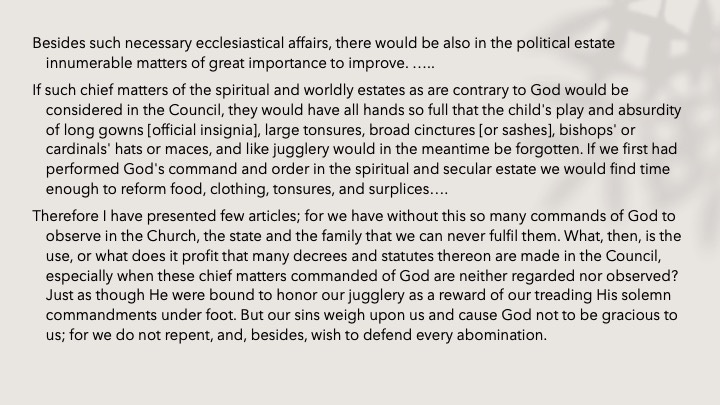
O Lord Jesus Christ, do Thou Thyself convoke a Council, and deliver Thy servants by Thy glorious advent! The Pope and his adherents are done for; they will have none of Thee. Do Thou, then, help us, who are poor and needy, who sigh to Thee, and beseech Thee earnestly, according to the grace which Thou hast given us, through Thy Holy Ghost who liveth and reigneth with Thee and the Father, blessed forever. Amen.[2]
Luther conceives of the Church, and her involvement in the three estates, as not just something that happens at an individual level. He also presumes this occurs at an institutional level; at a necessarily then, “political” level. The Church is a political institution and creature by nature, as are people and pastors. This is good and normal. After all, the Church is both visible and invisible. It’s “invisible” because it’s made of believers in Christ, and faith is something you cannot see. It’s “visible” because serious Christians are found together as a community, in an institution, which you CAN see. And as an institution, I believe that the Church has a role to play in the public square. Now the Roman Catholics take this too far. The Pope is the head of a religion and the head of a state (the Vatican). This is an abusive mix of the two kingdoms. But we Lutherans don’t take it far enough. We separate the two as if God is disinterested in the way we live in the public sphere. There are some exceptions, such as when our synodical president shares our theological view in congress or goes on a pro-life march. That’s terrific. But for the most part, we talk like the only voice Christianity can have in the world is by single individual Christians speaking out, as opposed to together as a Body, as the Church. Yet evangelism (and speaking into the public square with the ultimate goal of converting souls for Christ), isn’t just done by individual Christians, it’s done also by the communal body of Christ![3]
Now I’m going to say something shocking, that makes Luther sound like a Christian nationalist: Luther cared about national security! Yes, that’s right. He had a political position as a pastor. He doesn’t just tell the prince to keep Muslims out of Germany because they’re heretics. But on behalf of the Church, even though he is undoubtedly pro-evangelism (as we see in his rhetoric regarding salvation for the Jews), he tells him to keep the Turks out because they are a military threat to the nation: primarily because they attack the interests of the Church such as the preaching of the Gospel, but also because God cares about the physical wellbeing of his beloved people.
Luther never preaches politics from the pulpit, in the sense of salvation being conditional on views of public policy. But he does speak publicly about the applications of our life in Christ, applying common sense and godly wisdom to real life situations. When it comes to the third estate, the clergy drop the ball when they are paranoid of preaching politics from the pulpit by addressing moral questions of abortion, euthanasia, homosexual culture, etc. These are both spiritual and moral topics that have Biblical applications in Christian vocations in both church and civil society. As we will see, pastors as seelsorgers are expected to shape the souls of parishioners in edifying and God-pleasing ways. When WE don’t do that, we betray soft antinomian tendencies. The Church is at the center of all civilization and the cross is on top and in the middle, the light of the world. But antinomians selfishly, lazily or cowardly hide this light under a bushel. Even though “we are his workmanship, created in Christ Jesus unto good works, which God hath before ordained that we should walk in them” (Eph 2:10), soft antinomianism is manifested in a quietist position on matters of morality as we encounter them in the public sphere as individuals and as a Church.
We live in community together. Church community includes voting members in civil society. Issues of poverty or abortion don’t just happen outside the walls of the church but inside too. The three estates are not silo-insulated spheres, but overlap.
For instance, the Church is a charitable organization. Pastors officiate weddings as priests and represent heads of state. Think of evangelism techniques. We do ESL and soup kitchen ministries that help the body (as an excuse to helping the soul), and they are not only products of individuals, but also as an organization or program of a church. That is what many synodical RSOs are. Many of these endeavours are not just tolerated but seen as crucial to unique missions of local congregations. People are coached and led by pastors in those projects too, in ways that are not often theological: sharing their administrative and leadership abilities. Yet why is ESL and feeding the homeless less controversial than political involvement in moral matters encountered in the Left hand kingdom (after all, the ultimate intent is never simply fixing temporal problems but saving souls)? Probably because it touches on our idols. At end of the day addressing these personal gods is precisely what the Gospel is about, done in public ministry but often most effectively in individual pastoral relationship.
COVID offers a good example of this happening or the neglect: Was it the pastor’s job to inform about the morally questionable vaccines or not? Even later on during the pandemic: the hesitancy to talk about issues that seemed to have no bearing on spirituality at first, but then we had a hunch that we were wrong. Families were broken, worship services were reduced to zoom for years in some places. We may now admit that all things are spiritual, but have we learned from those mistakes? Are there still life-living subjects that we believe are off limits? Do pastors believe they should have spoken more about life in the third estate, or made it their business as to how their members believed and behaved? I haven’t met an American Lutheran nor Lutheran pastor who hasn’t confessed that they failed to some degree during that difficult and dark time in our history. Yet we sinners have a hard time confessing specifics.
I get asked to do a lot of presentations on spiritual warfare, especially pertaining to demonism. And I always introduce the subject with a contrast as to how we moderns view the invisible dimension of life versus our forefathers. Its not just a philosophical question that satisfies an epistemological curiosity. It has real practical implications: when the ancients looked around themselves, they did not see empty space.
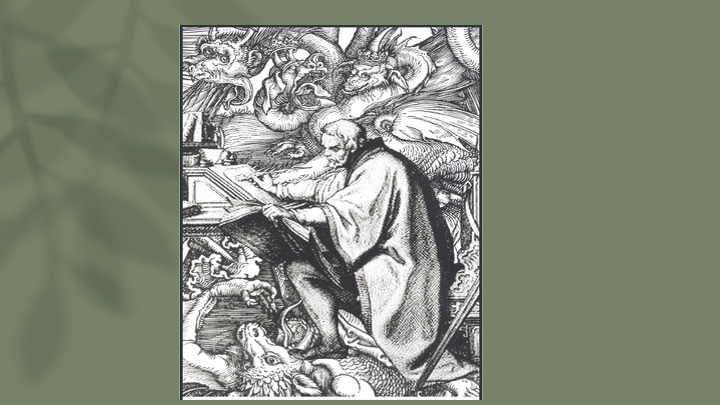
They saw demons and angels around them all the time (for better or for worse). A haunted house wasn’t as freaky to them as to us. Even my parents would refer to their parents experience with spells and voodoo in the folk life of Germany. My dad’s opa apparently drank too much, and was threatened by my great oma with words like “I will pay the local witchdoctor to put a curse on you, and then you’ll smarten up”(!).
In the old days, it was more natural to engage in spiritual warfare in a very tangible way. When Luther throws the inkwell against the devil, its because he saw him there. And it wouldn’t have been that strange for him to tell the maid what happened when the mess needed to be cleaned up. We laugh. We figure he was really stressed. Why do we presume it’s a mental health problem? Was Luther crazy because he frequently had words with Satan? His hymns regularly rebuke the devil as if he’s standing in the room beside him. He doesn’t need to scream loudly either. The devil is right there! Many Lutherans including Luther, Chemnitz, Balduin and even Walther give practical steps, on how to exorcize demons, and none of them are alarmist.
Today, due to the impact of rationalism, we get chills when we hear stories about demons and poltergeists. We believe in the supernatural, but limited to the ins and outs of two sacraments. As sinners, we don’t like mystery. We don’t like not having all the answers. We think we know better than our forefathers! Why is it that when we imagine empty space, we see particles, rays and energy, instead a room crowded with angels and demons? Its because we are “scientistic”. Not “scientific”. We have bought into the false religion of science as a way of viewing the world around us. It is closely related to the philosophy of rationalism in the 18th c, which elevated reason over God’s word, resulting in Higher criticism, where you get to judge Bible, and not the other way around. But the ancients did not see it that way. They saw demons and angels all around. If those were all manifested to us right now in the flesh, I doubt that we would be able to see each other standing a foot away.
Luther never pitted reason against faith. Philosophers such as Schleiermacher, Kirkegaard and Wittgenstein did that. Luther saw reason as good and a gift of God, but its corrupted version, he called “Frau Hulda”. She is as whore that seeks to replace the Word of God as our lens through which to the see the world (even when the Word seems to contradict itself). Lutherans believe the sacraments are what God says they are even if its humanly illogical. God says. We believe. Sadly, the practice of immediately referring those with “demonism traits” to mental health, is characteristic of Lutheran pastoral ministry today, unfortunately. We believe in sacraments doing miraculous things, and the Word, and yet it ends there. Miracles, demonic activity: some bronze agers even deny their existence entirely today. Angels and demons aren’t really part of our lives, is the impression. For if they were, we would be forced to view things spiritually, with a spiritual lens. If we did that, it would change our lives. Pastors would then be first responders on demonism. God gets praise first, not doctors, when a healing occurs. We thank God, not coincidence or chance, when miracles happen through the prayers of Christians and from the altar, when no medicine could succeed. Yet the default position today when it comes to demonism, when church leaders notice an issue, is that you send the suffering and hurting individual to the mental health experts or hospital first, even if it clearly has the marks of demonic oppression or even possession. For even if the congregation suspects that demonic activity is the cause, we have no protocol in place to address it. So we ignore or deny it. Some Lutherans refer their members to the Roman Catholics, because the papists apparently know how to deal with it better. This is a shame and a compromise. We can do the work better than they, since we have the full Gospel and right understanding of the Word. It’s a spiritual concern which means it’s a theological problem. By referring these issues to the Roman Catholics, we are conceding that they are theologically stronger, at least in this category, or have a better “in” with God. But our pastors are largely unaccustomed to thinking about it that way.
Whether it be dealing with demonism, or mental health, or the family and political decisions of our members, talking about it with them, and even among us, is uncomfortable because we have lost the art of SEELSORGER. Our Lutheran fathers saw the ministry of deliverance as a kind of unusual but still “normal” part of pastoral ministry, because they weren’t rationalists, they were seelsorgers. And seelsorgers are involved in the application of the third use of the law in all three estates.
To interpret all of life spiritually, means we need lenses to be given to us. Thanks be to God, those have been given to us through the holy catholic and apostolic Church, in Holy Baptism. Yet those lenses need some instruction on how to use them. And all the way along you need the pastor.
Historically, Lutheran pastors saw themselves as seelsorgers. This was how they equipped members for spiritual war. Certainly, sacraments do that, but just like any soldiers who have weapons, they need training. So, we need pastors to help us learn to use our weapons. Pastors are not just added extras but indispensable to our spiritual survival. Seelsorger literally means “Spirit guides” (not in the new age way, but as a kind of spiritual life coach, to put it crassly). The German word is “care for soul” giver, having no perfect English equivalent. Seelsorgers can be best likened to a “kind father”. Fathers care about the entire holistic life of their children; not just one compartment of their lives. No part of their being as a child is off the table for a good father’s involvement. Disgruntled children complain today about how their fathers were not enough a part of their lives. Children secretly expect their fathers to poke their nose into all their business. What my kids eat, who their friends are, who they marry, career goals, what they watch on screens, is all my business as a father, whether they like it or not. That’s normal. That’s love. The father’s “opinion” is not really a viewpoint among equals. He has authority over his children. They are to listen to him, show respect, obey and carefully consider his view in all things.
St Paul refers to himself as the father to Titus and Timothy and others. Its obviously not a biological relationship. It’s a spiritual one but the comparison is perfect. Its normal for us to see our pastors as fathers, and pastors to consider themselves as such, even if they are decades younger than their members. This is how the pastoral office was once viewed. Why not so much today? We will talk in a moment about some historical movements that had us drift from there. But this idea of pastor as father is essential in seeing pastors as seelsorgers.
“Seelsorger” is pretty much a uniquely Lutheran term, and expresses a Biblical view of the function of pastoral office as the pastor relates to individuals. At least since the fourth century, pastors have been known to function as spiritual physicians.
The uniqueness of Lutheran pastoral ministry became very clear to me having served 11 years as a military chaplain. Lutheran pastors had an outstanding reputation for visiting people and members among protestants. The individual caregiving wasn’t as much of an emphasis for other denominations. Pastors for them were mainly seen as spiritual helpers, but without a right view of the Office of the Ministry, pastor as “father” is not in their vocabulary. In the wider religious spectrum of the Canadian chaplaincy (in which I served eleven years), Christians were distinct, and Lutherans in particular, from “question and answer men” like rabbis or imams. Those religious leaders exist to answer your theological questions, or perform certain rites on your behalf. For Lutherans, due to Luther who gave new value to individual believers through the emphasis on the universal priesthood which meant each individual counted before God, each was a precious little lamb of the good shepherd. Pastoral care then was characterized as individual care. For Lutherans, it was crucial that pastor interacted with people. This was not the way for the Roman Catholics during Luther’s time (the Late Medieval period). This isn’t to suggest Lutheranism was doing something new. Instead Luther resurrected a practice that had been corrupted by the papacy, as was the case with most of his reforms. He went back to an earlier, healthier Christian tradition. For “seelsorgering” as an early church practice of pastoral care was known as cura animarum, “the cure of anima” or “cure of soul” from the Latin word for the Hebrew “nephesh” (which comes from “breath” as God breathed into his newly formed creature) and the Greek word “psyche” from which we get “psychology”, pertaining to the mind. So seelsorgering as pastoral care, ultimately, always recognized the connection between soul and mind, and that God’s word and ordained servants had something to say about the whole person: body, mind and soul.[4]
Lutherans carried on that tradition, but it has sort of fallen out of use. So now we may need some help to carry it on in the future.
Back to the military, ironically, in Canada the word for “chaplain” was the Spanish word for father: “Padre”. What a complement! And the way we speak and the words we use, doesn’t only reflect the way we think, but shapes the way we think. So the language was convenient for those of us who were missionizing soldiers in a Canadian environment which is radically godless compared to the USA.[5] But in the old days the Canadian “padres” or American chaplains were the mental health workers, counsellors, even doctors. They took a holistic approach to the survival of soldiers in physical war. We need to do the same as pastors and parishioners in today’s spiritual war.
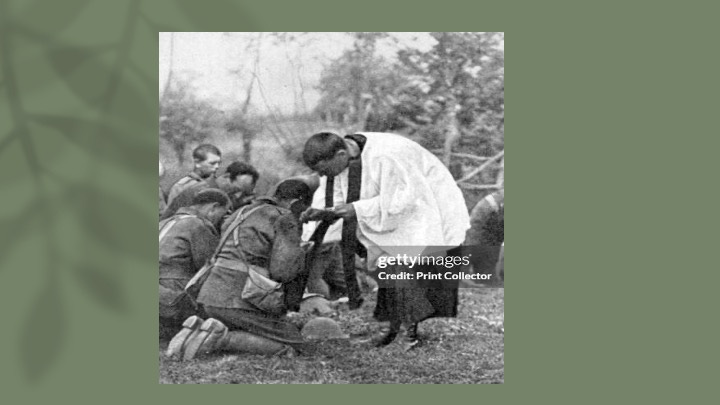
But as the secularization of the Western world sped up in the 1960s, the role of the chaplain diminished, and his shepherding and fathering became more compartmentalized to just “doing” religious services, like Roman Catholic priests today. Spiritual life became a subcategory of mental health as the “helping professionals” effectively hijacked the role of pastor.
For example, did you know that PTSD used to be called “moral injury” (a religious term) and prior to that “spiritual injury”? PTSD was considered to be ‘a soul issue’ and not a ‘mental health issue’. This kind of change represents a deliberate shift to the secular world of psychology usurping the stuff of the church and making it its own. Unless PTSD among infantry men is caused by actual physical brain injury, it’s usually a result of a crisis in conscience, guilt, or existential questions regarding ‘who I am’ and beliefs about the sanctity of a soldier’s vocation and role within the machine of authorized killing. These spiritual questions remain undisputed among all health professionals as the cause of most mental injury. Yet the notion that religion should be the loudest voice in addressing them is considered absolutely laughable. I spent 3 years with NATO special forces of NATO on teams with secular psychiatrists and psychologists in creating recovery packages for PTSD victims, and clearly the spiritual side is, at best, not understood in the least, and at worst, seen as a Christian nationalist attempt at evangelization. Trying to regain this lost territory is next to impossible today, and our militaries are worse off for it.
It’s noticeable that the shift in the military to others doing the job that chaplains should be doing or once did, (like the heightened role of mental health workers active in spiritual caregiving), parallels what is happening in the church. I would guess that with the mental health stats what they are today (as roughly 20-35% percent of Americans, Christian and non, are using mental health professionals and or legal or illegal drugs to cope with life), Christians are more inclined to speak to “secular” “specialists” over pastors about their problems; issues which, again, always have a spiritual and or moral component.
I know that we pastors don’t have training in psychotherapy or counselling, but does that preclude us from being the first tier in a process of healing? It’s a huge mistake to think that any social or psychological issues in life does not have a spiritual dimension, which then requires the Word of God, administered by his pastors, to address. My kid may injure himself and need stitches, but before taking him to the doctor, I see if I can help first.
A return to such a trajectory presumes pastors, though sinners, are characteristically mature and humble enough to empathetically employ pastoral wisdom case by case, since only a truly domineering pastor puts his interests before the other to whom he has been called to feed, and for whom Christ has so graciously redeemed. It is no secret that pastoral ministry is an area where our clergy could receive “a deeper” formation, in terms of helping orthodox confessional pastors not feel threatened by difference or other perspectives in pastoral care giving. So again, with great power comes great responsibility, and just like some father abuse his role in the family, the same applies to the Church. Yet, thanks be to God that mechanisms exist to mitigate for such situations in our spiritual family.
In short, pastors as seelsorgers need to be involved in the details of the lives of their people in order to, as St. Paul writes, help them “take captive EVERY thought for Christ” (2 Cor 10:5).
“Pastoral care” is often equated with “seelsorgering”, though I would argue seelsorgering is a function of pastoral care as a description of pastoral ministry and the pastoral office. But notice that today how often “spiritual care” is substituted for “pastoral care”. It’s more open ended and less paternalistic. “Not all people are religious, but they are all spiritual, right?”. It’s a popular less offensive notion: “spiritual” versus “pastoral”. So too “spiritual counselling”, even “Christian counselling”, has come to replace the work of the seelsorger.
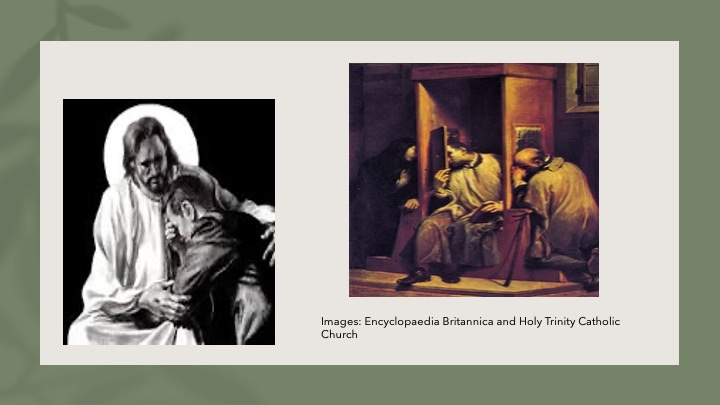
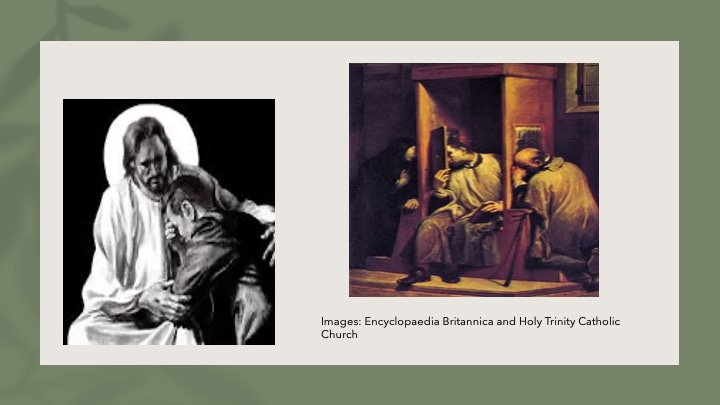
How did this all happen? What was it like in the old days? Individual Confession and Absolution was the way prior to the Reformation.
Afterall priests were the early psychologists, and confession was the early therapy. You confess sins, get forgiven, and the pastor then advises you on how to live better. It’s a shame that the Roman Catholics make absolution conditional by their view of penance. So Lutherans flee from anything that looks like we need to guide people on how to live the new life. But look at our rite of individual confession. At the end, we expect our “father confessor” to say more than just forgive. He is to encourage and advise the absolved sinner. It’s too bad that we have lost this art. As a seminary professor I taught pastoral ministry and had a unit on how to practice effective private confession. I compared it with a dentist who goes poking around at rotten teeth in a mouth. Each mouth is different. Each dental solution is somewhat tailor made. Yet treatment needs to be individual, as some individual teeth need more attention than others, and a general fluoride dose isn’t going to be enough to effectively improve the situation. Pastors are that dentist and confession is that process. Sometimes they poke and say “does that hurt?” or “how about this?”. In confession, it is not inappropriate for the confessor to interrupt and steer the conversation, making sure it doesn’t turn into a pity party or blaming of other people for your problems as the one confessing sins may experience meandering thoughts but spoken outloud (e.g. “I am really sorry Lord for my anger towards my sister, but she just drives me nuts and she thinks she’s so much better, and gossips about me… Lord, can you get more busy on changing her?”). As a newly ordained pastor, I would just let people say whatever they want, and just forgive them, no matter what they ever said (justifying myself by saying, “well they are just talking to God anyways, and not me”), and offering no advice afterwards. I don’t do that anymore. I’m not saying that I make it a two way conversation, but I do get involved and interact. No one has ever complained.
One of the seelsorger’s best tools is private confession. Yet most don’t like it because its too personal, and touchy, and, maybe one reason is that it prods into the sins committed within the second and third estates.
Ironically, although Roman Catholic priests don’t have the tradition of seelsorgering like Lutherans, they are structurally better set up for success as a Church due to the expectations by members to go to confession and receive the counsel of their “father”. The problem is that the frequency among Roman Catholics to tap into the benefits of a “The Sacrament of Reconciliation” aren’t great: 16% of Roman Catholics go once a month while 42% once a year. Our stats are way lower, with most Lutherans never having gone to private confession even once in their lives. In fairness, confession stats are not necessarily the best marker to measure the openness of people to let the clergy into all aspects of their lives, but it is safe to say that it is increasingly less popular among all Christians, due to the dominant influence of hyper-individualism in Western culture.
Yet historically Lutherans theoretically had the advantage over the Roman Catholic in the department of pastoral care. For the difference between Roman Catholics and Lutherans on Confession was that the ministry of “spiritual care and counselling” for the priests was largely limited to private confession (it was often an empty and robotic rite, in within a factory of confession boxes with the priest in a swivel chair, speedily hearing confessions from one side to the next,
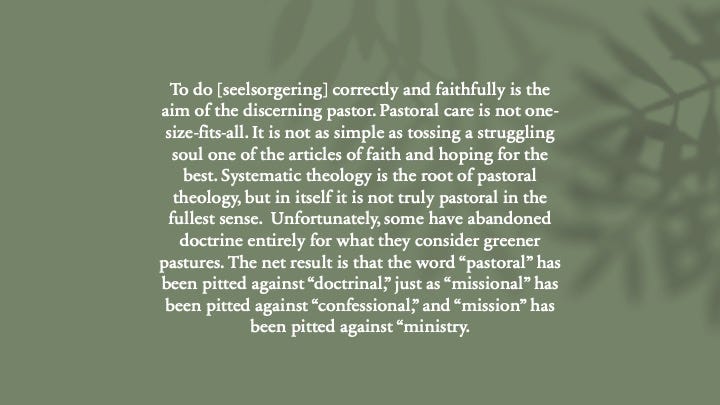
whereas for Lutherans it became one part, a crucial part, but not the only part, of the more holistic seelsorgering of “spiritual therapy”. Thus, smaller congregations with healthier ratios of pastor to people was important for Lutherans. In contrast, this really didn’t matter to Roman Catholics, especially during the Middle Ages when just viewing priests doing the sacrament, as your go between, sufficed for salvation. Unfortunately, though, for the Lutherans, time with the seelsorger later became a necessary pastoral alternative to the rite of confession (which became optional, as sadly, it is with human nature and the third use of the law, when the Lutherans refused to mandate certain practices, like fasting or confession, they fall out of use).[6]
But on the bright side, seelsorgering was still actually very similar and complimentary to confession, even if it lacked the formal ritual. Think of when a pastor sits on the couch with an elderly woman crying on his shoulder and he pronounces Christ’s forgiveness. No liturgical rite is followed, but there are unspoken mutual understandings in place, and the objective is the same. Such “sofa ministry” certainly is a function of the pastoral office, and fits under the category of confession, yet a little casual and fluid, which I think is ok, but a healthy Christian spiritual diet includes both the “casual” and formal.
Yet seelsorging today, when practiced, has often begun to look like a kind of Christian psychotherapy. Seelsorgering in the past was more holistic with the aim to fully prepare Christians for living righteous lives. It was not limited to individual confession and absolution nor was it just about helping individuals addressinging the dark areas of their life. It was a way of equipping them for spiritual warfare in the surrounding society, as they carried out their various vocations. It happened within a more communitarian-based and less pluralist pre-American society, and where the two kingdoms were really seen as two distinctive halves of one kingdom of God. So it was a way of guiding people into the complexity of what they were dealing with in life, in all three estates. All aspects of life can fit within the circles of Church, state and family, which all overlap. Seelsorgering then wasn’t just about questions of “how to heal from my sins” but also on “how to live a virtuous life”. Pastors should not be shy to do what the hymnal encourages (though honestly it could say it a little more forthcoming): i.e. give advice on how to live better in light of the confession of specific sins, like, again, that dentist prescribing a unique diet to each client based on their unique dental issues. We expect our medical doctors to pry into our personal lives, yet when it comes to the soul, we sinners don’t like someone to do that, because the devil doesn’t like that. He has made his home in each of our hearts, and doesn’t like getting the boot.
I encourage you all to read, if you have not already, Kirch und Amt (church and ministry) and Gesetz und Evangelium (Law and Gospel) by C.F.W. Walther, where we get a picture of how seelsorgering involved more than just spiritual healing and mental health. Walther was a big a fan of making personal issues of members his business in not just estate number 1, but 2 and 3 (family and civil live). Some pastors today may be gifted in pastoral counselling, and even have the CPE qualification, but are they addressing these moral and ethical issues of, say, life in the civil estate? In what venue do we train them for that, or even talk about it? When I asked, during the pandemic aftermath, how many pastors in one confessional circuit had told their people about the pecking order between different COVID vaccines/injections (all were controversial due to their connection to aborted children, but some worse than others). Well, heads hung low and not one said that they had. Other pastors wanted to defer it all to the “specialists”, while still others tried to seelsorg but ended up reverting to offering Sunday-school answers to complex questions in spite of employing the rhetoric of “unprecedented times” to justify the lack of justification for unorthodox behavior, opinions and decisions when it came to pandemic mandates.
Some of you are familiar with LCMS Doxology crowd, intended to help equip pastors for the, dare I say, “practical” side of pastoral ministry, with its journal appropriately entitled Seelsorger. Founder and good friend Hal Seinkbeil talks about how seelsorgering has sadly become a thing of the less confessional and orthodox pastors, who are interested in spiritual counselling over traditional word and sacrament ministry. That means that the most confessional pastors, the ones that we should look to for leadership, are the least accustomed to seelsorgering. This explains for so much silence in them feeling comfortable talking about COVID issues to their members, since even though we all agree that is had a major impact on life within all three estates.
Pastor Seinkbeil writes,
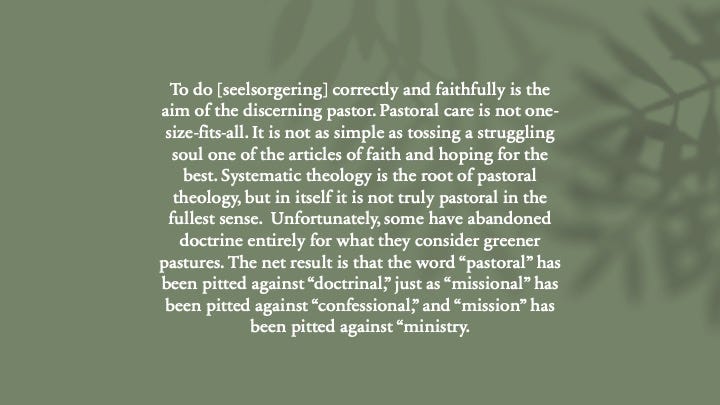
[7] We found during the pandemic that the most confessional pastors had their heads in the sand when it came to addressing current topics that had direct implications on the spiritual life of members. We found members equally disinterested in pastors prying into their personal lives. Such fear and suspicion is not healthy. Where does this cowardice or lack of comfortability to seelsorg come from?
What went wrong? Well you heard me mention earlier the term “rationalism”. Rationalism was a pivotal philosophical movement that tried to reverse the roles of God and man by elevating the authority of man’s mind over God’s word. That movement was a product of a more specifically religious movement and philosophical theological system of the 17th century called “pietism”; not in the sense of “pious” (doing good Christian behaviour or exhibiting healthy devotion to God), but the idea is that because you and God have a personal spiritual relationship, you don’t need anybody or anything else to help you in your growth. Your direct relationship with God morphs into the idea that you don’t need other people, or means! You become your own priest, of sorts. Pastors, at best, become spiritual helpers, as do sacraments, fellow believers, and congregations. But none of them are essential. Your relationship is so personal, how can a stranger really speak into that? Your relationship is so spiritual, how can a “thing” like bread, water and wine really make that much of a difference to what God is doing deep down in your heart?
The origins of this movement, which is hyper-spiritual and anti-clerical, is actually mysticism. Luther and the early orthodox reformers rebuked it as “enthusiasm” from the “schwarmer”, who boasted a direct link to the Holy Spirit, even outside of the Word, something which we find in Pentecostalism and charismatic evangelicalism today: “me and God have a direct link, without the holy Word and means of Grace”. The early Lutheran pietists would have been horrified to be associated with the theology of Zwingli, Karlstadt and Muntzer, but that just goes to show you how careful we must be with all matters of doctrine and stand up against any hint of heresy creeping into our churches.
Now there is a good kind of mysticism, not a radical non-Christian type, but the kind that springs from the Word of God and says that even though we don’t count on experiencing God in our personal devotional life, we don’t need to be afraid of it either. Luther encountering angels while receiving the Holy Eucharist[8] is a good example of that. Paul talks about levels of heaven and even possibly the existence of mystical languages[9]. They don’t consider such mystical religious experience as rewards of holiness in any way, but they admit there is a dimension of mysticism, beyond human words to describe, in the lives of many, if not all, Christians. There were even some nice offshoots of mysticism and pietism, in Paul Gerhardt hymns, that highlight your personal loving interactions and relationship with Jesus. One of my favourite devotional prayer books is Johann Gerhardt’s “Meditations on Divine Mercy”, in which, you often get the impression that, as one fourth century desert father, an Egyptian mystic monk said “only you and God exist”. But they are all based in, and assume, the sacraments as the source, and operate within the walls of orthodox theology. Mysticism at its best fosters a very personalized relationship with God within the parameters of the Bible, and never disconnected by His sacred means: the mysteries as we find them celebrated in the Church. The word “mystery” or “sacrament” in Latin itself suggests something being beyond human articulation, and thus there is a mystical element to the means of grace. Consider also how the term “mystic union” of Christ and His Body, the Church, is entirely appropriate Lutheran language.
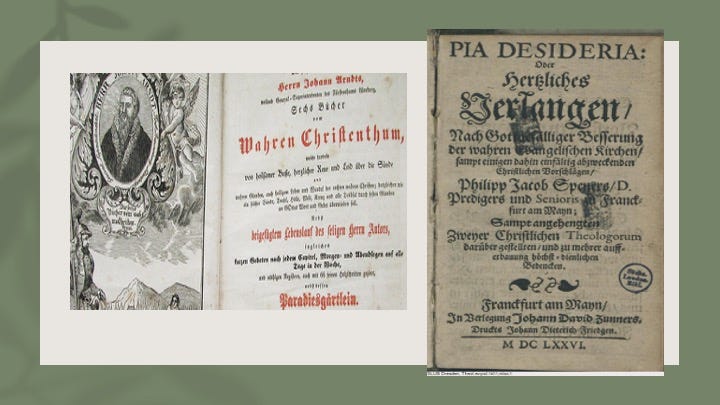
But just like anything, when misunderstood, a great gift can become abused and dangerous.[10] And so it went with interpretations and applications of the writings of Lutheran mystics like Johann Arndt, in the sixteenth century, a highly popular devotional writer among Lutherans (with his writings taking third or fourth place to Luther’s!
Arndt, a great devotional writer was highly influential on Lutherans, reiterated, for the most part, the healthy Lutheran emphasis on individual faith and a direct relationship with God through Christ. The medium to God was the means of grace, whereas in the Roman system you had a soteriological mediation that involved not only sacraments, but priests and saints. But for the first time in a long time, in the West at least, a relationship with God was personal. This was good news. Luther taught this, but the mystics, who influenced the pietists, showed you what it looked like. And it began to look less like a communal experience within the confines of the Church as an institution, or among people as interdependent members of a indispensable spiritual communal body. So the drive toward individual spiritual development had its downfall, especially in a climate of temptation to throw the baby out with the bathwater when observing the abuses of the Roman Catholic church. Lutherans struggled with how to be catholic amidst all the abuses. If it looked Roman Catholic, it was dismissed as being exclusively for their use. Did you know that in early Lutheranism in North America, even candles were controversial? No wonder it has taken us so long to get crucifixes back into our churches.
So Arndt, though not saying anything necessarily wrong, led to pietism. For instance, it led to one of the most famous Lutheran devotional books after the Small Catechism, Pia Disideria by Jacob Spener. This book is largely all legalism and law, with little Gospel, as believers are forced to climb a ladder of holiness up to heaven, never sure whether if you died right now, you would make it there through faith alone. The implied goal of life was to please or impress God and avoid His wrath, by your personal religious decisions. Pietism then meant less focus on the visible church and visible sacraments. It fostered a view of the Church, capital C, as nothing but a bunch of believers with a common interest assembling together. It’s a very inorganic and cold view of the body of Christ. It is basically the current protestant view that individual believers get to heaven, not within the wider body and institution of the Church, lead by true doctrine, but by themselves and through the works of the law.[11]
Conversely, the Lutheran Confessions say that the Church is defined as believers assembling around the Word and Sacrament (which includes the pastoral office!)(To prove it: though lay people can perform emergency baptisms they cannot preside over “emergency Eucharists!”). The Confessional Lutheran view of the definition of the Church is trinitarian and beautiful: the Father’s children gathering around Jesus, and brought there by the Holy Spirit: very warm and organic. The pastor feeds the sheep, the food purchased and won by Jesus.
Pietism caused rationalism and is closely related to it. As one friend, Rev. Paul Williams, author of one of the handouts, put it, “pietism was rationalism of the heart, rationalism was a pietism of the brain”. Rationalism rejected the Bible as authoritative. It said things like there is a rationale explanation for miracles. The red sea parted because of the wind. Demon possession is mental illness.[12] Pietism ultimately rejected the Church, the Word and her ministers as authoritative and thus as necessary. Both placed the individual, mind, heart, feeling, experience as metaphysically supreme. After all, mysticism, carves out the requisite space for rationalism. Mysticism means your spirituality is above anything knowable, including the Word of God, which is all just letter of the Law right? God is spirit, immanent, transcendent, unknowable, uncontrollable, uncontainable. Faith in this God doesn’t need to be at all reasonable, and can’t really be grounded in facts or history. Your spirituality hovers above all that, and so far above all that, that it has nothing to say about any of that, like the mundane things of the earth and every day life[13]. Besides, if your personal relationship with Jesus is everything, then who cares about anything else: how you live, or how you think about other stuff? You can be an evolutionist while holding a “spiritual” view of the creation narrative. You can believe in a “spiritual” resurrection while holding to the world’s view that physical resurrection is scientifically impossible. “We are not saved by reason, anyway, right? We are saved by faith!” Faith and reason ironically become pitted against each other, as opposed to reason bending knee to faith and faith being shown to have reasonable substance. We encounter this in the existential German philosophers, most of whom, unsurprisingly, had Lutheran roots, but watered down through rationalism. “Why study doctrine in depth if the Bible is unreliable and if my highly individualized spiritual experiences and sentiments surpass in quality and cannot be contained by words and theological formulas?” Pietism resulted in a lot of devotional acts that either tried to increase the intensity of those religious experiences, as the soul escalated the latter towards Jesus in the heart, or reduced Christianity to doing good works, having a skewed view of “sanctification”, to, again, help you get closer to Jesus in your heart.[14]
But without viewing the pastor as necessary in guiding this spirituality, and teaching the proper distinction between Law and Gospel, and the place of true good works, pietism paved the way for faith being the only thing that mattered in the end, and soooo personal that nobody else was deemed fit to judge the ins and outs of that, including a pastor, who functions really just as a more educated and moral man than the rest of us. The logic seems then also to have been extended to life living being very personal and adiaphora. This is key to this discussion.
LECTURE 2
For today, as pietism has been filtered to us, life -living is largely treated as adiaphora, based on personal and contextual decision that individuals make, with lots and lots of religious freedom. If all that Lutherans care about is forgiveness of sins, since believing that doctrine is the only one you really need, why talk about good works? In pietism, you become your own priest, your own judge. Living in the three estates, becomes a matter of opinion and preference. Your pastor may have an opinion, but yours trumps his.
Pietism had a huge influence in the Western world. It was a Lutheran phenomenon that impacted all of Western Christendom. With the Reformation’s emphasis on the individual relationship with God, the radical reformers took this to its logical conclusion and said there was no need for any mediation, such as the means of grace, which are just symbols of spiritual realities, that we “do” because God says we should. For the means of grace to do more than just being symbols of divine truths, necessarily implicates some kind of mediation. Luther is 100% correct in arguing that man can never escape a physical means in connecting to God. If you reject God’s means, your heart, brain, emotions, take the place. Like Baptist Bible Studies: “I believe the Holy Spirit is telling me that this verse means x, y, and z to me. What about you?”. Well the protestants never really respond to any of these criticism. The Peasant revolt of 1524 resembled a kind of communistic rebellion destroying the orders of creation by a misunderstanding of the order of redemption. Their logic went: “If we are all equal before God, why not before man? So let’s all destroy any distinction between priest and lay, king and subject.” This shift, which included despising the church as an authoritative hierarchical organization in any sense, resulted in demonic anarchy, rebellion and mass murder.
But the Lutherans had it right. Although individual Christians have a direct mediation with God through Christ, that mediation happens through mediation: the Means of Grace; and where the pastors also belong to those means. Whether you consider them a means to the means or means themselves, they are necessary. The Bible says it. They are “essential workers” and so are the buildings from which they operate and the tools that they use (which is why churches should not close even during a real pandemic). But shortly after the successes of the reformation were celebrated, the counter reformation was launched and much of the territory gained by Lutheran was lost quickly, and the golden age of Lutheran orthodoxy was pretty short lived. The religious wars resulted in fragmented church bodies, and lack of strong confessional leadership, with Lutheran princes hailing a status as “emergency bishops” without much of any theological knowledge, and thus clearly mixing the two kingdoms in devilish ways. Seminaries were in a poor state. Pietism meant Lutherans, who could now read and could afford Bibles, had them, along with Luther’s Small catechism, but without much orthodox instruction. After all, the Small Catechism isn’t enough to get you through all of the complexities of life in terms of Christian living.[15] Pietism meant spirituality was reduced to “Me, God and my Bible”, with the sacraments functioning as spiritual booster juice but not essential nourishment. The third book on the book shelf of an average educated Lutheran, Pia Desideria, by Spener, didn’t help the situation at all.
So when Lutherans migrated to North America, they brought with them the baggage of these pietistic ideas. Immigration always involves the importation of culture. This is why it should be a concern for Christians, and saying so is not racism!!! Due to the prevalence of Protestantism in North American, these new Lutherans found an easy fit in the American climate. The American landscape was theologically comfortable for these early “confessional” Lutherans who simply didn’t know any better. After all, pietism, rationalism and ecumenism were the largest threats to true confessional Lutheranism in America. Rationalism is a denial of mystery, and pietism, applied on a community level, meant “as long as church bodies are trying their best to grow close to God and do good works, doctrinal differences shouldn’t put up unnecessary walls in fellowshipping together with non-Lutherans”. The two notions together lead to, and fueled, ecumenism: Where nobody should be compelled to judge personal relationships with God. Pietism’s emphasis on good works and “piety” meant that most Christians appeared to be the same, in terms of a general observance of the 10 commandments. And, “after all, we have more in common than not, and we need each other to survive in the new world.”
None of this was good for Confessionalism in America. Clergy were hoped for, but not necessary. And because they weren’t there, Lutherans got used to not needing them, and doing the pastor jobs, or at least what they thought were pastor jobs, themselves. Communion practices were infrequent. There were few notable confessional pastors interested in tackling the American wild life. Courageous pastors such as Henri Muhlenberg led the Church, prior to men like Walther. Yet however confessional we wish to depict such personages in historical records, the honest truth is that he more than likely wouldn’t have passed the standards of most of our conservative districts today.
In short, pietism resulted in a lessened openness and expectations in pastors as seelsorgers, especially in the American context. The principles of democracy as expressed in the US Bill of Rights, aligned well with pietistic ideas. Don’t get me wrong. These developments were not out of place, and it has been argued that Martin Luther’s early emphasis on the “universal priesthood of all believers” was an instrumental founding pillar for the U.S. constitution regarding equality between men. As mentioned earlier, the removal of soteriological hierarchy, such as the necessity of priests and saints to get close to God, meant each individual has equal value before God, and now in America, before man. BUT the downside of American democracy was that it was rooted in suspicion of authority. After all, it was a reaction against abusive British monarchy. There is a good side to this and a bad side. I believe that the USA is one of the best countries in the world, due to the preservation of Christian culture but also its stability through wise checks and balances within the political structure. After all, there is a place for healthy suspicion, since, all men are liars, and the Bible says do not put your trust in princes. Checks and balances in American democracy (Constitutional Republic) make sense. Even the way that we ordain and install pastors shows a realpolitik sensitivity in controlling for sinful abuse of power and authority in the life of congregations: pastors and their people promise to keep each other in check in doctrine and life. We all need to be accountable to someone due to the fact that we are sinners. But the concerns of the Left hand (civil government) had a major spill into the Right hand: ecclesiastical authority. Pastors are obviously sinners too, but when they speak from the Office, and with arguments and counsel supported by the Word of God, they are the voice of God; and, unless they are actually abusive, crazy or heretics, it’s wrong not to listen to them or let them consult on matters that they believe have spiritual implications. The pastoral office IS the office of Jesus, who is God, and pastors are his presence through that office. But the tricky part is, not everything pastors say come from the office. Pastors need to be aware of that as they may inadvertently abuse their authority when their personal opinions which actually are adiaphora are viewed in a Lutheran ex cathedra kind of way.
American Lutherans already had a lowish view of clergy, by virtue of this pietistic and protestant culture to which they were exposed and by no fault of their own (surrounded by church bodies who largely have low view of the office). But also, confessional Lutherans of the LCMS stripe had a specific issue that aggravated the situation of clergy trust even more. Now I know that the pastors in the room know all about LCMS history from seminary, but many of you lay people may not have had the opportunity to hear it. So let me give you a really fast run-down on how suspicion of clergy was reinforced by those early confessional Lutherans escaping the Prussian union in 1839.
The Prussian union of protestant churches was established in 1817 by a Calvinistic king, Wilhelm III, who was ruling a majority Lutheran population, approximately 95% Lutheran. He forced the Lutherans to compromise their Faith through unionism, such as what we would call today altar and pulpit fellowship, which is why the state church in Germany today is basically theologically ELCA. The liturgy was changed in order to accommodate Calvinistic Eucharistic beliefs. Faithful Lutheran like Walther, after resisting all the wicked political manoeuvres and public policies of the king, fled to America with a few ship loads of others to be able to practice their faith without compromise. The bishop of the time was a man named Martin Stephan. Well the bishop (who already had a shady reputation as being princely and domineering) got caught in a scandal with an affair with the church secretary. After the alleged affair was revealed in a confession to a Lutheran pastor, who then shared the news with the clergy, Stephan was chased out of town demanding a fair trial, which he didn’t get. He probably did it, but, just for the record, we don’t actually know. But the point was, for those early Missourians, there were some understandable trust issues when it came to authorities. Walther had a lot of damage-control to do after the scandal. Without any strong leadership, having lost one of the ships crossing the ocean, many confessional Lutherans, had doubts as to whether or not this was divine judgements and whether to flee back to the theological reign of terror of unionistic Prussian King. The superstitious thought that God was punishing them for leaving the state church in Germany. Walther was the clear selection as a new leader, or “bishop”, but was wise not to assert his authority too strongly in light of the scandal, and also of him being a youngster, at 27 years old. It took some time for him to earn his reputation and clear designation as leader of what would become the LCMS, proving his remarkable abilities by stabilizing the situation, but in the meantime, the view of clergy improved mildly, but not enough for pastors to be really viewed as a spiritual “father” in the seelsorger way.[16] It would take months and years for Walther to build the lost trust. If being a real seelsorger was already difficult in the American climate, it would increasingly be so after this fiasco.
As much as we adore Walther, he wasn’t perfect, and his mentor, Willhelm Loehe ,[17] was Walther’s hero, having funded Confessional missions in North America through the Iowa synod of the time, at a moment in history when it was very much needed in light of the influx of so many weakly catechized “cultural Lutherans” from all over Europe. He founded the Fort Wayne seminary, was a huge fan and supporter of missions among American Indians, developed a responsibly Lutheran approach to the diaconate, and helped preserve Lutheran culture from the influence of other denominations. Walther came to America for theological reasons, to escape the persecution of resisting the syncretism of the Prussian union, which was unlike many other Lutheran immigrants prior to him, who came for business opportunism and adventure. Most of those pre-Waltherian Lutherans sadly, but appropriately, melted into the pot of the ELCA today. Loehe, on the other hand, suffered many trials in Bavaria in his fight for confessionalism, but he never visited America. It was easy for him to judge the shape that confessional Lutheranism would take in the new world. Yet that doesn’t mean his judgements were invalid, though, again, they often lacked empathy, and even sympathy. But Loehe’s big fear was Walther being tempted to compromise the True Faith in the American landscaped. For example, he warned Walther of importing democratic principles into church governance. Walther likely did not have much of a choice, politically, after the Martin Stephan, scandal. The suspicion of authority, pietism and democracy made it hard for a German episcopal “top down” ecclesiology to strive, and so a more congregationalist “bottom up” structure was pretty much inevitable. Within 100 years, Lutheran polity went from being governed solely by pastors in ministeriums to equal lay and pastor representation in Synod. Again, it was easy to criticize Walther from Bavaria, but to strain relations more, Walther was a stubborn Saxon. Personality wise, Loehe was more of an idealist and even a romantic, while Walther more practical. And so whether or not Walther agreed with Loehe on the inside, he never took heed of his warnings in any significant way. Loehe was seriously concerned about the relationship between the pastor and the people and the impact of all these factors on the role of the pastor to the congregation. Loehe was more concerned about cultivating a culture where pastor is truly a seeslsorger, whereas Walther thought that, even if all American cultural tides pummeled Lutheran orthodoxy, Lutherans were sort of, deep down, spiritually hardwired to view their pastors as fathers. Walther had his hands full in making sure the Church just survived in America, so Loehe’s concerns were pretty low priority on his totem pole.
Yet even if Walther wanted to preserve a high view of the pastoral office alongside a high view of the congregation, it was pretty difficult in an environment of lay led congregations. Many, by no choice of their own, were operating without pastors. Many German pastors were frankly ill-equipped for the ruggedness of the USA, and even wildly worse winters in Canada.[18] Some were honestly too snobbish and elitist to come to America (which, honestly, wasn’t necessarily a bad thing in many cases since much of the seminary training of the time in Europe was pretty liberal due to the impact of rationalism). Congregations continued worship without pastors, and thus began to be seen as increasingly less necessary or important. Communion wasn’t possible except for occasional clergy visits. The protestant neighbours were doing ok without pastors, or communion. Joint worship was a common phenomenon, receiving shepherding by local leaders of other protestant denominations who had little theological training. Sadly, the temptation to mimic other protestants and have fellowship with them, surpassed Lutheran convictions and confessional commitments.
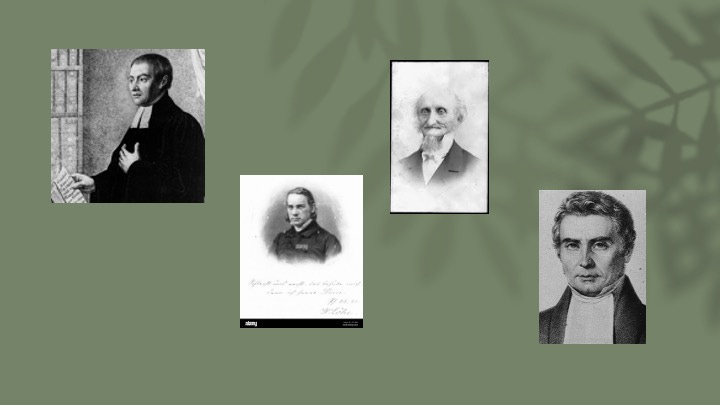
Johannes Grabau (father and president of the Buffalo synod, which fell out with Missouri Synod, but who was a confessional pastor, and good friends with Loehe), was a contemporary of Walther. Even more critical of Walther than Loehe, Grabau went to bat with Walther on a number of matters.[19] Without going deeply into the differences and what led to the separation between the two[20], unlike Walther (who was leading churches recovering from clergy abuse, and dealing with the power struggles within congregations), Grabau had an easier ride. He could get away with a very high churchly approach to ministry, and one that left little room for lay leadership. For instance, he insisted on German liturgical forms and orders and treated them as next to divine, atypical to the American landscape. Grabau was less tempered in his words than Loehe, and accused lcms polity as Anabaptist, poisoned by democratic processes. He used words like “people should obey their pastor except if forbidden by Scripture”. Again: to obey your pastor in everything UNLESS the Bible contradicts it. I don’t think he meant that the pastor gets to decide the colour you paint your barn or the name you give to yours kids; blind obedience to a pastor, which would be abuse of the office. But, nevertheless, the argument struck the Saxons in the wrong way. For though such a pastoral approach is intended for good, and assuming a pastor implementing the idea was a servant-hearted shepherd, it’s a good example of seelsorgering, well, to the Saxons it sounded unquestionably domineering. Albeit, it left the door open for abuse, as does seelsorgering, or private confession, or individual care and counselling, still today.
Grabau saw the pastor more as father of a family, and less as a president of a congregation, because he could. Walther treats the pastor more as the mouthpiece of universal priesthood and representative of people before God. Grabau had a slightly different view of the pastoral office, troublesome to Missouri.[21] These differences of church and ministry strained relationships between Loehe and Walther, because though Loehe habitually took a middle position between Walther and Grabau, Loehe sided more with Grabau. There were also some differences between what confessional conscription meant in terms of the authoritative relationship of the Lutheran confessions and the Scriptures. Iowa wanted a historical context to dictate some matters of church practice and allowed more open questions whereas Missouri took a less flexible approach. (After all, the AC doesn’t answer every question, such as new ones, as Herman Sasse points out in 1933 when defending his battles against Naziism from “confessional” clergy who effectively thought the Lutheran Church had nothing to say about Hitler, since there wasn’t, say, a 29th article on Naziism in the Augustana![22]:
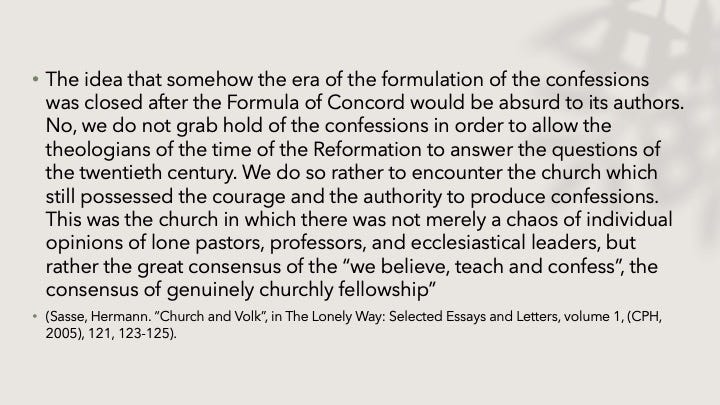
[23]. Although these Lutheran leaders all had way more in common than not (a godly fixation on pure doctrine, infallibility of Scripture, traditional worship and the authority of the Book of Concord in its unaltered form), the falling out was significant on the theological shape that the LCMS would eventually take.
Walther and Grabau parted ways. Loehe had to decide with whom he agreed with more. He chose Grabau. The break seemed more personal than theological, though personal reconciliation between Loehe and Walther did eventually occur. In any case, Grabau was accused of having a domineering attitude. He said that what was the parishioners business is the pastors business. In other words, the pastor has a right and obligation to go poking around in the private life of his parishioners!
It may sound bad to our American ears, but is it justified, nevertheless? Now I wasn’t there in the 1800s, and I don’t know much about the guy, but when you read Grabau’s writings[24], you don’t get the impression that we have a dictator monster pastor, but rather we get a window into a deeply pastoral heart.
At the same time, you can see how a pastor prying deeply into lives of parishioners can be upsetting, dangerous and thus controversial. When asking why Private Confession and Absolution is increasingly unpopular among Roman Catholics, answers range from shame to fear, basically reflecting distrust in the confidentiality maintained by the priest. I personally believe there is a direct correlation between those who see pastor as seelsorger, as opposed to just a theological resource and/or officiant over religious services, AND those who understand him as a father, and good and trustworthy father. The Church has tried to protect her children by putting several mechanisms in place to reduce clergy abuse. Defrocking, for example, is one way. It has two clearly Biblical foundation: false doctrine and immoral life (and maybe incompetence). But we also include the reason of “domineering”, which allows for much more subjectivity. All of us here may think that we know what a domineering pastor looks like, but it’s hard to put your finger on it, especially when the alleged dictator-type pastors are theologically orthodox. In my seminary class, there was one student who was the brightest, but his attitude was sour, negative, and aggressive. The seminary delayed his ordination for years, since he would have destroyed his first parish. Yet he lived a pure life and never spoke heresy.
It’s hard to measure and assess these kind of subjective qualities in pastoral formation. We pray for our precious seminaries to have the divine wisdom to properly vet candidates in order to minimize defrocking based on domineering attitudes. And they do a really good job. But in terms of identifying problematic personalities, there is a fine line between domineering and just being a faithful father who may become unpopular due to his decisions when they are controversial.
Although I ask for my kids for their opinion at the supper table, their input doesn’t outweigh mine as father. And sometimes they don’t like my decision. I am wise to get my wife on board with my decisions, and even the kids, but at the end of the day, the family is not a democracy, and neither is the Church. One needs to be careful with accusations of a pastor as domineering, especially when considering Biblical prophets and apostles who may have failed the tests that we set for pastors today.
Since I have lived in the USA, and I am so impressed when I travel to hear all the mutually kind things said between pastors and the lay people about each other. Its really beautiful.
But, still, even in the best ecclesiastical contexts, are pastors viewed as seelsorgers? Are they willing to be used as seelsorgers? Are they getting deeply involved in parishioners lives?[25]
It takes a lot of patience and instruction for a pastor to convince his treasured flock and precious lambs that much of their “personal” lives are his business, in so far as the life of children in a biological family are the business of parents. St Paul says “For if you were to have countless tutors in Christ, yet you would not have many fathers, for in Christ Jesus I became your father through the gospel” (1 Cor 4:15). He also compares himself as mother, as does Jesus, expressing an intimate and involved connection between clergy and people. Galatians 4:19, calls them “his children” for whom he is “in anguish of childbirth until Christ is formed in you”, much depth to unpack. But St. Paul basically sees himself as the one who chiefly forms them, like he is a mother who is with child. That he is in painful agony in that birthing and formation of them as his children. It’s normal for pastors to suffer in the process of forming his members spiritually. But Paul is playing with a kind of double image here; that precisely through him birthing them, they are birthing Christ – as Christ is being formed in them. It’s a touching image. The point is that a pre-American view of seelsorgering is fully Biblical and historical.
But the good news is that inspite of the challenges of early LCMS in light of church structure, power and authority in relationships between clergy and laity, congregational autonomy and relations to synod, you still observe lovely practice that shows pastors as more fatherly and involved in their parishioners lives than today. The notion today of separation of church and state, seems to suggest that the church has nothing to say about the life of parishioners outside of religious life, meaning the estates of family and life in civil society are off limits to pastors. But this was not the case at all in Walther’s day. Lutherans guided by their pastors freely and openly talked about family size, career choices, marriage etiquette and engagement, financial planning, what leisurely weekend activities were appropriate or not, if and whether you could attend a church of another confession (like at a funeral or wedding), who to pray with. Did you know that when you visited a congregation while travelling you needed a letter from your pastor stating that you were in good standing? Your word was not good enough? The pastor had that level of oversight over your “private” decision. Did you know that even life Insurance was a question that pastor’s believe they needed to speak to? Did you know that what we deem as pastors influencing the political opinions of parishioners, was not an issue in early LCMS, and even until recently?
For those who believe that the Church has no voice in the public sphere: The Old Testament and New are threaded with precedents. Whether Isaiah or Jeremiah, Joseph or David, the prophets warned government officials of the consequences of ungodly decisions and keeping them accountable. The imprecatory psalms praise justice and victory whenever the interests of the Church are promoted in the public sphere. Although such successes are temporal, they are still important to God. On the Two Kingdoms, Luther is clear on the Church’s obligation through the pastor, to not only pray for, but rebuke and advise the prince. In return, the “state” is obliged to protect the Church and her interests in preaching the Gospel and providing Word and sacrament ministry. Accordingly, later confessional Lutherans, even as we encounter them in figures such as Walther or Herman Sasse, pressed against government abuse and overreach in the life of the churches in Prussia[26] or Nazi Germany[27]. In 1974 the LCMS reinforced the idea also, both that there is no truly secular sphere in which the church has no public input, and that Christendom (which the enemies of the church seem to define today as Christian nationalism) is a good thing, and that Lutherans are obliged to keep the civil authorities in check by active political participation.[28]
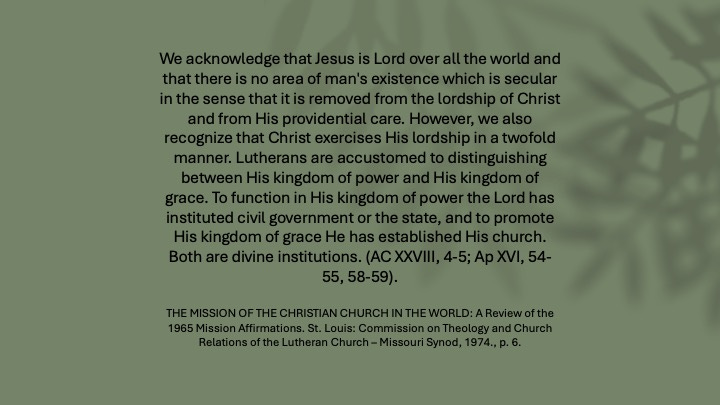
A CTCR document from 1965, which I know is a bit controversial, and we had a somewhat improved version of it in a 1974 CTCR publication, that sought to ensure that, in good Chalcedonian Christological logic, the relationship between the two kingdoms is expressed in a Biblical and balanced way, without separation and with confusion -- still there are some golden nuggets of wisdom in there nevertheless such as this: “We acknowledge that Jesus is Lord over all the world and that there is no area of man’s existence which is secular in the sense that it is removed from the lordship of Christ and from His providential care. However, we also recognize that Christ exercises His lordship in a twofold manner. Lutherans are accustomed to distinguishing between His kingdom of power and His kingdom of grace. To function in His kingdom of power the Lord has instituted civil government or the state, and to promote His kingdom of grace He has established His church. Both are divine institutions.”[29]
The outlandish argument that the Two Kingdoms somehow coexist as two self contained silos, with no effective relationship between, was a foreign concept to our forefathers. It was absolutely inconceivable in Luther’s time to imagine a rigid separation of church and state in the sense of what we have become accustomed to. Luther presumes the tight and overlapping relationship between the two kingdoms. He was not a modern. In fact, the early Lutherans, such as the authors of Madgeburg Confession, elevated the sanctity of the state and government leadership in a way anabaptists and papists could not. Non Lutherans rejected, or tolerated it, but never glorified it. In contrast, the Lutherans thought that if God is the Lord of both kingdoms and His holy hand is at work through both (albeit through different instruments and for different goals), then both kingdoms are holy. Who gave you your glass of milk this morning? God did it. Yes, hidden through means: the one who milked the cow and sold you the product. Who gave you a speeding ticket last week? God did. Through the police officer and administrator at the local police department. Even the executioner is a holy instrument of God, via carrying out the justice of God. Every dimension of life in a society underpinned by Biblical morality and Christian virtues is thus holy, because our holy God is working through God-pleasing vocations to serve us. Both kingdoms are to be hailed as divine ordinances, unless when they contradict the Word of God. In those cases, and there are many, we Christians need to speak and act as if Christendom IS the work of God in both kingdoms. This isn’t advocating social justice or liberation theology. Instead it’s confessing that both kingdoms are God’s, and rejoicing and submitting to the Holy Spirit’s work to help and save the lost, and even our enemies.
This Lutheran high view placed on ordinary society and the civil state actually becomes problematic after the Reformation with the left hand leaders claiming a higher status and power than the right hand leaders, in the political power shifts in the 16th c. European royalty even began to basically view themselves as divine incarnations (!), on equal footing or even higher than the pope. But Lutherans elevated the status of civil rulers not only because of their practical role regarding preserving Christian instruction, worship and virtue, but also, as the Magedburg Confessions says, political leaders and political processes are “sanctified.”[30]
There was never a thing in the minds of Lutherans as a neutral or secular sphere. Again, consider Luther’s distinction between the two kinds of righteousness, and how “civil righteousness” obviously assumes moral expression in the estate of the civil sphere. Up until the Age of Revolutions, any notion of a radical separation of church and state was absolutely undesirable. National socialism and communism were the first ideologies that sought to entirely rob the Left Hand kingdom of the influence of the Creator. Those Christians today who are opposed to envisioning our Triune God as Lord over both appear to be the same people that were all too eager, however inadvertently, to hand over that which is God’s to Ceasar’s, on a silver platter, during the panic of the recent pandemic.
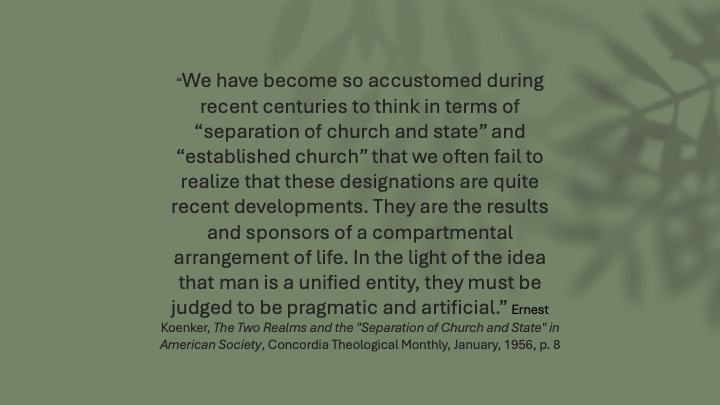
Ernest Koenker in 1956 wrote: “We have become so accustomed during recent centuries to think in terms of “separation of church and state” and “established church” that we often fail to realize that these designations are quite recent developments. They are the results and sponsors of a compartmental arrangement of life. In the light of the idea that man is a unified entity, they must be judged to be pragmatic and artificial.”[31]
Who would not want Christian culture? The CTCR On Civil Obedience and Disobedience, 1967, does not just tolerate but encourages protests and petitions by Lutherans. It even provides a step by step helpful guide on how go about it in good Christian order. The logic and argumentation of how to address abuses in government reflects those of the Magdeburg Confession (i.e. Different levels of crimes or injustices require proportionate responses by the Church, to ensure that she doesn’t overreact but approaches things in the most sensitive way to the consciences of people, and displays due respect for authority).[32] In other words, Lutherans need to be careful in such high impact decisions, and follow the logic of Jesus in Matthew 18 in addressing sin publicly, but with the ultimate goal of actually addressing it, even to the point of political resistance, including in rare cases of taking up arms.
Lutherans who are uncomfortable with allowing their pastors to inform into this arena of socio-political life, and pastors who are equally uncomfortable doing it, wish that the two kingdoms can be juxtaposed. Not only is this not practical nor possible, it is not Christian. It’s easy to just flippantly say that the US is about separation of church and state, and not admit that that was never a reality in America! Remember that the US constitution rhetoric was driven by a desire to protect the church from state interference (protect the Right hand from interference from the Left hand), and not other way around! What has changed in our Church today that tempts us to agree with the liberals that somehow the right hand is an ungodly threat to the left? The founding fathers of America understood that God cares about His Word governing all of the space of both His left and right hands. Unless we are Amish, we Christians have, then, a critical role to play in the public space. It is not an advocation for a theocracy to believe so.
The difference between a theocratic country and a country grounded in Christian culture, is the fact that a theocracy mandates and forces religious principles upon all people in spite of their consciences in all areas of their lives, like an Islamic state. In some places within a “Christian society” you may have shops closed on Sundays, encouraging people to go to church, but nobody is forcing you to get off your couch and do so. Chick Fil A isn’t firing its employees who don’t agree with Sunday closures of their restaurants. One could argue that abortion ought to be illegal everywhere, not because of religion, but because of natural law and science. Fetuses are human and killing them is murder. It is easy for the unbelieving world to mudsling Christians claiming our goal is to create a theocratic Christian nation, since they are irrational and under the power of the devil in a way that we aren’t. But it is bizarre for Christians to support them. Chesterton complained about the Church of England’s tendency to tolerate “underbelievers” but to persecute “overbelievers”.[33] Lutherans enthusiastic in letting Christ’s Church and change society for the better should be supported and not shut down.[34] I have never met one Lutheran in my entire life who had an issue with Augsburg Confession, Article XVII which rejects trying to materialize the heavenly kingdom on earth through political forms.
Yet, the greatest problem of a theocracy for Lutherans isn’t even moral, it’s theological. It can lead to works righteousness: faith in Christ is not sufficient for salvation, but the political form that we adopt, or political party affiliation, is also somehow necessary to secure a place in heaven. But the argument that natural Law, logic, true science and reason, which support the vast majority of Christian notions as they apply to the public sphere, should govern the language, content and decisions in the public sphere is NOT theocracy.
Back to Walther: question of family and political life were common points of discussion, and played into Walther’s unspoken expectations that his pastors practiced seelsorgering. Although none of these moral issues or life issues are obviously addressed in the Book of Concord, they were still seen as something that needed to be discussed in the public sphere, and required a Christian response. Today, unless people ask us explicitly what we think about a heated topic, we have a hard enough time addressing in church abortion and related issues like fetal stem cell research and vaccines, sexual perversion and gender pronouns, that to raise topics like how to spend your money in God-pleasing ways, retirement decisions that maximize service to God instead of self, appropriate careers that don’t compromise the dignity of either sex, or couples choosing not to have kids or when to have them, just seems absolutely impossible. When was the last time you heard the topic of capital punishment or birth control raised in bible study?
But seelsorgering to individuals naturally spills into “seelsorgering” to groups, and can be compared to the case of the necessity of individual confession leading to the necessity of corporate confession, as we do every Sunday. If talking about these issues with individuals is important, why not also in the larger community?, Seelsorger-minded pastors tackle these topics publicly and not just privately.
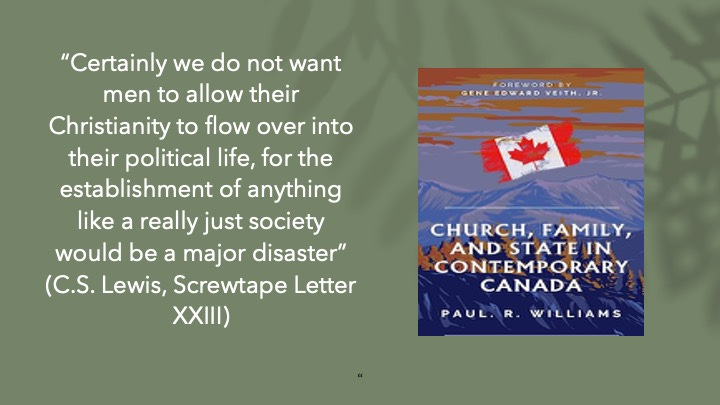
Luther Classical College is already tackling these kinds of questions boldly and without compromise, in good ole fashion Missouri ways, through our Ad Fontes, Christian Culture conference and magazines. The popularity of these from those not even interested in classical Lutheran education, but just loving our topics, is pretty incredible. It shows that people are hungering for help in dealing with life as it is applied in the three estates: seelsorger material.
We at LCC hope to help set a positive example. Even while I was a professor in Ontario, recruiting at my seminary, I would raise the issue with congregations that we all have obligation to grow seminary student bodies. That it is all our jobs to encourage Lutheran boys with whom we have no biological ties, but may make good pastors one day, to consider seminary. I got the impression that I had invaded personal space. Yet our spiritual family is even more family than our biological ones. After all the blood of Christ is thicker than biological blood ties within our physical families. We need to regain such early Church communitarian views.
The importance of pastor as seelsorger, in the estate of family, is clear when examining, say, the stats of mental health and pornography. 70% of American men and 40% of women, regularly use porn. The number is lower but significant still among church going Christians. The subject of family and sex is a hugely important field that pastoral voice needs to speak into. When it comes to demonic possession and oppression (allegations of which are on the rise, and if you want to hear why I think so, you can buy my new book), entry points of demonic activity include not just false teaching about theology, occult practices, etc. (first estate) but also sexual perversion and drugs (pertinent to the second and third estates).
In 2 Cor 10, the weapons of spiritual war are presented as equipment that resides in the pastoral office; but intended to be shared with the laity, meaning it’s not going to work as well unless clergy help dress them and train spiritual soldiers. If pastors wish to fight the spiritual war alongside members, and help them fight, they need to both exemplify this Christian soldiering [as St. Paul tells the flock to “imitate me” (1 Cor 11:1) while He could have said just imitate Christ] but also deliberately address these issues throughout their ministry.
Pastor Ramirez, at an Evangelism conference a several months ago in Wyoming, did an excellent job discussing the new interest among young people, especially men, in topics such as birth control, role of sexes, Christian etiquette, appropriate gender related activities. Youth are crying out for seelsorgering. They are not just asking intellectual questions to satisfy curiosity, they want help in how to make difficult decisions. We talk about saving our youth, but how many are courageous enough to meet these “lost boys” where they are at, and to delve into the tough topics instead of tiptoeing around them, even if we lose a few who get offended? Our college is trying to do that (though we could use a little more help from the larger Church Body), as we get flack for being too cultish, as soon as word hits the street that, say, we raise questions about modesty in dress, or publicly praising fatherhood and motherhood. We have been accused of being sexists for saying that one of woman’s primary roles is having children! We have been called chauvinists for arguing that men need to rejoice in the uniqueness of being man.
But though pastors inserting themselves into topics pertaining to family is controversial, they are still justifiable in the mind of most Lutherans. We don’t say “wait a second, the church has no business talking about family life, gender roles, etc.” even though we find it really awkward when they are addressed and discussed.
But when it comes to the state, which includes politics, we back off.
Yet pastor has as much an obligation to speak to the third estate than to the others. Some Americans treat politics with a jingoist religious zeal (like America is the new Israel), which is obviously bad. Others make a similar error by treating enlightenment ideas like egalitarianism (that have some Christian roots, but unbalanced consequences) as sacrosanct. It makes it difficult to seelsorge within the third estate with some of these idols in the way. But discussion still needs to happen, and having no discussion is usually the worst scenario. Like in any family, issues that people do not want to talk about are precisely those that need to be addressed the most.
To assume that parishioners need no coaching in these topics is irresponsible. You would be hard-pressed to argue that St. Pauls’ words in 2 Timothy 3:6, “All Scripture is God-breathed and is useful for instruction, for conviction, for correction, and for training in righteousness, so that the man of God may be complete, fully equipped for every good work” (2 Tim 3:17), that “training in righteousness” is not referring to civil righteousness. The response to COVID was a perfect example of clergy being unprepared to respond to the necessity of addressing the juncture between faith and civil life (i.e. politics) in the lives of their congregations and each of her members. Little guidance was provided to faithful Christians as to how to react to, say, certain vaccines that the Church, up until then, unhesitatingly condemned due to her stance on abortion. Clergy were disinterested or afraid to speak into the [35]personal lives of their members being unaccustomed to do so. But to suggest that moral, and thus, political positions, are a matter of adiaphora is nothing short of an endorsement of soft antinomianism. In the recent American election, Christians were free to not vote for Trump, but it was hardly justifiable for any of them to vote for his competitor, arguably a communist, who had a portable abortion clinic present at the democrat convention in Chicago. In other words, pastors should feel free to tell people how NOT to vote, (that is a totally appropriate application of the third use of the law in the third estate), which is not the same as telling them how to vote.
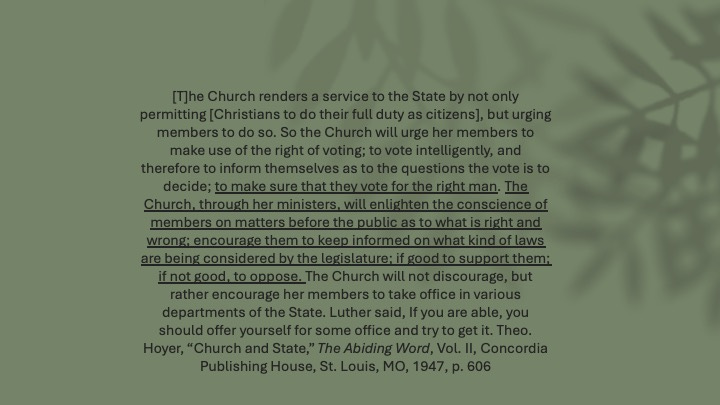
[T]he Church renders a service to the State by not only permitting [Christians to do their full duty as citizens], but urging members to do so. So the Church will urge her members to make use of the right of voting; to vote intelligently, and therefore to inform themselves as to the questions the vote is to decide; to make sure that they vote for the right man. The Church, through her ministers, will enlighten the conscience of members on matters before the public as to what is right and wrong; encourage them to keep informed on what kind of laws are being considered by the legislature; if good to support them; if not good, to oppose. The Church will not discourage, but rather encourage her members to take office in various departments of the State. Luther said, If you are able, you should offer yourself for some office and try to get it[36]
Christians sometimes need to be told what to do. That is what it means to preach the Law (in light of the critical Canadian election last year, in an effort to dissuade Lutherans from voting for the communist Prime Minister who sadly was elected, one district of Luther Church Canada published a “Christian Election Guide” telling people the kinds of things they should be thinking about in casting their vote. I have left that for you as a resource).
Last summer, conservative Baptist reporter and author, Meghan Bashan laid out topics that at first glance do not appear to have spiritual applications. In her book SHEPHERDS FOR SALE: HOW EVANGELICAL LEADERS TRADED THE TRUTH FOR A LEFTIST AGENDA[37], she exposes the despicable depth of corruption in Christian higher education, with multiple top schools having sold out to billionaire influencers and anti-Christian foundations that deliberately seek to poison America with cultural Marxism.[38]
Due to a vast array of reasons, pastors are often vulnerable to these leftist agendas and many have shockingly and rapidly compromised on “Me 2, LGBTQ, climate change, COVID-19, illegal immigration, abortion, and CRT. The striking success of this deliberate leftist agenda is manifested in Christianity Today, Billy Graham Association, the Council for Christian College and Universities, or Southern Baptist Convention, to name a few.
In that list, most pastors have hopefully tied into sermons, offered prayers about, and done bible studies on homosexuality and abortion. But what about CRT (the demise of logic and rationality), economic socialism and DEI (with objectives against Christian values, Christian culture and Christendom), Me2 (feminism), immigration (involving multiculturalism, the infiltration of Islam, and how a liberal agenda IS a theological agenda). National security is a very important issue for the Church, not just due to love for our neighbour’s physical well being, but also in protecting her interests like the freedom to preach the Gospel. It is really hard for church to be church, and preach the Gospel when she dwells within an Islamic or communist state! A political view on this (and political forms that best protect the Church and supports its growth) is obviously not a mark of the Church, but it is an expression of the Church, not just individual Christians, but Church capital “C”. Thus “Synod” has a role to play in public space.[39]
Hopefully 4 years after the pandemic, most of us have considered the spiritual dangers of blindly complying to government mandates during an alleged plague. Hopefully we have taken to heart father Luther’s words on ministering during a real plague. But climate change? What does that have to do with religion? How could the devil be using this apparent threat to close churches, divide families, and usurp fatherhood? Did you know that Sweden is closing 7 historic churches during winter months due to mandates on oil heating.[40] Heating churches is apparently contributing to global warming. So the government is requiring their closure during several months of the year. Nobody would have thought a political issue like climate change could be so deliberately an attack on the interests of the church. Sweden was once a historical Lutheran powerhouse, but now, the church is totally unprepared to address these issues theologically or politically. If we don’t talk about these supposed secular issues as soon as they come up, as Christians led by pastors, and view them through spiritual lenses, we will continue to be unprepared for the devilish consequences.[41]
There is no shame in pastors coaching members in political matters. In fact, I would argue its their obligation.
Lecture 3
ARGUMENTS AGAINST THE NECESSITY OF THE SEELORGER
Yet, now, I would like to address the arguments against truly practicing seelsorgering. I used the word “truly” because what Lutheran pastor would openly criticize the idea that he can always improve in being the father that He is to his spiritual children? But to actually feel comfortable doing it, is another thing. The resistance to pastors from pastors behaving as seelsorgers, who help guide and shape their members in living their lives, especially as it applies to civil righteousness in the third estate are twofold (“we over think what God wants us to do, complicating the simple ethical scenarios which involved decisions which are much easier to make than we want to believe):
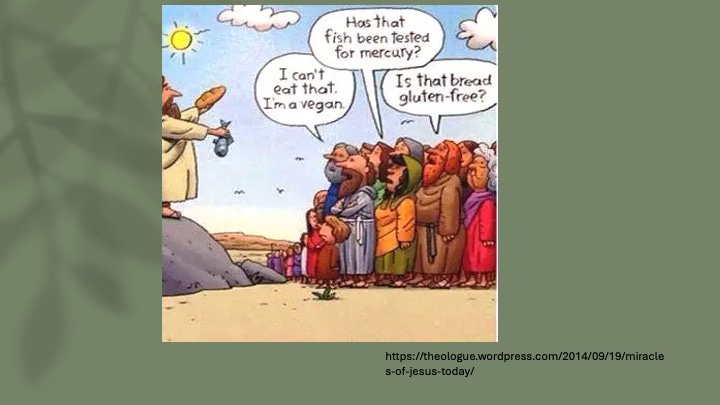
1. Firstly, that most of Christian living is a matter of Christian freedom. The way antinomianism has been able to dupe Christians to think that the pastor, and thus the Word of God, has less authority than it does in questions of Christian living, is with the trump card word “adiaphora”. As Drs. Preus and MacPherson point out in the new translation of the Magdeburg Confession: the abuse of the notion of “adiaphora” was used by confessional Lutherans in their caving into government regulations when they should have pushed back. Even Philip Melanchthon, (theologically orthodox but renown for his political tact, with the downside being more susceptible to compromise in the practice of theology), gave into these temptations. But when the only thing that really matters is faith in Christ as your personal Lord and saviour, a practice of that faith doesn’t only take second place, but even very little place in the life of a Christian. For example, in the last American election, through all sorts of virtue signalling and public messaging the democrats wanted to be identified as the pro-choice party. It wasn’t just one item of their mandate, but a major identifying characteristic. Even if a Christian believes other positions for which that party stands are more Biblical than the emphasis place upon them by the Republican party (like addressing issues of poverty, as an easy example), the issue of murdering children needs to take a primary spot. Very few pastors would rebuke voting against the democrats (which is, again, not a voting for republicans, since you can always just destroy your ballot, which is a legitimate act also). Thanks be to God that most LCMS pastors would not have voted for the democrats this last election, but sadly most would not share the reasoning behind that decision with congregations (out of fear of pushback), and even more sadly, because they thought that it was wrong to do so (they thought that even though they were telling the truth about whatever the political topic happens to be, theologically they were mixing the two kingdoms, which meant, silence was preferable over vocalizing truth).

Often the justification today in dealing with the awkwardness of the matter, is that whether or not you sin in casting an ungodly vote, it’s forgiven anyways. I knew pastors in Canada who were quite open with me in saying that they didn’t want members to know why all the COVID vaccines were morally controversial, because they didn’t want to put their members between a rock and a hard place, aggravating their consciences, and forcing them to make a decision. It’s a very twisted argument. Its also a denial of the fact that we are commanded to repent of both things that we have done wrong AND things that we have not done right, in every field of life. We often don’t realize that we should have done something better unless somebody points it out to us. Our conscience may be unaware because it’s a little lazy, or it just doesn’t have all the information: so that a Christian is deprived of necessary information for a fitting confession and God-pleasing repentance because a pastor or friend didn’t have the courage to tell them what they happen to know about the subject. The bottom line is that those who took this position thought they were being loving by not telling them the truth. By not pointing out their sins, they deprive them the chance to feel guilty for those sins. Well guilt has a divine purpose in our spiritual growth and the spiritual battle. Luther considers Satan a divine tool for God’s saving purposes, because he is a great “preacher” of the Law, and accuser (Satan=accuser). Certainly the devil has evil intents for flaunting the dirty laundry of our sins in front of the noses of our souls, but that doesn’t stop the love and grace of God in using bad for good (as was the case with Joseph’s brothers, with Joseph confessing, “you intended it for evil but God for good”). We should welcome suffering and rebuke, as needed discipline of God. Not telling someone the truth because you are hurting their feelings does not represent a spiritual victory in our battles with darkness.
Besides, consciences are fallen too, and most can use some help in their formation. The secular psychologists claim that psycho and sociopaths don’t have consciences (which is not Biblical) or that their consciences are not developed (which is kind of Biblical). If decisions based on conscience are informed, at least partially by, communal values held by individuals, do you see how difficult it is for good decisions to be made based on conscience in a pluralist post-modern society? Today in our fragmented multi-cultural Western society people often don’t feel guilty when they should. That is way less likely in a homogeneous society, where people have the same morality and culture, and, therefore, feel guilty for the same kinds of sins. The secular discipline of ethics is largely about trying to form these consciences. We Christians can do better. But when pastors don’t talk about the issues individually and publicly, they are not even helping their people make godly decisions on their own, by neglecting to help form the necessary Biblical and Lutheran framework for them to do so! So even if you think that the third use of the law decisions should be considered as very individualistic and contextual, without some guidance, people aren’t able to make as responsible conscience-driven decisions in a complex American, often anti-Christian, landscape today.
And this ties into the next reason seelsorgering is not seen as essential (or even treated as dangerous) in the minds of those who embrace or flirt with soft antinomianism or versions of it,
2. “Life is just so grey and complicated, let’s just ignore it and trust God to deal with our questionable decisions. It’s covered by Christ’s blood anyways”. There is some truth here when dealing with ethics and the grayness of life, but it doesn’t mean there is not a Christian response to any of it. If we know canned pineapple is produced by children labourers in the third world, we still need to take that seriously and it should change our spending habits, EVEN THOUGH if you did the research, you would find most of our imported food from outside of the Western world is tainted by the same moral and ethical concerns. With the COVID injections, we heard that because other vaccines that we had all blindly taken were also tainted by fetal stem cell technology, why worry about these ones? I am the first to admit that while deploying oversees in the military I took, without hesitation shamefully, lots of vaccines, that I should have opposed for the same reason that I opposed the COVID ones. Yet I have repented and publicly. But many instead console themselves with Luther’s “sin boldly believe more surely” statement, by taking it out of context. Today it is used to mean that you realize something you have done was sinful, but that you shouldn’t feel too bad about it, and not really repent of it, believing that you had no other choice. Such logic gives us permission to make the same sinful decisions again, without even going through the intellectual and spiritual work as to discerning whether or not my decision is driven by right motives: i.e. grounded in true crisis of conscience, or just laziness or cowardice. Now there is some room for context to play into decisions that may vary from one situation to another. One Christian may eat meat sacrificed to idols while another doesn’t. St. Paul addresses that, and the reasoning behind it. But today, there appears to be a post-modernity element here where you can say context dictates different responses without being required to offer explanation or serious justification. Instead, the pietistic post-modern and Western hyper-individualist Lutheran asks “who are you to judge?” Ignoring the raising of such questions in our parishes and the lives of individual members suggests that not only do I get to decide the context, but I don’t even need to talk about it or justify it to God.
One problem with this is our consciences only work rightly when they are rightly informed. So back to the idea of pastors depriving people of information that would bother their conscience: means Christians can in “right conscience” make a decision that is ungodly, and feel good about it. Again, they can make a sinful decision while not feeling bad in the least. It’s the reason why militaries only let soldiers have the bare information to get the job done (on a “need to know” basis). It’s largely because they want them to follow orders, without hesitation, and not let their conscience can get in the way of that process. A soldier second-guessing orders because he is wondering whether blowing up that village over there is morally justifiable, not only puts his team at risk but can jeopardize the whole mission. Conscience is powerful, and especially when well informed. God made it that way. Yet in the end, with the individualistic approach to spirituality in America, the idea is that “I interpret the word of God as I wish; I determine the context. MY conscience almost exclusively comforts or rebukes me. I am free in Christ to live how I interpret that according to a general reading of the 10 commandments”. This careless and arrogant attitude coupled with a pietism that doesn’t appreciate pastors fully for what they are and can do, results in pastors who are uncomfortable speaking about these subjects; or pastors feel like they are about to make salvation seem conditional on non-doctrinal decisions (like, again, the hesitance to give advice after private absolution).
Again, both of these responses amounts, or at least leads, to a version of soft antinomianism, where the Law is no longer needed nor applied to the redeemed person. So much for the fourth part of catechism on Baptism on daily drowning of Old Adam!. It also diminishes the importance of sanctification and suggests that there is no pastoral role to play in the formation of the sanctified life of believers, which includes training in righteousness. Soft antinomians express an unbalanced view of the sinners that we are, and our ability to fight temptation and make godly decisions. Proponents think that spiritual completeness in possessing the alien righteousness of Christ means there is little or no need for guidance on how to live life. “Forensic Justification is all that we confess to be important: that is the Gospel. So what else is necessary? To talk about how to live life, is adding on to the Gospel, which is works righteousness.” This logic leads to a Gospel reductionist, “cheap grace” view of the work of Christ, or displays faith in the lie that salvation means you are actually no longer much of a sinner. The error represents a reaction to pietism which placed too much emphasis on being a saint and progress up a ladder of good works, and yet it kind of buys into it, by assuming that Christian holiness is a hidden and highly individualized phenomenon, best left to individuals with the Holy Spirit to figure out by themselves. Yet any father of a family knows that raising children takes work and lots of intimate conversations and involvement. They also know, even if the kids don’t, that the kids need help in figuring out how to live. Now the way your kids behave does not change their status. Whether they are lazy ungrateful slobs, versus obedient children, doesn’t change that they are still your kids.[42] But good fathers seek to improve their children and help them live up to the family name. You care about how they live inside the family system and outside (in all their vocations, throughout the other estates). You want them to be good witnesses and representatives of the family; that they spread the good reputation of the family name to the world around them.
The parallels in our spiritual family, and our status as God’s children as saints, yet needing help to live as the saints that we are, due to the sinners that we are, is hopefully clear. Soft antinomianism is often fueled by laziness or delusion. Its like accepting that your kids are just “good enough” in spite of bad behaviour and a poor representation of the family. True Christianity celebrates our status in Christ, but also the right use of law to address the flesh.
So UNLESS you believe forgiveness is all that needs to be said, and that no coaching is needed in spiritual progress, then pastors and people need to be passionate about seelsorgering. It’s the reason that I have always chosen small churches over large ones. I need my pastor. I need him intimately involved in my life (even if, as a sinner, I don’t WANT him there). I need to confess my sins and struggles to him, and have him keep his eye on me; so that he can curb my life and be my guide. Its harder to hide from him in a small congregation. After all, when we choose our doctors, we want the one who, both, has a great reputation due to competence, but also one (all things being equal), who has a small client base, so you get maximum attention. Yet why when it comes to churches, strangely, we all want to join the biggest one?
But when pastors are hesitant to guide people in the production of good works (believing that only right faith in forensic justification is adequate in making all the fruits simply grow, and doesn’t need some guidance, or pruning, by the pastor), they would be wise to make a distinction between sanctification and good works. There are all kinds of good works, but there is one sanctification, and one sanctifier. And addressing issues of sanctification is definitely something that no-one would argue falls outside of the parameters of the pastor’s business. But sanctification needs to be distinguished from good works. The Reform tend to equate sanctification and good works, and sometimes Lutherans do as well. That is why we talk about being saved by justification and grace alone, with no contribution on our part, and now, out of gratitude for God’s grace, we choose to do good works, And thus sanctification is understood as the part that you do, or cooperate with the Holy Spirit to do. Talking about sanctification seems to be a focusing on our deeds, instead of Christ’s. We may feel that we are being self righteous by talking about sanctification since it seems like we are celebrating ourselves and our good deeds.
To console the consciences of those who feel guilty talking about sanctification as somehow betraying the Gospel of Justification, we can ask ourselves, “What is sanctification?” The word “Sanctus” comes from the word “Holy”. What is holiness? It’s hard to describe. “Separate”, yes, since things pertaining to God’s nature are different from anything conceivable related to creation. But what is it? Dr. John Kleinig often points out how defining the “glory” of God is equally problematic. It’s hard to describe, since it’s so otherworldly. It has to do with concepts pertaining to the nature of God with no parallel “on earth”. Its totally unique, so we have no common references for it. We are left with only describing what holiness looks like, but are very limited. So Dr. Kleinig points out that “holiness is the glory of God revealed”, while “the glory of God is the holiness of God concealed”. Due to this limitation, it’s also hard to intellectually grasp the attribution of holiness to man, or the process of being made holy. Lutherans rightly run from any ideas of Lordship Salvation: “Jesus became my saviour, through justification, and now he becomes my Lord, through sanctification”, because it makes it seem like salvation is incomplete. Yet there is room for spiritual progress in Lutheran spirituality. Although completely redeemed and thus fully holy, there is a sense in which we are incompletely sanctified until we get to heaven. Sometimes sanctification has been defined as “ongoing justification”. That partially solves the problem for Lutherans: “I keep getting what I already have”. It’s a paradox. We Lutherans like that. Its mystical, so we can say its sacramental. We like that too. We are both justified and sanctified at the same time, both complete and yet both ongoing at the same time, like two sides of the same coin. But though there is a time and place for this analogy (namely that it seeks to ensure those two processes aren’t juxtaposed from one another), it doesn’t give the whole picture. Justification is easy to define. Forensically: we are declared righteous: the guilty named innocent. And this imputed righteousness is external to us, as so clearly articulated in the Formula of Concord. We are not justified by internal faith or spiritual changes, like in the Ossiandrian sense. But sanctification as a consequence of this, as its offspring or subsequent step, is much harder to handle. Simil iustus et pecator doesn’t help either; since we are 100 percent saved and “made” holy, and yet we are still “becoming” holy.
Sanctification is hard to grasp intellectually. Good works, on the other hand, is easier. We can see them. They are also something we do, yes through the Holy Spirit in us, but we are, in a sense, a cause. We choose to resist the Spirit’s work in our lives or not. We choose to walk the old lady across the street or ignore her. Sanctification is different. It is something that happens to you. You are entirely a passive recipient, just as you were when you first believed, were baptized, and were saved. Sanctification is that you are made, and being made, holy. The glory of God is mysteriously at work and present through, in and on His holy people. How? By the means of grace. You share in God’s holiness, even participate in His glory, and are made holy by His Word and Sacrament. In as much as a newborn baby has no choice in its birth from the womb of its mother, so was your experience from the womb of Mother Church at the font of baptism. In as much as a baby sucks life giving milk from the breast of its mom, so it is with you as you open your mouth at the divine altar and the Lord enters in. Through such sacramental acts that forgive your sins, sanctification is happening. It is really the active result of the ongoing justification that happens by the declaration of God’s divine word on God’s elect. Good works are then a result of this, or these, processes. Faith is increased by the justifying and sanctifying power of our Triune God, and good works are its fruits.
The Bible makes the distinction between sanctification and good works by saying that we are MADE HOLY in order to DO good WORKS:
The one who is cleansed of sins, is a sanctified person, useful to God, and used by God, through His good works. That means that when pastors help people examine themselves according to the Law, in all three estates, and even in the nitty gritty personal details, more good works are being produced through the labour of God.
Underscoring the importance of pastor as Seelsorger assumes that pastors are called to do more than simply absolve sins, though that remains chief and the crown of their divine ministry and holy office. In light of the threat of soft antinomianism, permit me to take some time to pitch the argument that, although we are 100 percent justified and thus, “saint”, that divine promise and reality doesn’t preclude the fact that there is a spiritual growth and thus “progress” involved in the Christian life. We are sinner/saints, completely, both, simultaneously and yet we progress from sinner into saint.
I married a convert from Pentecostalism. And in order to get my mother in law’s approval I agreed to one session of premarital counselling with her pastor. When asked where my relationship with God was on a scale of 1 to 10, I was a little snarky. I said “what do you mean?” So he said, “you know, most Christians are around a 5 or 6, he said he was maybe around and 8 or 9….” So I said, “well I’m a zero and a ten: totally deprived sinner and fully fulfilled child of God as a saint”. He really hated that answer.[43]
But we are a 1 and a 10. Otherwise, the words of St. John does not make sense about Christians being perfect and having no sin, and yet we are deceivers if we say we have no sin (1 John 1:8). But that is not the end of the story in terms of our experience of spirituality on earth. Just like a husband and wife who have a healthy relationship and communicate a lot with each other, and exchange lots of love, and intimacy, etc. are as fully and equally married than those who don’t (where there is no talk, no romance, no deep relationship), there is still room for growth in either marriage. We are declared the righteous bride of Christ, but there is still room for growth in the relationship from our end. In fact, the wedding that happened in Holy Baptism, commences a relationship of exploring how wonderful our Bridegroom is, until the day we die and we enter glory. We talk to Him in prayer. He talks to us in His Word. Our marriage is consummated weekly in the holy Eucharist. Husbands and wives are married once, and reminded of that marriage daily, and yet we could say that we are “becoming” increasingly married, the more we live together, get to know each other, and deepen our love for one another. Marriage is thus a mystery, and points to a higher mystery, as the Bible explains. So yes our identity as Christians is a paradox, being fully saint and yet still becoming, and any emphasis on third use of the law is driven by this acknowledgement. What makes the concept of sanctification different among Lutherans from all other denominations, and protects us from self righteousness is our Christocentricity and the fact that the Law always still accuses (lex semper accusat). We are not perfect and are constantly reminded of our sins and full dependence upon Jesus for all things. For this reason, where other denominations tend to slip away from spiritual growth happening at the foot of the cross of Christ, for Lutherans there is no room for ego and pride, since there is never a reason to boast in self. Any boasting happens in Christ.
As the sainted Dr. Kurt Marquart once said, in his criticism of the Finnish school on their take on deification or theosis, “all right talk [of the subject] must pass at least a twofold test, to be genuine theology of the cross. The first is whether God and His life are accessible directly, or only in the crucified and risen Savior, and in His gospel means of salvation….The second test is whether [it] is driven by the downward movement of God or by the upward movement of man.”[44]

I have a scale here with x axis showing time and y axis spiritual growth to demonstrate how we pass these two tests. For most Christians they see spiritual progress according to the top, blue line. Once converted, like I give my life to Christ, I start up in the middle somewhere (above murders but below Mother Theresa), at say a “5” and except for a few bumps along the road, I get better in my spiritual state. That is religion of the Law. But with the religion of the Gospel (the red line), you THINK you start up here, at, say, a 5. But as you “grow” in your faith, you find that your experience is a descent. In the acknowledgement of your sinful state (that it is way darker than you thought at first), you mature out of self-righteous kinds of thinking: you stop crossing off commandments off the bucket list of your spiritual life thinking you have mastered any one of them, (since you don’t lust after women like you did as a youth, you are content with your wealth level and therefore don’t covet anymore, that you finally have a regular devotional life and are never tempted to skip church on Sunday, you got the third commandment down pat, and fulfilled, and you only have, say, 3 or 4 left to master before you die). No! Instead, the mature Lutheran sees himself as descending on that scale through time. We go down, we get weak (as Luther says, “God came down….in order to lead us back into a knowledge of ourselves”[45] so Christ can go up, and we with Him, as we are revealed and made strong in him!). Spiritual growth is not a ascending but descending experience! The bumps are the self-righteous moments in our life when we THINK that we have become better, and God deals with those through verbal rebukes through the Bible, sermons and pastors, or personal afflictions like suffering. All things that make us feel uncomfortable in this process should be considered as suffering, and so suffering is what pushes us down that scale; down to the bottom: to the zero mark from the perceived 5 starting place. “May I decrease so Christ can increase”, John the Baptizer says. And that’s what we say too! When we find ourselves down at the bottom: at zero, we are a 10 in Christ! The more we examine our lives the more sin we see. And if you have a hard time believing you are a sinner, well, remember Don Matzat of the original Issues Etc? He said, “You can’t name any more sins? Ask your wife and she’ll tell you some”.
Like a tree that stretches up at the sun with is branches bearing fruit for other to eat, it grows closer and closer to the sky, not cognizant of its fruit since its disposition is directed towards the sun, the mature Christian isn’t producing fruit on his branches for himself to eat (by, say, introspection), and isn’t really aware of that fruit as others munch on it. The immature Christian talks a lot about himself, tracking his good works, boasting of spiritual progress, doing spiritual gift inventories and obsessing over his spiritual talents: eating his own fruits. But when others see those fruits and praises them, the mature Christian is kind of surprised that anything good comes from his piece of wood, out of that rotten tree, and rejoices at the miracle of it all. Like when Christ compliments the disciples on their good deeds, they naturally ask, “Lord, when did we do all these good things?” --they weren’t even keeping track and noticing in themselves-but the Lord noticed! For its the tree of the cross, producing the fruits of the spirit, through the body of Christ affixed to it, the body that you are, a body that you possess and am possessed by, which is the thing doing all that work.[46]
The moment we acknowledge some progress is involved in the Christian life, you need to acknowledge some “qualitative” change in a Christian. Again, we Lutherans are uncomfortable with the notion, understandably, since we don’t want to be lumped together with the “holiness heresies” of Wesleyan perfectionism which claims that the Christian human is intrinsically of better quality than that of unbelievers, due to the indwelling presence of the Holy Spirit and some lack of both actual and/or original sin. Yet we are not talking about infused grace, as something salutary, reflecting Roman Catholic and Pentecostal views of a holy substance inside you that grows more and more, making you more and more holy in your holy rolling. We forgiven sinners are already holy as we are being judged and assessed by God IN Christ who is holy. And yet we still do change, transfigured daily by Word and sacrament. Otherwise, what do we do with the language of “mortification”, “renewal” and “healing of our nature” of Luther and the Formula? Chemnitz writes: “The healing and renewal itself is not such a change that is immediately accomplished and finished in a moment, but it has its beginnings and certain progress by which it grows in great weakness, is increased and preserved.“[47] Lutherans don’t slip into the “holiness movement” direction when any internal change is rooted in Christ’s works. Because sanctification isn’t just about our status before God, but also involves internal spiritual growth, a growth that is manifested in good works, there is a “qualitative” element to Christian growth and maturity.
We can’t ignore this reality. We confess this when addressing the distinction and role in Christian life between the sacraments of holy baptism and the Holy Eucharist. Baptism happens once. But its still ongoing. Unlike Roman Catholics who limit its use to a past event (just forgiving original sin and having little more to do with the here and now), or Protestants that treat it as a symbol of truth, for Lutherans, through daily contrition and repentance, we return continually to our status of being baptized, as a source of Christian comfort. But the Eucharist is more clearly an ongoing act. We don’t simply receive it as a reminder that we are already forgiven, but that we are being forgiven.
What is noticeable about Lutherans who deny salvation causing a spiritual process, and those soft antinomians, is not a verbal support of the sacrament of the altar, but a lack of sincere conviction that it is necessary. Their silent thinking is “If baptism suffices, then why do we need to keep communing?” They may argue for a need for the eucharist, and weekly, since its Biblical. But in their heart of hearts, it’s not understood as essential. Instead, the Lord’s Supper is essential for more reasons than we able to conceive, for it does change our hearts, making them more like Christ’s.[48]
So now lets look at three verses that speak to this paradox:
Here we encounter the interchangeability of the notions of justification and sanctification and baptism. Ultimately the three are grouped and even equated together. But I think it is notable that sanctification is the second in the list and justification is the third. You’d think it would be the opposite (putting justification first). I wonder if St. Paul does this in the Corinthian context of immature holy rollers who overstate spiritual growth, expressed in “penta-Baptist” self-righteous ways. But for our purposes (not to overstate the significance of the listed sequence of the terms), it informs on how all three events or processes are completed as a final act (even “sanctified”: you are completely holy, suggesting no progress happens). The fact that all three are of the passive or middle voice, means the subject is a passive recipient of an act done to them (ie. God does the work on man all by Himself). BUT with an aorist (instead of the perfect or imperfect) there is a subtle deliberate silence of when the action takes place and how long it lasts!
2. Now let’s compare this with Heb 10:14:
“Made perfect” is in the indicative, active perfect. It has been done in the past, by God alone, but with present effects. “Being made holy” or “sanctified” is the present passive or middle particle. Both are saying that the divine saving and sanctifying work has been done to, and for, you, as the passive recipient. Yet one says the process is complete and the other, ongoing. It is difficult to reconcile logically. But Lutherans say both, because God says so.
Incidentally, it happens to coincide with our human experience (although one should always be careful judging any theological truth based on human experience). We live by faith believing that we are perfect, in spite of our experience as sinners that, in the department of holiness, we are not even close, or it hasn’t even started happening at all! But in reality, consider it this way: we are in a sense growing into the clothing of Christ gifted to us by grace, the robe of righteousness given us at baptism. Our life of sanctification is God growing us into those clothes. The good works we produce which God uses to change the world around us, are evidence of us getting comfortable in that foreign attire; while as sinners its obvious to us and others, that we are squeezing ourselves into clothing a size too small or making an x-large fit a medium sized body. Even though its now our clothing, its always going to be an uncomfortable fit until we enter glory. But it still does the job. Christ lives in me and I live in Christ, and good works demonstrate that. Yet sins demonstrate that the process is not yet complete and never will be until the final resurrection.
3. Our final verse is 2 thes 2:13. “But we should always give thanks to God for you, brothers and sisters beloved by the Lord, because God has chosen you from the beginning for salvation for sanctification by the Spirit and faith in the truth” (NASB).
God saved you via divine election through belief, which I would argue corresponds with justification (i.e. having faith in the promise of what Christ has done for us) but “for” the purpose of “the sanctification” of the Holy Spirit, implying the process of being sanctified. So again, you are chosen by God to be saved, a passive recipient of sanctification and faith/belief, yet where one process is a completed act[49], and the other is ongoing (being sanctified). But both are interdependent: we are being saved through the sanctifying work of the Spirit and through belief in the truth. Now some exegetes debate whether or not the preposition “for” in “for sanctification” should actually be translated as “through”, as in “through sanctification”. “For” would imply that you are saved for the purpose of being sanctified and believing. The idea is that God is saving you and sanctifying you so that you can be a fitting worshipper of Him and “worthy” inhabitant of heaven. “Through” suggests that sanctification is a cause of salvation, which Pentecostal types really abuse, BECAUSE they equate sanctification and holiness with good works and holy living. They judge faith by works; salvation by external observances of holiness. So if you smoke or drink, and participate in any unholy works of their estimation, this means you are likely not saved. They judge whether or not you are justified by your sanctification made visible by your external good deeds. But for our sake the distinction between “for” and “through” is not that important when recognizing that sanctification and holiness is a HIDDEN phenomenon, based on what God does inside us by His Holy Spirit through the means of grace. Certainly good works are a fruit of sanctification, but those works are by no means the foundation of sanctification. The fact that we are not to judge makes for a more humble and compassionate church. The good works shown by, say, a recovering Christian alcoholic who has been raised by terrible abusive parents may not appear to us to be as spectacular and as obvious as those from a Christian who has been raised by wholesome parents. The baggage of the past may make them less refined in their Christian manner. But one beautiful thing about being Lutheran is that a gracious God, not man, is the ultimate judge of the quality of good works or the tree from which they are produced.
These three verses are examples of how the Bible shows salvation as a completed process and yet ongoing, as we exist in time. Summaries: 1. We are not yet dead, so we are continually being saved[50]; 2. Part of that being saved phenomenon means there is an element of Christian growth as there are two logically distinct things going on here: God is saving us and we are being made holy. And God is the author and completer of both.[51] 3. That growth is often invisible, though having visible manifestations, since we are body/soul people. 4. The spirit of Christ within us produces true good works for others to enjoy.
This leads us to the question of what the difference is between good works produced by Christians versus by non-Christians. On the one hand, I would say Christians produce truly good works, while unbelievers are only capable of producing somewhat good works, at best. The distinction returns to the idea as to whether or not there is a “qualitative” change in Christians through the indwelling Christ or not, which I believe there is.
You often can’t tell the goodness of a work by its external appearance. So you can’t see sanctification happening, because it’s a hidden phenomenon, as the Holy Spirit works through the means of grace in Christians, while good works are indicative of that. But at the same time, God is so gracious, that He produces good works through unbelievers too, just as he gives daily bread to evil people as well as His baptized children. For example, an unbeliever and believer can both give 1000$ to a charity. These are both good works, equally good. 1000 bucks is a 1000 bucks no matter who gives it. It gets put to good work. But the one from the believer is accepted by God as a fruit of faith (even though still “tainted” with sin, since we are unable as sinners, to produce pure good works, though as saints they are received as such), while the other from the unbeliever is regarded as having no value by God (even though almighty God still uses these works for his good ultimate purposes). That “good work” from the unbeliever may even be condemned as works righteousness by those believing they can earn points with the divinity by doing them. But even if it is not a deliberate effort of works righteousness, the fact that it doesn’t come from God’s people, means it doesn’t have any positive bearing in God’s estimation of the one who does it. Muslim parents love their kids, sincerely. Not just because they fear God’s wrath. Pagans can behave kindly to each other, not just because subconsciously believe they are earning their way to heaven. The fingerprints of God remains on them too, though they are unredeemed and corrupted. They can still do legitimately good things (i.e. “somewhat” good works). Thanks be to God. But in the sight of our heavenly father, he effectively turns a blind eye from those works since they are not “truly” good works, arising from his “true” children.
Here’s an illustration to help: When my kid draws a stick man on a piece of paper in art class, I put it on my fridge and am the proudest dad in the world. Yet I know that it has no objective value. It will never get hung in an art gallery. If a stranger’s kid gave me the exact same drawing, I likely wouldn’t put it on my fridge, and maybe eventually throw it in the trash. It is the same work and quality, yet its significance and meaning changes due to its personal relationship with me. Christian good works are better in the sight of God than unbeliever’s same good works, which, relationally, can be viewed as not even good works, but bad works.[52] Our works as Christians are filthy rags, but God accepts them as beautiful since they are covered in Christ. The “good deed” of the believer and unbeliever may externally appear exactly the same, but due to the different relationship between the giver and the receiver, one has a different STATUS. In this sense, on the one hand, you could say there is no qualitative difference between good works between believers and unbelievers.
But on the other hand, when asking the question regarding a definition of true good works: Christians have the sanctifying Holy Spirit in them who makes good works happen while unbelievers don’t. This means that there IS a “qualitative” difference to a Christian’s good work. Christians do “better” good works and follow a standard that is higher. They can fight addiction more effectively. They can overcome temptation more successfully. They can do better than the world and exceed the low standards of morality that unbelievers put in place. This is why unbelievers like living in Christian societies because they experience this “Christian culture” to be true. They would trust the keys of their home in the hands of a Christian over a non-Christian. They like it when their boys date Christian girls. They hate Christ, but they like the good works that they observe in the lives of Christ’s disciples [like the new atheists who want to live with Christians and in Christian culture, though they deny God].
This implies that countries with more Christians are “qualitatively” better than those without. Christian culture matters to a better life on earth. Of course, eternity is our ultimate aim but temporality is still important to God. I may care most about what may kids do when they grow up, but I am still interested in whether or not they are having a good day, today, here and now, even though it has no real bearing on the most important events of life.

Seelsorgering then has smething to say about not only personal internal battles within Christians, but about the larger spiritual war within surrounding society. Good seelsorgering makes better Christians, one’s who behave better in their vocations in the three estates, including their political participation in civil society. Now, one needs to be careful, since the theology of cross means we are not trying to create heaven on earth, nor judge spiritual success by our eyes. In early Calvinist states, you got a fine from the government for skipping church or Bible study: a pretty compelling reason to live a holy life. We stand against Reform type ‘Christian Reconstructionism’, like America as the new Israel, because they see the USA as the most “Christian” society on earth. There is no such thing as a “Christian” country, in the sense of salvation through citizenship in an earthly society. We should even be wary using the word “Christian” as an adjective too often. But there is a sense of a Christian country, and hence, “Christian nation”, when the majority of citizens are Christian, or at least seek to live according to Christian or Biblical values and principles, underpinned by a Christian ethos, anthropology and philosophy. Christianity flavours society, it gives an aroma to the culture unparalleled by other religions.
So as Lutherans we shouldn’t be ashamed when God blesses us, as a nation. We can praise God for all the visible expressions of the internal workings of the spirit, through Christian good works which have had a measurable, quantifiable and powerful impact in the society and world around us. We should not shy away at seeing the tremendous opportunity in cultivating that even more. When pastors as seelsorgers coach their people in Christian values, virtues and morality as it pertains to specifics within family AND POLITICAL life, that is what is happening.
We have the Holy Spirit producing good works, and He is intimately at work in this life on earth. This changes society. After the coming of the Holy Spirit at Pentecost, the world started to change due to the cultural influence of Christianity. John 16 prophesizes that:
This text mentions a “judgement” upon the culture of the non-Christian mainstream. Is it possible that our Lord means that the evils of the world will be exposed at a new level, because there will be a community, a Christian culture with which to contrast the pagan one?
I used to think that the Red Crescent was a Muslim version of the Red Cross. Then I found out that it was the Red Cross operating in Muslim countries, and the financial support is all Western. What we find is that the only truly altruistic religion on the globe is Christianity, because we Christians care and love everybody. Jews care about Jews and Muslims about Muslims. Buddhism is the most selfish of all religions (just thinking about yourself all day long), and Hinduism the most satanic.
Due to Christianity, the world is a better place for everybody on earth. Just consider the roots of public services like hospitals and schools, etc. It was Christianity that created the first public hospitals, networks of social care, mass education and respect for people. Constantine was crucial in creating a “Christian” nation of Rome by reforming the devilish gladiatorial games, implementing better treatment of slaves, women, and children.[53]
Christianity changed the world, not just spiritually, but in a physical way, which is evidenced in “Christian culture” today. Sure, we are all sinners, and
“Christian nations” consist of them, but the loss of this culture will eventually mean the deterioration of the God-pleasing pillars of Western civilization. Right now, we are in a kind of in-between stage in history. We still all benefit, believer and unbeliever alike, from the dregs of Christian civilization, but once those dry up, what will take their place?
My home country is a perfect example of a nation undergoing the growing pains of losing Christian culture to multi-culturalism alongside anti-Christian culture. We boast the second highest medically assisted suicide in the world, and the most free abortion laws (there are none). My former Prime Minister, proudly proclaimed when he first arrived into his office to begin his reign of terror, that Canada has no shared values. “Canada is becoming a new kind of country, not defined by our history or European national origins, but by a “pan-cultural heritage”. There is no core identity,” Trudeau said, concluding that he sees Canada as “the first post-national state.”[54] He led the country into rebellion against the authority of God and did not see himself as accountable to His Law: for amorality is immorality!
This new movement that seeks to muzzle the Church’s voice in the public sphere is all very odd and spiritually unsettling. Over the last couple of years, the bizarre buzz around the elusive phrase “Christian nationalism” has spread throughout our churches. The recent interest and confusion surrounding the concept frowns upon active participation in the public sphere by Christ’s faithful followers who are simply trying their best to live Christian lives through their God-given vocations.
As has become typical of the anti-Christian Left, who weaponize words and phrases to bar their opponents’ effective entry into the public sphere for rational discourse (such as dismissing Christians as “extreme” or “far right”, “conspiracy theorists”), Christian nationalism has become the new pejorative term intended to keep the Church’s perspective (which is God’s perspective), out of the public sphere. The leftists have framed this debate in a way that disallows a defense of Christian values, which underpins and is expressed in Christian culture. By controlling the language of the dialogue, they set the parameters of discussion within it. By embracing the language, Christians adopt a crippled disadvantage in the debate. Yet through the label “Christian nationalists”, which they manipulatively equate with being “white” and “white supremacists”, and even “Nazis” by unchristian sources, they terrorize consciences! In a society that is less equipped to think critically due to the demise of Western culture, the term has become a highly effective one in fear-mongering.
However, it has become a strangely powerful and shameful gaslighting term to dissuade Christians from fulfilling their vocational duties in the civil sphere. It’s a hot topic, and you can obviously see how this bizarre association of “Christian culture” with “white supremacy” via “Christian nationalism” are a concern for our college, with our “Christian Culture” conferences and journal. If you speak into the public sphere in an effort to foster Christian culture, you risk accusations of being called a radical, or neo-nazi, which is typical a devilish tactic to frighten Christians and stop up the mouth of the Church..
[And yet ] As my good friend and colleague John Stephenson writes that while for Luther in the Large Catechism ‘holy Christendom’ (ein heilige Christenheit) is the ‘best and clearest’ rendering of the credal article of faith in the one holy Church (LC II, 48; BS8 656,26), so that for the Reformer, Christendom and Church are synonymous terms. Since Anglo-Saxon times this noun has also had the wider sense of the geographical area over which Christ holds sway, hence not only denoting the Church stricte dicta but also connoting cultures suffused with the Christian ethos. According to the still authoritative, but less credible, Encyclopedia Britannica you may be startled by a certain overlap of its definition of ‘Christian Nationalism’ with what used to be familiar under the rubric of ‘Christendom’:
“Christian nationalism: an ideology that seeks to create or maintain a legal fusion of Christian religion with a nation’s character. Advocates of Christian nationalism consider their view of Christianity to be an integral part of their country’s identity and want the government to promote—or even enforce—the religion’s position within it.”[55]
A Two thousand year old belief system is given the status of an ‘ideology’? Moreover, a series of linked developments on five continents over twenty centuries is flippantly dismissed? The incontestable influence of Christ and His Church on history and culture, which has undeniably included the effect of Christianity on many cultures, is scornfully waved away. “Who could ever think that Christianity might be an ‘integral part of some countries’ identity’? What fool examining the historical data would ‘create or maintain a legal fusion’ been certain countries and the religion practiced by a majority of their citizens?” Consider the appearance of the Cross—in the case of the British Union Jack an overlay of three crosses—on many (actually 31 out of 196) national flags indicates that britannica.com, and the article that has provoked these reflections, are clearly ‘gaslighting’.”[56]
The contemporary Reformed theologian Carl Trueman sagely notes that, ‘The term “Christian nationalism” has become a canard used by secular progressives (and some Christians) as a rhetorically pejorative catchall for anyone who holds to any number of traditional conservative views.’[57]
Luther believed in the importance of Christendom as a support for the Gospel. Whenever you hear Luther talk about protecting Christendom, he is NOT talking about preserving a narrow sense of the preached Gospel. He MEANS the entire package of Christian culture. When Seelsorgers do their job well, they help cultivate a necessary Christian culture. They speak to three estates, including civil society which includes politics. It’s a sensitive topic, especially during the pandemic when so many pastors were terrified to speak God’s word into the third estate, but especially as we consider what is at stake over this paranoia that behaving like old fashioned patriotic American Lutherans has now become wrong, because the liberals tell us it is. As LCC’s Academic Dean, Dr. MacPherson indicated: “America has never been “Christian”, but deistic at best. But there is a lot less salt and light in this nation, than there used to be”, and we sure do notice a difference.
Even being practical, just turn to those on trial in Europe, including confessional Lutherans, for vocalizing that homosexuality is a sin, or when Britain prosecutes those who prays silently before an abortion clinic, or in Canada 112 churches (including Lutheran ones), and the numbers till grows, were burnt down by leftists due to a lie that Roman Catholic and Anglican priests had mass murdered thousands of aboriginal children, without one thread of evidence, while the P.M. defended the violence as “understandable”, and thus justifiable.
Christians seeking to explore the relationship between Church and Culture or Church and State in the context of the right understanding and application of the teaching concerning the Two Kingdoms or Two Governments, and the interaction of the Three Estates should avoid playing to the world by casting aspersions of so-called ‘Christian Nationalism’ on those who appreciate and seek the continuance or restoration of Christendom among us.[58]
Some of you already know this, but others have no idea: but I became known as the chaplain for the Canadian Trucker convoy in 2021. Remember that? Tens of thousands of truckers from across Canada came to our nation’s capital, Ottawa, to voice their concerns, at which time the government accused them of illegally occupying the city; which then resulted in a horrific use of martial law against thousands of Christian protesters in some of the most violent acts against Canadians in our peaceful history? Canada is the last country on earth that you would think the government would crack down on peaceful protesters! I say “peaceful” since no laws were broken other than parking infractions (trucks parked all over the streets, as far as the eye could see, but peppered with Canadian courtesy: always with one lane clear for emergency vehicles). Long story short, I became one of four litigators challenging the Canadian socialist government regime against peaceful protesters, and I won the case in federal court (and, recently, won a final appeal launched by the federal government), which, according to several republican governors and President Donald Trump, was instrumental to the undoing of our country’s dictatorship. Sadly, the Church didn’t care. It was implied that Christians had no business in getting involved in such matters. The newly elected socialist government of Canada, prior to their win, vocalized its intent to take away charitable status from all prolife organizations including churches (If that happens, half our churches will close within a few years). The argument that matters of the state have nothing to do with church life is an absolutely foolish, unbiblical and unhistorical argument.
We are grateful for Christian culture, and the world is too whether they acknowledge it or not. But Seelsorgering into the third estate, is becoming harder and harder due to this bizarre question as to whether or not Christendom was ever beautiful. That’s the agenda behind Critical Theory. A recent Canadian seminary professor actually published an article a few weeks ago implying that Christendom is evil such as the loss of DEI in the public sphere is lamentable.
Those critical of Christian nationalism think that there is this spiritual playground of neutral space where individual Christians are free to make decisions that are equally God pleasing to each other. It is a post modern myopic deception that the public sphere is somehow neutral of values. The New Testament clearly announces how this present age is darkness (Eph 6:12). Yet those who courageously and boldly share the voice of the Church and her Lord in the public sphere, which is more important than ever as we approach the final parousia, are being increasingly persecuted and discouraged from doing so.
When we oppose Christian nationalism in its best form (!), are we ready for what fills the vacuum left?
Those concerned that Lutherans will go too far in speaking the truth of God’s word in the public sphere and somehow jettison their catechetical instruction on eschatology through joining this fictionalized cult of Christian nationalists, should consider how, according to their own descriptions of Christian nationalism, St. John the Baptizer would qualify. He is rightly praised as a martyr, for implicitly, but not explicitly standing for Christ. How? On behalf of the Church, he condemned the immoral behaviour of government officials of the day, and he was executed by the state.
All citizens have religious beliefs that influence public policy and legislation at all levels of government whether they acknowledge them or not. Christians should celebrate and not flee from the fact that the Holy Spirit has called them to share, advocate and fight to advance those beliefs in the public sphere. Let me end with an excerpt from the first preacher of the highly esteemed and belloved Lutheran Hour, Dr. Walter A. Maier, addressed these same issues 100 years ago, and arrives at the same unsurprising conclusion:[60]
A Sermon By Dr. Walter A. Maier
WE NEED GOD TO PRESERVE OUR CHRISTIAN HERITAGE
We should, however, do more than cry out, “Keep America Christian!” We must act! Everyone who knows the Lord Jesus and the magnificence of His grace in reconciling a lost world to His heavenly Father must be ready to assume individual responsibility. Jeremiah does not primarily seek to start a mass movement nor ask others to act for him. He recognizes his own share, his personal duty. May the Holy Spirit awaken men with the courage of that mighty prophet who, as few others, protested ceaselessly against evil, defended the faith at all costs, resolutely championed his Lord and continually sounded the necessary note of repentance and contrition! Let American clergymen make this fearless man of God their model by clinging to the whole Word of Truth! Such loyalty may produce opposition, just as Jeremiah had to fight the chief priests and the officials in the ecclesiastical system of his day. Dare to be a Jeremiah, and you will have a Jeremiah’s blessing - deliverance in danger and persecution! If necessary, the Almighty can invoke His heavenly power to sustain you in any struggle.[61]
The problem with the rhetoric of anti-Christian nationalism is it frightens faithful Christians away from living Christian lives and into the devilish claws of antinomianism. But if pastors have open discussions about these questions and deliberately address them with their people, and model them in the public sphere, we are sure to find those fears reduced. Only enthusiasts and pietists believe the Holy Spirit can be the personal seelsorger of individual Lutherans and that that will suffice in equipping spiritual warriors in knowing how to spiritually battle within the complexities of the third estate. Instead, it’s the pastor’s job, as the Holy Spirit works through his instruction, by which he sanctifies his Church and produces the necessary fruits from which the world nibbles, so that they can taste and see that the Lord is good, and join Christ’s flock as new followers, disciples and missionaries.
So I hope I did not disappoint any of you by giving these lectures on spiritual warfare, by not speaking about the armour of God, or sharing ghost stories about demonic encounters. What we have here is far more important and relevant, since the attacks of the devil are found in these ordinary ways, and that is why pastors are crucial in that warfare, primarily as seelsorgers who have the courage and ability to speak regularly, and comfortably into all three estates. Thank you.
[1] The Magdeburg Confession (trans. Christian Preus)(CPH, St Louis, 2025), p. 33.
[2] This text was converted to ascii format for Project Wittenberg byAllen Mulvey and is in the public domain. You may freely distribute, copy or print this text. Please direct any comments or suggestions to: Rev. Robert E. Smith of the Walther Library at Concordia Theological Seminary. E-mail: CFWLibrary@CRF.CUIS.EDUvSurface Mail: 6600 N. Clinton St., Ft. Wayne, IN 46825 USA Phone: (219) 481-2123 Fax: (219) 481-2126
________________________________________________________________
[3] If we agree that all things are spiritual, (since, again, there really isn’t a secular sphere in the mind of God), then God’s word matters to the public realm. This is precisely what Luther reaffirms in his doctrine of the two kingdoms. And even though individual Christians are both living stones AND the very tools of God in building his Church, the Church as an institution is expected to boldly speak to the civil rulers, rebuking, advising, and praying, and the government in turn is expected to protect the Church and allow her to teach, preach and administer the sacraments freely.
[4] “Seelsorgering” doesn’t exist as a verb, but for my purposes here, I will just use it as such.
[5] The largely agnostic Canadian soldiers are forced to wrestle with how to incorporate chaplains into their lives as fathers, when they can’t conceive in any sense how they are their children. Still I found Americans, even though they don’t use the word “padre”, actually treated us chaplains more like fathers than Canadians, largely, again, because Canadians were less confessing Christian.
[6] Herbert Anderson, “Whatever Happened to Seelsorge?” Word & World (Volume XXI, Number 1 Winter 2001 Seattle University School of Theology and Ministry Seattle, Washington. 32-41), p. 33.
[7] Harold L. Senkbeil, “What’s Old Is New Again: The Art of Seelsorge” (CTQ, Vol 87:3–4 July/October 2023
265-274), p.267.
[8] ‘Martinus dixit saepe se expertum esse. Vidisse se visiones horribiles: saepe se Angelos vidisse: adeo ut coactus sit eessare a Missa. Elevationem ideo conservamus, propter sanctus Jesaiae: quod valde eonvenit Elevationi. Nam sonat, quomodo sedeat in throne et regnet. Et elevare corpus et sanguinem Christi nihil aliud est quam Evangelium praedicare toti orbi etc. ‘ (Analecta Lutherana; Briefe und Actenstücke zur Geschichte Luthers. Zugleich ein Supplement zu den bisherigen Sammlungen seines Briefwechsels : Kolde, Theodor, 1850-1913, p.72.)
[9] glossalia
[10] The nature of demons is abuse. Angels are holy instruments of God and demons are those that reject their instrumentality (though almighty God uses them anyways, to their eternal frustration and horror!). Yet the devil’s nature is about twisting and abusing God’s gifts, the greatest being true doctrine. What is adultery other than perversion of marriage, or a lie as the deprivation of truth? The greatest spiritual battles in life happen when it comes to divine teachings.
[11] Most of my protestant Christian friends who served with me in the military see church as interaction between them, their Bible and a whole host of internet preachers. They all help coach you in your spiritual lives. These friends desire seelsorgers, but they settle for a two-dimension pastor on a screen who they have never met or doesn’t know their name, which does not suffice.
[12] I was surprised by a devotion by Bo Giertz, one of my favourite theologians, Swedish --but he’s not perfect-- in To Live With Christ, where he makes reference to medical explanations for demonic possession in the New Testament era, in a way that implied that the disciples were less informed, scientific, educated and thus, rational, than us today in their assessment of a demoniac in categories other than mental health.
[13] I appreciate the argument of Luther in Against the Heavenly Prophets in the Matter of Sacraments and Images in1525, where the heavenly prophets are criticized precisely because they are so heavenly minded, transcending word and sacraments and the fleshly aspect of Christian living. He also implies how they are so heavenly minded that they are of no earthly good.
[14] Baptist Lordship salvation is really a cousin of pietism. Pietism took a toll in all of Christendom, including Roman Catholicism through both the cult of the Blessed Virgin Mary (i.e. (your personal relationship to Christ happens through her) or the cult of the Sacred heart of Jesus, with its emphasis on Jesus changing your heart through His heart. Incidentally, that’s what those beams of light flashing out of His chest signify. The mind—i.e. doctrine—isn’t the focus: the heart is.
[15] AND is more ecumenical than we Lutherans may want to admit (the only really offensive parts are on the sacraments, and since Vatican II, not even to most Roman Catholics).
[16] Notice how “bishop” is less popular in American LCMS circles than “president” in spite of the opposite being the case overseas.
[17] Thomas M. Winger, “The Relationship of Wilhelm Loehe to C.F.W. Walther and the Missouri Synod in the Debate concerning Church and Office”, in LTR VII:1&2 (Fall/Winter 1994 & Spring/Summer 1995) pp. 107-32.
[18] which is why so few Lutheran settlements in Canada survived, most being absorbed by Anglicans, and even handed over to them by “confessional” missionaries who asked Anglican priests to teach Luther’s catechism to their Lutheran attendees.
[19] See Benjamin T.J. Mayes, “Grabau Versus Walther: The Use of the Book of Concord on the American Lutheran Debate on Church and Ministry in the Nineteenth Century” in CTQ 75 (2011), pp/ 217-252.
[20] For a detailed study on differences between Walther and Grabau on the Church, Ministry and Pastoral Office see William M. Cwirla, “Grabau and the Saxon Pastors: Of the Holy Ministry 1840-1845” (Concordia Historical Institute Quarterly. Vol. 68 , 2, summer. 1995 Concordia Historical Institute), pp. 84-99.
[21] Ibid.
[22] “The idea that somehow the era of the formulation of the confessions was closed after the Formula of Concord would be absurd to its authors. No, we do not grab hold of the confessions in order to allow the theologians of the time of the Reformation to answer the questions of the twentieth century. We do so rather to encounter the church which still possessed the courage and the authority to produce confessions. This was the church in which there was not merely a chaos of individual opinions of lone pastors, professors, and ecclesiastical leaders, but rather the great consensus of the “we believe, teach and confess”, the consensus of genuinely churchly fellowship” [Hermann Sasse, “Church and Volk”, in The Lonely Way: Selected Essays and Letters, volume 1, (CPH, 2005, 123-125), p.121.]
[23] which is why we create CTCR documents in order, in some sense, to “fill in the gap”. It remains unclear, though, as to their authority. Some dismiss them as having no weight and being the mere opinion of a few in synod, while others treat them as addendums to the Book of Concord. What is the middle road considering the tension between our doctrine and ecclesiology?
[24] See his Hirtenbrief. Also, see Bemjamin T. J. Mayes, “Reconsidering Grabau on Ministry and Sacraments”, in The Lutheran Quarterly, Vol XX (2006), 190-208.
[25] In Canada, in my experience, to do so, is often automatically seen as abusive and domineering. And where it is done well, it has taken many years for pastors to cultivate relationships of trust in which the parishioner allows them to be that seelsorger, which proves my point of overcoming suspicion of the holder of the pastoral office, and even lots of catechesis for them to understand what that office is and is supposed to do.
[26] Consider the controversy of emergency bishops and Prussia Frederick William III of Prussia who forced unionism upon his subjects, and, effectively, became both head of state and Church, resulting in the heroic departure of the first founders of LCMS to flee to America, from such governmental abuse.
[27] Sasse was a renown social critic of Nazi government in the 1930s.
[28] AC XXVIII, 4-5; Ap XVI, 54-55, 58-59. THE MISSION OF THE CHRISTIAN CHURCH IN THE WORLD: A Review of the 1965 Mission Affirmations. St. Louis: Commission on Theology and Church Relations of the Lutheran Church – Missouri Synod, 1974., p. 6.
[29] Ibid.
[30] The Magdeburg Confession (trans. Christian Preus)(CPH, St Louis, 2025), p. 80.
[31] Ernest Koenker, The Two Realms and the “Separation of Church and State” in American Society, Concordia Theological Monthly, January, 1956, p. 8.
[32] The Magdeburg Confession (trans Christian Preus)(CPH, St Louis, 2025), p.37.
[33] Kurt E. Marquart, “Luther and Theosis” in CTQ, (Volume 64:3, July 2000), p. 196.
[34] “Certainly we do not want men to allow their Christianity to flow over into their political life, for the establishment of anything like a really just society would be a major disaster” (C.S. Lewis, Screwtape Letter XXIII)
[35] “Certainly we do not want men to allow their Christianity to flow over into their political life, for the establishment of anything like a really just society would be a major disaster” (C.S. Lewis, Screwtape Letters, XXIII)
[36] Theo Hoyer, “Church and State,” in The Abiding Word, (Vol. II, Concordia Publishing House, St. Louis, MO, 1947), p. 606.
[37]Meghan Bashan, Shepherds for Sale: How Evangelical Leaders Traded the Truth for a Leftist Agenda (Broadside Books, 2024).
[38] For instance, she reports on the Council for Christian Colleges and Universities, the U.S. Federal government during the recent pandemic, the impact of atheist billionaire George Soros and his foundation, who intentionally influence evangelical leadership and work in promoting anti-Christian Marxism. She writes: “Around 32 percent of the U.S. electorate describe themselves as evangelical, and the vast majority of that group leans right. Among Americans who describe themselves as conservatives, Protestant evangelicals are the single largest religious group by 23 points. As The Atlantic put it in 2021, evangelicals are simply “America’s most powerful voting bloc.” Accordingly, conservative and evangelical church leaders, schools and organizations have been actively targeted in America by leftists, a tactic that stretches back to WWII and the Cold War. In The Devil and Karl Marx, political science professor Paul Kengor describes the process the Communist Party USA used between 1920 and 1950 to deliberately infiltrate mainline Protestant churches and woo pastors to their socialist program, particularly in the realm of education.
[39] Scripture aside, opponents must at least concede that interest in national security is part of the Lutheran tradition, back to Luther seeing a primary role of state to prevent Islamic invasion for sake of the Church. On the War Against the Turks, Luther is clearly interested in advising the heads of state. Again Luther is not just saying to the prince that he hates Muslims because he is a white supremacist, but he says keep them out of Germany for sake of the Church and Christian culture/Christendom!
[40] https://www.lifesitenews.com/news/sweden-is-closing-churches-to-meet-climate-goals-including-historic-churches-from-the-middle-ages/?utm_source=most_recent&utm_campaign=catholic.
[41] Or what about masks and the dehumanization that they cause when used wide scale, or the suspicion cultivated among each other in social distancing, or the unimportance of communion, or the necessity of communion together in an environment that does not foster doubt that God is sovereign, good and safe? These were clearly all demonic attacks on the Church. Spiritual soldiers never rest but need to always engage in defensive and offensive warfare. For us, that means at least talking about the truth and responding to the political and social trends.
[42] But let’s be careful even here: regarding the prodigal son, what would have happened had he not repented? He is a son but living outside of the Father’s kingdom -- essentially denying his identity, or at least living contrary to it—what would have happened had he died outside of that kingdom? We don’t know, since its not the point of the parable.
[43] So, the rest of the hour conversation revolved around practical ways of financial management of a household, like putting your credit card in a bucket of water and freezing it, so that every time you are tempted to use it, you were forced to rethink your decision…Actually, its not a terrible idea for young people today. But not really what I expected to talk about in a pastoral counselling session.
[44]Kurt E. Marquart, “Luther and Theosis” in CTQ, (Volume 64:3, July 2000), pp. 195-196.
[45] WA 5: 128-129. Walter Mostert, “Martin Luther- Wirkung und Deutung,” in Luther im Widerstreit der Geschichte, Veroffentlichungen der Luther-Akademie Ratzeburg, Band 20 (Erlangen: Martin-Luther Verlag, 1993), p. 78.
[46] In my experience with other denominations, Lutherans are more aware of their sins than their fruits, and the fact that we talk a lot about sin causes other Christians to think we are overly pessimistic: an orthodox chaplain friend of mine once accused us of being so down on ourselves. But actually, we are realistic and honest. He never understood how we could find joy in this profound truth and mystery. Well, he wasn’t Lutheran.
[47] Martin Chemnitz, Examination of the Council of Trent, Examen I:424.
[48]And not only that, even to take this one step further, Luther describes the bodily benefits of communion as ultimately a medicine of immortality for both soul and body. In other words, it doesn’t just change the soul, it changes the body! This is certainly not the main reason for communing, but an added, and really unsurprising bonus, given we are not Gnostics but believe in the redemption of the whole person through the God-MAN, by his incarnation and corporal presence in the Lord’s Supper. In short, the Lord’s Supper is not just something that points us to our resurrection, a reminder of a not yet materialized promise, but has practical repercussions on our mortal bodies and Christian lives now. “Lift up your hearts” isn’t a command to look up into the sky, but an invitation to tilt your head up slightly to the alter, where God enfleshed is now found. The Lord’s Supper is a reminder of what has already been achieved for us, but it’s not just a confirmation of what has already been done to us. Communion changes us.
Communion is connected to bed side ministry with a sense of urgency, not just because it offers a special reminder of the grace that is already ours. Some Lutherans behave like neo-gnostics, insisting upon a rigid separation of body and soul, until we talk about the final resurrection of the dead. But being anti-gnostic means appreciating that spiritual phenomenon has physical consequences. Miracles still happen today through prayer. Demon possession is a physical manifestation of a spiritual problem. The works of sanctification are the physical manifestation of a spiritual solution that contradicts a theology of “completeness”, for lack of a better word. The bible sometimes logically contradicts itself, but this is not problematic for Lutherans who welcome the mysteries. Example of contradiction: the debate between us and Calvinists regarding single versus double predestination: double is logical, single is Biblical. We accept God’s word as magisterium. And so it goes with the issue of justification versus sanctification. We don’t understand it. But we don’t need to. We are fully holy and yet still becoming holy. Soft antinomianism denies the mystery, and rejects the paradox.
[49] Having faith: you do or you don’t. Certainly “I believe, help my unbelief” shows that faith can grow too, but a basic faith is the starting point.
[50] Even psalms like 80:19, salvation is spoken in the subjunctive: “Do this Lord for us who are saved already, and we shall be saved”.
[51] Warning: many Bad bible translations typically interpret expressions of divine monergism of Grace as involving human activity: subjunctives or the imperfect is often translated as imperatives: commands like “Do this!” instead of appeals to “keep doing this”. In other words, don’t resist what God is already started and continues doing in you. The Holy Spirit is already at work and your job is just not to get in the way. The idea is that we are compelled not to resist his work, as sinners, as opposed to being led to believe that the work can be reduced to our cooperation with the Holy Spirit or even just a neo-Pelagian idea that we can do it on our own. When protestants don’t see holiness as happening to you, but rather it is rather something you do, it’s partially due to bad interpretations and bible versions.
[52] For give the crass comparison but did you ever notice that the diaper of your kid doesn’t really smell as bad as that from somebody else’s?:)
[53] Historian Tom Holland’s Dominion: How the Christian Revolution Remade the World (Basic Books, 2019) underscores this legacy, tracing how Christian values of compassion, equality, justice and human dignity became the moral bedrock of Western civilization. As Holland writes, “To live in a Western country is to live in a society still utterly saturated by Christian concepts and assumptions. The ambitions of universal human rights, the expectation that the wealthy should look after the poor, the notion that society should protect the vulnerable – all of these are deeply and distinctively Christian.” The notion of equality before men is a Christian idea which was further refined by Luther with the universal priesthood. That alone should be enough to acknowledge that Christian culture is foundation of what secular culture takes for granted and gives you an idea of what is at stake by not fighting for Christian culture. See also Alvin J. Schmidt, How Christianity Changed the World (Zondervan, 2004).
“Yet, as secularization intensifies, the moral depth of, say, a healthy view of human rights are being eroded. Yale professor Samuel Moyn’s in The Last Utopia: Human Rights in History warns that framing rights as timeless obscures their historical and theological origins, reducing them to hollow abstractions. In such a state, rights become instruments of power rather than enduring moral principles. Oxford theologian Nigel Biggar cautions that a purely secular understanding of rights lacks the moral depth necessary to justify their universality. When this happens, rights risk degenerating into tools of political expediency – a devolution that is all-but complete, with seismic implications for the trajectory of Western societies.” Instead of appreciating the invention of human rights, by Christians, as reflective of human value, they are used and abused by non-Christians to serve unchristian ends.” Patrick Keeney, “Analysis: Notre Dame Cathedrals Rebirth Deeper Meaning” in True North News, January 12, 2025. https://tnc.news/2025/01/12/analysis-notre-dame-cathedrals-rebirth-deeper-meaning/
Accessed 01-13-2025.
[54] Candice Malcolm, “Trudeau says Canada has no ‘core identity’”, Toronto Sun, Sep 15, 2016, https://torontosun.com/2016/09/14/trudeau-says-canada-has-no-core-identity, accessed May 27, 2025.
[55] Christian nationalism | Definition, History, United States, & Facts | Britannica, accessed 14 November 2024 .
[56] From an early draft of “Aphorisms on Christendom haunted by the Specter of ‘Christian Nationalism’” (Ad Crucem, 2025).
[57] Ibid.
[58] From an early draft of “Aphorisms on Christendom haunted by the Specter of ‘Christian Nationalism’” (Ad Crucem, 2025).
[59] Koenker, The Two Realms, Concordia Theological Monthly, January, 1956, p. 9.
[60] KEEP AMERICA CHRISTIAN! A Sermon By Dr. Walter A. Maier. First Aired January 1942. https://branscome.org/KeepAmer.htm:
Need I remind you that a similar, lamentable contrast exists between the American of today and of our founding fathers; that we, too, must pray with deep-souled appeal, “O God, ‘renew our days as of old’!” The Book of Judges points to grave national calamities which began when “another generation: arose “which knew not the Lord, nor yet the works which He had done for Israel.” Similarly a new generation has now arisen within our boundaries which does not know the God who made America great nor recognize His over bounteous mercy toward our country. Despite everything radicals may try to tell you, keep this basic truth firmly implanted in your mind: Our colonies, later the States, were settled by men and women who were Christians, who came to our shores, among other reasons, because they could here spread the Gospel, erect Christian churches, and worship the Savior according to His Word! Those early pioneers had their faults, of course, and I am not endeavoring to glorify something so far distant from us that its frailties cannot be seen; but for the most part, the people who built America were outstanding in their devotion to Christ. The Charter of Virginia assures its colonists the right to live together in “Christian peace” and instructs them to help “in propagating . . . the Christian religion to such people as yet live in ignorance of the true knowledge and worship of God.” The Plymouth Charter specifies that the colony is established “to advance the enlargement of the Christian religion, to the glory of God Almighty.” The Delaware Charter defines one purpose of that settlement as “the further propagation of the Holy Gospel.” Maryland’s Charter explains that its first settlers were moved by a “pious zeal for extending the Christian religion.” The Massachusetts Bay Charter emphasizes that Boston was founded by men who wanted to bring the new world “to the knowledge and obedience of the only true God and the Savior of mankind.” The early settlers of Pennsylvania came to America, according to their own declaration, for the spread of the “Christian religion.” The Rhode Island Charter commits its people to the “true Christian faith and worship of God,” and in the Rhode Island Compact the signers declare, “We submit our persons, lives, and estates unto our Lord Jesus Christ, the King of kings, and Lord of lords.” The Connecticut Constitution in its preamble pledges the settlers to help “preserve the liberty and purity of the Gospel of the Lord Jesus Christ.” The first article in the New Hampshire Charter begins: “We . . . in the name of Christ and in the sight of God.” The oath that this instrument requires was to be administered in the name of “the Lord Jesus Christ, the King and Savior of His people.”
Similarly, if we ask ourselves, What is the worst disaster that can overtake our beloved land? ….That deadliest danger is unbelief, ingratitude toward God Almighty, the blasphemous ridicule of His Word, the rejection of the Lord Jesus Christ, the denial of the cleansing blood, the contempt for the Gospel, and with this, the carnival of crime, the sweeping rule of sin, the glorification of evil. God’s truth, majestic in its plain, unalterable force, warns, “The nation and kingdom that will not serve Thee shall perish,” and every time an empire has collapsed - review this parade of fallen kingdoms: Egypt, Babylonia, Syria, Media, Persia, Greece, Rome, and above all, Judah - the truth of that warning is fulfilled.
The most vital necessity for America today is, therefore, trust in the Lord Jesus Christ’s power to forgive sins and restore us to God. That truth was recognized when the United States was founded; but because the opposition to our Lord and his Church is steadily increasing, while sinister anti-Christian forces attempt to destroy the faith which has been the heritage of millions, I appeal to you in Christ’s name:
Need I remind you that a similar, lamentable contrast exists between the American of today and of our founding fathers; that we, too, must pray with deep-souled appeal, “O God, ‘renew our days as of old’!” The Book of Judges points to grave national calamities which began when “another generation: arose “which knew not the Lord, nor yet the works which He had done for Israel.” Similarly a new generation has now arisen within our boundaries which does not know the God who made America great nor recognize His overbounteous mercy toward our country. Despite everything radicals may try to tell you, keep this basic truth firmly implanted in your mind: Our colonies, later the States, were settled by men and women who were Christians, who came to our shores, among other reasons, because they could here spread the Gospel, erect Christian churches, and worship the Savior according to His Word! Those early pioneers had their faults, of course, and I am not endeavoring to glorify something so far distant from us that its frailties cannot be seen; but for the most part, the people who built America were outstanding in their devotion to Christ. The Charter of Virginia assures its colonists the right to live together in “Christian peace” and instructs them to help “in propagating . . . the Christian religion to such people as yet live in ignorance of the true knowledge and worship of God.” The Plymouth Charter specifies that the colony is established “to advance the enlargement of the Christian religion, to the glory of God Almighty.” The Delaware Charter defines one purpose of that settlement as “the futher propagation of the Holy Gospel.” Maryland’s Charter explains that its first settlers were moved by a “pious zeal for extending the Christian religion.” The Massachusetts Bay Charter emphasizes that Boston was founded by men who wanted to bring the new world “to the knowledge and obedience of the only true God and the Savior of mankind.” The early settlers of Pennsylvania came to America, according to their own declaration, for the spread of the “Christian religion.” The Rhode Island Charter commits its people to the “true Christian faith and worhip of God,” and in the Rhode Island Compact the signers declare, “We submit our persons, lives, and estates unto our Lord Jesus Christ, the King of kings, and Lord of lords.” The Connecticut Constitution in its preamble pledges the settlers to help “preserve the liberty and purity of the Gospel of the Lord Jesus Christ.” The first article in the New Hampshire Charter begins: “We . . . in the name of Christ and in the sight of God.” The oath that this instrument requires was to be administered in the name of “the Lord Jesus Christ, the King and Savior of His people.”
Similarly, in the early days of our War for Independence, although freethinkers sometimes occupied high places, an unmistakably Christian note rang through the official proceedings. The closing words in the Declaration of Independence confessed the nation’s dependence on God. The first American day of humiliation, fasting, and prayer, in 1776, was appointed by Congress so that the colonies might “through the merits and mediation of Jesus Christ, obtain His pardon and forgiveness.” The first Thanksgiving Day, ordered by Congress in 1777, asked the people’s prayers for God’s solemn blessing and “the penitent confession of their manifold sins . . . and their humble and earnest supplication that it may please God, through the merits of Jesus Christ, mercifully to blot our sins out of remembrance.” President John Adams proclaimed a country-wide fast, asking the citizens to admit their sins before the “Most High God” and with the sincerest penitence implore His pardoning mercy through the “Great Mediator and Redeemer for our past transgressions.” In the midst of the Civil War, 1863, the United States Senate passed a resolution suggesting that our people seek God’s help “through Jesus Christ.” In a hundred different ways, it could be shown, the America of yesterday exalted Almighty God as the Supreme Ruler of our commonwealth, taught that in the Scriptures His will is revealed for the infallible guidance of men, and that Jesus Christ is the divinely appointed Mediator between God and the men who make up nations.
I am not now discussing the relation of Church and State nor pleading for intolerance or religious discrimination, both of which are condemned by true Americanism and true Christianity. I am trying to show you that the founding fathers in America were not atheists, skeptics, unbelievers, pantheists, freethinkers, Mohammedans, Buddhists, but (despite their denominational differences, which I would in no way minimize) Christians who built their hope on the Lord Jesus Christ. Here and there, in the course of years and with the freedom American offered all men, a settlement of unbelievers and atheists did spring up. For example, when the city of New Ulm, Minnesota, was planned, its founders boasted that in this community the folly of religion would be revealed by the success of irreligion. Yet New Ulm and a few other similar experiments failed dismally to function as centers of antireligious agitation. Today a Lutheran college and church steeples show Christ’s victory over unbelief. On the whole, the pioneers along our Eastern seaboard, the men and women who built cities and towns in the Colonies, the first to cut down forests in the Northwest Territory, to cross the Alleghenies, to sail down the Ohio and up the Mississippi, the early farmers on our Midwestern plains, the hardy adventurers who drove covered wagons to the Rockies and then fought their way over desert or mountain passes through blister of heat of blizzard to the slopes that drop into the blue Pacific, were close to the Almighty in those days when most of our congregations were established, most of our mission groups, Bible societies, Christian charitable and educational institutions founded.
Now, however, the scene is changed. We have more churches, but not stronger churches. The clear-cut acknowledgment of the Lord Jesus Christ which marked the original American way of life is subdued. Public orators speak of God, it is true; but have you noticed how woefully infrequent is the reference to “the Name which is above every name”? In some instances men of prominence deliberately refuse to mention Christ. Certain fraternal organizations, called “Christian,” systematically bar His name, perhaps because they are afraid of incurring the disfavor or losing the support of anti-Biblical elements. Even some religious groups which during the hard, formative periods of this country were outspoken in their loyalty to Jesus have gone over to the left wing of Modernism. They have imposing buildings, well-paid choirs, celebrated pulpit orators, elite membership, social halls, gymnasiums; but they are without Christ, the Son of God, the one Savior. They have lost the faith of their fathers, they have compromised when God’s Word demanded opposition to error and warned, “Whosoever shall deny Me before men, him will I also deny before My Father which is in heaven.”
At the same time, other countermovements have been set in motion against our Lord. Atheism has been systematically organized. Communism - and I mean the Bible-ridiculing, Christ-blaspheming sort - has made startling headway in the United States during the last two decades, and we may well expect that it will go forward in greater strides after the war. American Christians should realize that every atheistic Communist has sworn hostility to the Gospel of Jesus and that the higher his rank, the greater his influence, the more dangerous his hatred of the Savior.
When we thus behold the denial of the Lord Jesus in this blessed nation, generations ago dedicated to faith in His redemption; when we see the America in which, while strange, foreign sects and cults become firmly rooted, half of the entire population belongs to no church whatever and, therefore, comes under Christ’s verdict “He that is not with Me is against Me,” do you not agree that the prayer to be spoken from our innermost hearts must repeat Jeremiah’s plea “O God, ‘renew our days as of old’ “? Bring back the America that was not ashamed to confess the Lord Jesus; the America that had days of fasting, humiliation and penance; the America in which Sunday was a time for church attendance by the whole family; the American that wanted sermons instead of sermonettes, that listened to preachers who called sin sin; the American in which frontier settlers shared their homes with circuit riders or traveled for days to hear a preacher expound the Gospel; the America that had no streamlined trains, no airplanes, no radios, no electric power, no steam heat, no modern plumbing, no production lines, yet that had the Savior, and, having Him, was victorious over its enemies!
“Renew our days as of old!” we repeat as we recall the startling change which has overtaken American education. The first schools founded on this continent taught the Christian religion and were based on the Scriptural maxim “The fear of the Lord is the beginning of wisdom.” Today much of public education is pointedly antireligious, with a deep-rooted determination on the part of many teachers (whose salaries are paid from public funds) to poison young minds against the Bible. Most of you have no idea of the startling extent to which textbooks used in many public schools feature an away-from-God tendency. While recent years have witnessed a remarkable increase in school building and enrollment, on a steadily mounting scale we have been forced to erect more prisons in the battle against juvenile crime. In many cities we are training children to be mentally shrewd rather than morally good, cute and cunning instead of honest and straightforward. Because the collapse of morality and reverence constitutes a serious menace to the future of the nation, we ought constantly to ask the Almighty for a return to the early American educational ideals. They had no modern theories of training in those pioneer decades, no “progressive” systems, no theories of self- expression; but they kept first things first. For them no training was complete without the study of the Bible, the memorizing of its passages, the exalting of its truth.
True, we can never fully recapture that early American ideal since our public schools, attended by children of various, conflicting creeds, cannot give spiritual instruction or require Biblical training; but the Christians of our country can return to the colonial practice - and the conditions after the war may make this necessary - by which the churches built their own elementary schools to insure religious instructional. My own Church annually spends millions of dollars to maintain and expand a system of child training which helps the pupils keep the Lord Jesus uppermost in his mind. We gladly pay our taxes to support the public educational system; but we also believe that the nation and the churches require hearts and minds illuminated by the Holy Spirit, souls daily instructed in Biblical truth. Therefore we maintain hundreds of Christian day schools throughout the land, offering more than secular culture can legally give - a sound, Scriptural training. These schools are open to your boys and girls. Give us your children so that we can help give them to Christ! Juvenile court statistics show conclusively that youngsters thus trained have a moral and spiritual force in their lives which goes far in keeping them away from crime and closer to Christ.
Similarly, we need a return to the spirit of Christian higher education which marked our country’s yesteryear, and spread of the true faith. Read the records of the seventeenth, eighteenth, and nineteenth centuries to remind yourself that the oldest, largest, and best universities were dedicated to the Savior in their charters, on their seals, and in their Scripture-centered instruction! Deeply we regret that many of the colleges thus called into existence by humble, Christian faith, built by Christian funds, endowed by legacies from Christian friends, have forsaken this foundation. In too many cases such schools have become hotbeds of infidelity and hatred of the Redeemer. As some of you parents know from bitter experience, young people who enter colleges as happy, trusting believers, leave as dissatisfied, sophisticated skeptics. Particularly in times like these, when the nation needs spiritual strength for its first line of defense, we must keep Christ in culture. Therefore, if you fathers and mothers want your children to attend a college in which Biblical religion, far from being assailed, will be exalted, write me for a list of spiritually accredited colleges connected with my Church!
Similarly, the plea “Renew our days as of old!” arises from a dozen different sectors of our life. Give us the early American household, with large families, mothers devoted to their home, fathers conscious of the fact that they must be God’s priests among their own, children who are obedient and respectful; homes, in short, with Jesus the constant Guest and His Spirit the consecrating Power! Think of it, Christian marriage was so sacred in the Plymouth Colony that during its first seventy-one years only six divorces were granted, and these on Scripturally justified grounds! Contrast with this the reports of fifth, sixth, and seventh marriages in the United States and a divorce rate which now seems primed for a startling increase!
2- WE NEED GOD TO PRESERVE OUR CHRISTIAN HERITAGE
We should, however, do more than cry out, “Keep America Christian!” We must act! Everyone who knows the Lord Jesus and the magnificence of His grace in reconciling a lost world to His heavenly Father must be ready to assume individual responsibility. Jeremiah does not primarily seek to start a mass movement nor ask others to act for him. He recognizes his own share, his personal duty. May the Holy Spirit awaken men with the courage of that mighty prophet who, as few others, protested ceaselessly against evil, defended the faith at all costs, resolutely championed his Lord and continually sounded the necessary note of repentance and contrition! Let American clergymen make this fearless man of God their model by clinging to the whole Word of Truth! Such loyalty may produce opposition, just as Jeremiah had to fight the chief priests and the officials in the ecclesiastical system of his day. Dare to be a Jeremiah, and you will have a Jeremiah’s blessing - deliverance in danger and persecution! If necessary, the Almighty can invoke His heavenly power to sustain you in any struggle.
Laity of America, read these Old Testament prophecies to find strength and courage during disturbed days! You are not too small, insignificant, isolated, to be heard or have your objection to apostasy sustained. The man with the Almighty on his side is still a majority. Therefore, if you hear any attack on Christ, cry out in rebuke! If in church circles you meet denial of the faith, any contradiction of God’s truth, raise your voice in disavowal! If in the realm of politics attempts are made to discredit the divine Word; for example, if efforts are made to introduce anti-Biblical, anti-American, evolutionary, Communist books, reading guides or courses into the public-school system of your community, start a petition to prohibit them! Take the lead in eliminating violations of Scriptural teachings and our constitutional rights! Some of you business men, blessed with a clear- cut understanding of the Savior’s teaching, should enter the nation’s political life and contribute the uplifting power that Christian leadership can offer. Today there is a marked need in the weighty public offices - especially those dealing with the lives of our military youth - for many more far-sighted men who know Jesus and His exalting righteousness.
Jeremiah, realizing that without God all his protests would be of no avail, turned to the Almighty in the prayer of our text. Oh, that millions from coast to coast would likewise find refuge and strength in true petition and bring down God’s benediction through fervent intercession! American on bended knees, with folded hands, bowed heads, and humble hearts could win victories over foes a thousand times stronger than our enemies across both oceans. So, pray, America! Pray penitently! Beseech God in your own room, your household, your church, wherever you may be! Pray persistently, with trust which can never be defeated because you know “with God nothing shall be impossible”! By the omnipotence of heaven , if it be His will and for our individual and collective best, He can change our sorrows, stop this war, and give the world a true and righteous peace, with all oppression defeated.
Especially, however, pray as Jeremiah did when he pleaded contritely, confessing the sins of his people as well as his own transgressions! Multitudes across this nation should repeat his prayer “Turn Thou us unto Thee, O Lord, and we shall be turned!” Come before God, you among the unconverted who have never accepted the Redeemer! Ask the Almighty, “Turn me from sin, from hell, from eternal death! Turn me from my own sinful flesh, from my own lustful thoughts, my own selfish, hateful, revengeful self! Turn me from the lure and lust of temptation! Turn me from the despair over my transgressions, from the accusation of my conscience, from the fear of death! Turn me from Thy wrath, and for Jesus’ sake bring me into Thy love!” When you plead with this complete trust which takes Christ fully at His Word; when you know in the positive assurance of the Holy Spirit that the suffering which Jesus endured, the blood He shed on Calvary, the cry of anguish which there escaped His parched lips, the death He dies on the cross, was all for you, so that by the humble acceptance of Him as your Savior you could be turned from sin to salvation - you are saved for earth and heaven. Then, while you cling to Christ, no power of men or devils combined can tear you from His hands. You have been born again into a new existence that has turned you to God!
Plead with God in the faith of Jeremiah to turn you wholly to the Savior in body, soul, heart, mind, and spirit! My fellow redeemed, may the joy of a saved sanctified life be yours! By the power of rebirth and reconciliation to the heavenly Father, you, as believers in Christ, can be a mighty force in restoring the”“days as of old,” in keeping America Christian. God bless you in you love for the Savior, and God bless a Christian America, for Jesus’ sake. Amen.
(KEEP AMERICA CHRISTIAN! A Sermon By Dr. Walter A. Maier. First Aired January 1942. https://branscome.org/KeepAmer.htm)
[61] Ibid.
 | A guest post by
|
I love this piece. A few points I would like to make, 1.Christ is King ruling in His Kingdom of grace, and power and glory. The state is under His Kingdom of power that Christ rules with a rod of iron (Ps. 2). This is of course the Kingdom of the left in the two Kingdoms distinction. 2. The political left in the west is anti-Christ. As you point out they have placed LGBTQ+ issues and abortion at the center of their political program. Gay race communism is incompatible with Christian faith. The only faithful choice for a Christian is either voting for the right wing party in the USA the Republican party or not voting at all. A vote for baby killing gay race communists is rebellion against Christ. There might be local elections where a prolife anti LGBTQ candidate is running as a Democrat but that is the exception that proves the rule.
3. Meditation, meditation, meditation. The Confessions repeatedly exhort us to meditate on the Scriptures, the Catechism and good doctrine. Yet mention this in our circles and people instantly think your a new ager or an occultism. 4. As far as the simul goes both the total total and the partial partial are true in their own sphere. Total total is the truth of justification and partial partial is the truth of sanctification. There are plenty of places in Luther where in talking about mortification that Luther uses partial partial language. 5. Yes you are right that growth in humility is central to spiritual growth. 6. Spiritual growth is real yet cannot be measured. It is qualitative and not quantitative. 7. One little historical quibble. I don't think Saxony was under Prussia at that time history. While all Lutherans look on the Prussian union with horror I think that Saxony was afflicted with Rationalism and it's own version of perhaps of that union. I don't want that slight quibble to overshadow my agreement with what you are saying as a whole .
Since February 15, 2026, Rev. Dr. Harold Ristau is the Senior Administrative Pastor at Holy Trinity Lutheran Church in Bowling Green, KY.