
Can a Christian People Impose ‘Christian Laws’? – or Even ‘Christian Nationalist Laws’?
Against the neutrality regime and the temptation to make Christianity a civil religion.

“We confess the King who redeems sinners, not the king who is recruited to enforce national policy.”
– Charles Wiese
“If it is allowed by God to punish a reckless scamp who blasphemes in the market-place, it is also permitted to drive this horrid antichristian blasphemy [of the mass] out of your town.”
– Martin Luther
The Challenge of Charles Wiese
Charles Wiese is a former LCMS layman who, according to him, has “a call to administer word and sacrament as well as an irregular but valid legal ordination”. Charles is very active on Facebook and has started a podcast entitled The Last Christian Church on Earth. This goes hand in hand with his starting his own house church, as he tells me he has been sociaĺly excluded – though not officially excommunicated – from a previous congregation.1
Charles is very good with words and is quite knowledgeable about Martin Luther’s and the great American Lutheran writings. He will also always keep talking to you if you are polite to him, and for that reason, I pay attention to the [seemingly sometimes crazy!] things he says.
In this article, I am responding to one of his recent podcasts, where he talks about what the first Lutherans believed about civil affairs and political order. The podcast episode is an excellent foil for this article.
Charles begins by reciting the relevant article from the Apology of the Augsburg Confession, from the year 1530. If you are not familiar with it, you can see it here: Article XVI. Political Order.
Complaining about things “ignored in modern political theology”, Wiese begins his podcast with this handy summary:
“....Christians do not attempt to overthrow or rewrite existing civil laws, whether they come from Christians or pagans, and….[they] reject private redress—that is, personal vengeance or vigilante correction. [This is] against a rising movement that claims to speak for the Church but does the opposite: Christian Nationalism.”
Wiese says of this article from the Apology:
“The text could not be more blunt: ‘Christians do not seek to change existing laws whether framed by heathen or others.’ That means Rome, Athens, Washington, Beijing, Islamabad—laws are to be used, not subverted, not overturned by Christian agitation, not replaced with a new political order baptized in the name of Christ.”
Charles asserts that the Confessions “don’t make the Gospel a political crowbar”.2 Perhaps summing up the core of the matter, he says that “Lutheran doctrine protects peace, even when the nation is not Christian.”
This is all well said. Romans 12:18 says that insofar as it depends on you live at peace with everyone. And as the Apology also says in this section “What makes for Christian perfection is not contempt of civil ordinances but attitudes of the heart, like a deep fear of God and a strong faith.”
Still, when Charles says, “The only reason Lutheran pastors object to my posts is because they don’t actually subscribe to the Book of Concord. I’m not posting any new teachings”, is he correct? Might there be other reasons people find his posts lacking?
Indeed there is. The Apology, specifically mentioning the radical theology professor Carlstadt (“It was mad of Carlstadt to try to impose on us the judicial laws of Moses”), says only: “The Gospel does not introduce any new laws about the civil estate, but commands us to obey the existing laws” (italics mine). Charles, however, goes so far to say that the Lutheran Confessions forbid Christians from passing Christian laws in their nation.
This must be firmly opposed because: a) Within its territorial church system, and under its conditions of confessional uniformity, the Lutheran reformers did support the civil enforcement of religious norms, b) American Lutheranism, operating in its own democratic political context, reversed that, c) Wiese’s appeal to the Confessions oversimplifies this history, d) and his arguments are directly contradicted by statements from the very Lutheran Confessions he says he supports.
Let’s explore this more.
Civil Government Exists to Uphold God’s Law and Gospel
Wiese is correct to make us pause and think hard about these things, and we should all extend our thanks to him for his efforts. Still, we must nevertheless assert this: the ruler that the Apostle Paul describes in Romans 13 and that Peter also describes in his epistle should ideally be a Christian (Psalm 2)! We can not stop calling worldly rulers too to repent and “kiss the Son”! They, as insignificant as they may be, are not beneath our high and holy concerns! Rather, we preach the gospel to all creatures!
Yes, even politicians. And Peter Leithart may be Reformed, but this author of Defending Constantine is not wrong when he states that: “a church isn’t proclaiming the full biblical gospel unless it calls kings and nations to acknowledge and serve the king of kings” (italics mine). How else will the kingdoms of this world serve as the “scaffolding” for the Christian church, as the Lutheran theologian Francis Pieper argued?
If anyone calls himself a Christian Nationalist, this should be the first thing that he thinks about: the glorious Gospel of Jesus Christ’s atoning sacrifice for all peoples! This converts men’s hearts, turning them from their sin and making them into his disciples! And the church doesn’t only make disciples of individuals but of all nations, baptizing them in the name of the Father, Son, and Holy Spirit! Recall that Walter A. Meier’s Lutheran Hour took the world of radio by storm in the 1930s when it audaciously sought to bring “Christ to the nations and the nations to Christ”!
So, first and foremost, It is not so much that the state must be ruled according to the word of God or even just Christian principles, but that all, including kings and nations, must receive and bow down before him. So we must obey God rather than men (Acts 5:29) – and proclaim, preach!
And what should we say about the Christians attitude towards government as regards God’s law? Well, even though every man has a natural knowledge of God and his law3, they can nevertheless go very badly awry, becoming worse and worse. As the Magdeburg Confession of 1550 talks about in some great detail, some rulers and the laws they promulgate are simply more unjust and evil than others!
Still, no doubt, as the Apology says, private redress on the part of citizens is forbidden! Charles is indeed right when he says: “No revenge, no mobs, no overthrow movements, no guerilla justice”!
That said, when the Communists seized power in Russia, selectively applying the law against their enemies, changing other laws, and attacking the homes of their political foes, fathers who fought back and tried to defend their families were certainly within their God-given rights to do so.4 Those who would steal, kill, and destroy God’s created order must be confronted!
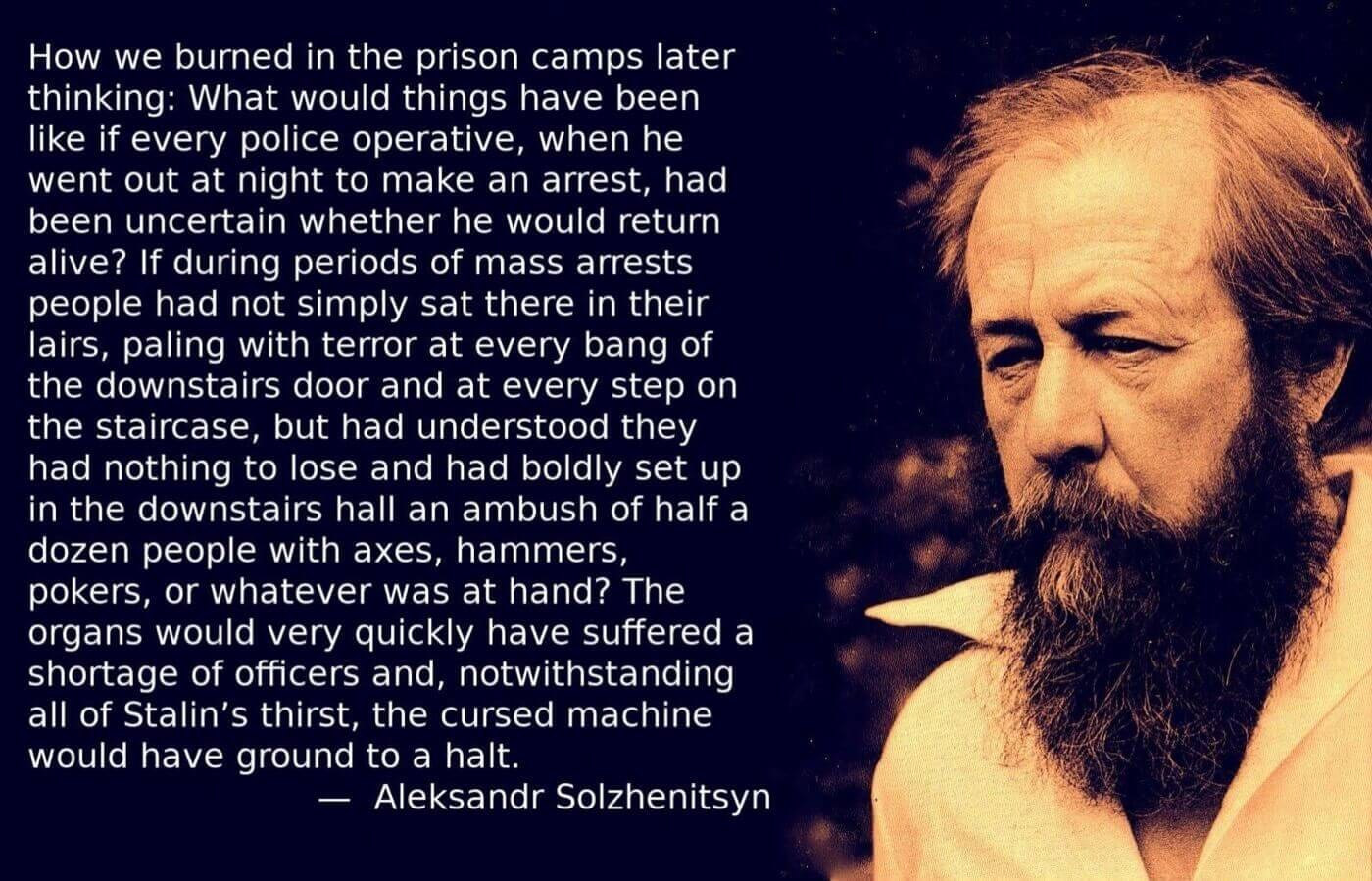
Can a Christian People Impose ‘Christian Laws?’
Maybe you are with me so far. Still, can a Christian people impose Christian laws?
Wiese is concerned to raise the question of coercion:
“Even when the law is pagan, even when rulers are unbelievers, the Gospel does not function as a legislative editing tool. It creates Christians, not constitutions.
If the law commands sin, we refuse. But refusing is not revolution. It is passive resistance, not coercive reconstruction.”
Let us assume for the sake of argument that every nation that was forced to convert to Christianity by the sword was evilly imposed upon. Nevertheless, what specifically constitutes coercive reconstruction or “religious coercion”? After all, we can and should recognize distinct things like persuasion, incentivization, establishment, privilege, regulation, discipline, punishment, etc.
Above all, we note that history is replete with examples of sovereigns converting to Christianity and then all of their people following, doing the same. Something like this happened on a smaller scale when the Philippian jailer became a Christian and had his whole household baptized (Acts 16). From some perspectives of course, even the latter example here would be seen as coercive! We know, however, that Luther and the early Lutherans thought highly of Constantine. Surely, they didn’t mean to contradict themselves with this confession!
Every ruler or sovereign should be willing to sacrifice and do what is best for his people. They are, after all, the ones that he is responsible for. For example, to touch on a timely example, Luther in his Genesis commentary discusses Joseph introducing his brothers to Pharaoh as follows:
“For Joseph wanted to show the king that he and his people were born in an honorable station… For rulers, too, should exercise such care; they should take pains to see what kind of guests they receive… that there is no danger at all either to him or to his kingdom...” (LW, 8).
Furthermore, while such a godly prince is never above the Law of God, the sovereign, in many contexts, is indeed the one who determines what the law is!
After all, later on in the same section of the Apology that Wiese quotes from we read:
“...a Christian may legitimately make use of civil ordinances and laws. This rule safeguards consciences, for it teaches that if contracts have the approval of magistrates or of laws, they are legitimate in the sight of God as well” (italics mine).
Note that here they talked about the approval not only of laws, but of magistrates, namely those whose job it is to make and enforce the laws. Also in the same Apology to the Augsburg Confession, in Art. XXVIII (XIV): Of Ecclesiastical Power, we read that bishops’ “power is not to be tyrannical, i.e., without a fixed law; nor regal, i.e., above law; but they have a fixed command and a fixed Word of God” (italics mine). “Above law”, like with the King? Who, lest he become a tyrant, needs to recognize he is accountable to God and his law?
How far a man like Martin Luther took all of this can be seen by the fact that he at one point said that if the Pope were able to attain earthly power like any other ruler – and would then command his people to fast and tonsure themselves not for theological but political reasons (i.e. not for salvation but merely for good order) – he would have to be obeyed for the sake of conscience. These kinds of things, along with many of the reformers’ views of slavery, for example, will no doubt perplex many today.
Can a Christian People Impose ‘Christian Nationalist Laws?’
Wiese has Christian Nationalism as he understands it in his sights:
“Christian Nationalism teaches that nations must be ruled by explicitly Christian law, that the Church has a duty to reconstruct civil government, that existing law must be replaced, and that Christians may wield national power to impose moral or religious uniformity…. ‘Christian Nationalist rhetoric often encourages civil agitation, power acquisition, law-replacement, national takeover, or the idea that a Christian has the right to remake the legal order. This is precisely what the Confessions forbid.’”
On the contrary, while we definitely don’t want National Christianity – where Christianity is the thing being modified – we should want Christian Nationalism, that is nations turning to Christ. Even as Lutherans need not necessarily subscribe to or endorse everything Luther said, they nevertheless will agree with him about this!
And in any case, when it comes to church-state issues, Luther never operated under the assumption that the church had any right to tell the government authorities how to do their jobs. In fact, he believed that church leaders were to be subject to, be under civil law, just like anybody else. Even as Christians must always obey God rather than men, they also must be wise as regards to their own role in the world vis a vis the state and its responsibilities.
So, to be sure, for Luther, the church not only does not have a duty to reconstruct civil government, but also has no right to do so! And In like fashion, the governing authorities have no right to have full dominion over the church. At the same time, he also believed that, at the very least, since rulers who professed Christ had the means, ability, clout and connections they had, they also should be willing, out of love, to help out the church when asked. Of course, never to do things like determine doctrine, but to help the church in other ways.
So what should Christians called to be rulers and politicians today do? Are they, as the scriptures say, to punish people and reward good? Does this not in fact mean improving, repealing, and making laws – not to “perfect the world by policy”, but to uphold righteousness and good order? Does the law not teach? Even as Matt Harrison and the CTCR might disagree, as it becomes possible and practical for Christian rulers and politicians to pass godly laws, should they not do so?
And even if every nation is indeed legitimate, can or should political leaders nevertheless attempt to lead their nations to repent from their blasphemy and serve the one true God? (see Jer. 18) And should not the eternal good of one’s people be in the picture? When early Lutherans like Luther, Chemnitz and Melanchthon addressed earthly rulers, this was, for them, an important consideration! What should it mean for us today?
Charles closes his podcast: “Confess Christ. Keep the peace. And obey God rather than men when commanded to sin—but never rather than men because you want a new constitution. Christ is enough.”
This is all well and good, but leaves us with many questions. Again, should Christians strive to become political leaders or even experts at politics – political scientists – if they feel that call? Should not Christians be at the forefront of matters regarding the effective use of power? Experts in the godly and effective use of power? God grant us wisdom!
Francis Pieper said that Rome and all romanizing Protestants (Zwinglians) insist that the state must become an “organ of the church”, using its means of coercion in the church’s favor (Christian Dogmatics, v. 3, 418). One might certainly reject the state becoming this and still ask the following kinds of questions: Can politicians exercise their office while also learning how to utilize power in both a godly and effective fashion? Can they talk about how while we still want to honor the Constitution, the meaning of many of its words have been subtly altered by cultural and political forces, more or less directly, over the years? Should they attempt to adjust or change laws when that seems wise to them? It seems to me that the answer to all of these questions is obviously “yes”.
For in the same Apology of the Augsburg Confession, it features Philip Melanchthon appealing to Charles V in this way!:
“Therefore, most excellent Emperor Charles…. To God most of all you owe the duty [as far as this is possible to man] to maintain sound doctrine and hand it down to posterity, and to defend those who teach what is right…”
In the Treatise on the Power and Primacy of the Pope seven years later Melanchthon wrote:
“But especially the chief members of the Church, kings and princes, ought to guard the interests of the Church, and to see to it that errors be removed and consciences be healed [rightly instructed], as God expressly exhorts kings, Ps. 2:10: Be wise, now, therefore, O ye kings; be instructed, ye judges of the earth. For it should be the first care of kings [and great lords] to advance the glory of God. Therefore it would be very shameful for them to lend their influence and power to confirm idolatry and infinite other crimes, and to slaughter saints.”
Of course Luther supported both of these documents and often spoke in a similar fashion in his own writings. The Preface to the Lutheran Book of Concord (22–24), published in 1580, is also abundantly clear on these points. So what is going on in churches like the Lutheran Church Missouri Synod today?
The Lutheran Church Missouri Synod vs. the Lutheran Confessions?
Cameron MacKenzie says that for the Lutheran Church Missouri Synod’s founder C.F.W. Walther, “the only positive thing that the state can actually do for the church is permit the church to do its work.”
Walther was at pains to say that the state should only protect the church insofar as it is just another social unit in its relatively neutral society. Therefore perhaps we should not be surprised when in the LCMS’s 1932 Brief Statement, in the section titled “On Church and State”, we read the following:
“Although both Church and State are ordinances of God, yet they must not be commingled. Church and State have entirely different aims…. we condemn the policy of those who would have the power of the State employed ‘in the interest of the Church’ and who thus turn the Church into a secular dominion; as also of those who, aiming to govern the State by the Word of God, seek to turn the State into a Church” (italics mine).
Clearly, the point here is to say that there is a very important difference between church and state, and both of these must know their roles. In order to get a better idea of what Francis Pieper, the author of this document, means, it is helpful to take a look at volume 3 of his Christian Dogmatics.5
There, we learn that the church must be content with the means of grace and not attempt to use the state in order to build the church. States that are simply run by reason, the natural or moral law – basically mapping with both tables of God’s Ten commandments – are fully legitimate states that the church should uphold. The church cannot and does not demand of the state that the divine law must serve as the norm for all social relations. Also, the church cannot demand that the state embody the Christian religion in its Constitution. Finally, the church cannot say that a state that does not conform to Scripture must be deposed!
Pieper would say that in objecting to any of the above beliefs one would show oneself to be a Romanist or Romanizing Protestant: a Calvinist or a Zwinglian, and not a Lutheran. For my own part, I tend to think that Pieper makes good points here, even as I would also mention that we should uphold the kinds of things that are mentioned in the Magdeburg Confession.
Nevertheless, given all the things the 16th century Lutheran reformers taught on this issue I wonder what Pieper would have thought about putting the matter of this way:
The state has no right to tell the church what to do insofar as it is within the moral law (both tables of the commandments) and the church has no right to tell the state what to do insofar as it upholds the moral law.6
Still, even if Pieper would approve of such a statement, we still need to deal with the fact that he did indeed say “we condemn the policy of those who would have the power of the State employed ‘in the interest of the Church’” and “we condemn… those who, aim[] to govern the State by the Word of God”.
For as Matthew Harrison has, echoing Herman Sasse, often pointed out, seemingly unlike many Reformed confessional documents, confessions from Lutherans are applicable to all contexts, their truth being wholly derived from scripture, which endures forever.
So what was Pieper thinking?
C.F.W. Walther’s, Pieper’s, and Sasse’s Explanation Do Not Work
We can readily determine what Francis Pieper – and most every other conservative Lutheran of his era! – was thinking.
To be sure, men like Walther and Pieper were trying to effectively deal with their contemporary situations. But how good of a job did they do? I argue that they – as well as the 20th century German Lutheran theologian Herman Sasse – missed very important factors when they distinguished between the Christian ruler as ruler and the Christian ruler as a member of the church.
Sasse argues that Martin Luther wanted to advise princes to, out of love, do their Christian duty as laymen and help the churches, but not as if it were their right. There were certainly some things they should not do, but there were also specific things that they – though not obligated to do as Christian rulers per se – could help out with, loving their Christian brethren in tangible ways as Christians do. Again, in other words, as the layman who had the means, ability, connections and clout, they would act to assist the church when called upon and not technically in their role as prince or governor per se.
Charles Wiese, certain that Walter and Pieper and Sasse had views similar to Luther’s, stands his ground, saying, for instance: “[Luther] really only suppressed blasphemy in regards to disturbances of the public peace and even then pretty reluctantly. You need to look at what actually happened and what he actually said.”
In his STM thesis Martin Luther and Religious Liberty however, Pastor David Ramirez reminds us that Luther “never questioned the magistrate’s duty to suppress blasphemy” (3, italics mine; you can also directly download Ramirez’s thesis by clicking on this link). And writing in his article “Are Rulers to Uphold Both Tables of the Law? “ from Luther Classical College’s online journal, Christian Culture, he states of the reformer that:
“Throughout his lifetime, he lobbied the magistrates to support Lutheranism in their lands and suppress heretical practices and preaching. To note two specific examples, he was insistent in his desire for Lutheran princes to repress Roman abuses concerning the mass, and wrote that it was the princes’ duty to suppress false preaching – particularly of the Anabaptists and other sectarians. Significantly, he not only justified punishment of heresy on the grounds of the threat to public peace, but also on the grounds of blasphemy....”7
Looking at what the Lutheran Confessions – which are based on the teachings of Martin Luther – say, does it sound like the views of men like Walther, Pieper, Sasse, and Wiese are tenable in the long run?
If you are going to make religion a concern of the prince, how do you avoid making religion a concern of the state (Pieper’s criticism of both Rome and Geneva, v. 3, 179)? After all, all the prince’s actions need to be seen not only as part of his Romans 13 Christian duty to love his brethren (verse 8), but as a part of his Romans 13:4 office, at least insofar as the threat of the state’s sword is involved.
Recovering the True History of the Lutheran Church as Regards Church and State
In his thesis, Pastor David Ramirez points out how the late contemporary German Lutheran theologian Oswald Bayer says that it was Martin Luther’s influence on the Anabaptists and other sectarians that led to the development of “religious liberty” (20, 21).
A quotation from the great 17th century Lutheran Church father John Gerhard seems to indicate that men like C.F.W. Walther, Francis Pieper, and Herman Sasse may have been more influenced by sectarian streams of Christianity than they realized:
“The Anabaptists invent the claim that the custody of the first table has not been entrusted to the magistrate, saying that faith and unbelief do not pertain to the judgments of the civil magistrate, since these are spiritual matters, not civil; that false doctrines and impious forms of worship are not to be abolished or removed by civil authority, nor are their authors and disseminators to be punished. They assert that the office of the magistrate does not pertain to the Church of Christ.” - Bl. Johann Gerhard, On the Political Magistrate (§ 175)
If the church advises or even calls rulers of the state to uphold the moral law as regards blasphemy as well – using the state’s power in their office as the civil magistrate – is this really to be condemned? Is not the opposite in fact true? Namely, asserting that this needs to be condemned – in other words binding men’s consciences about this matter – is wholly un-Christian and needs to be condemned?8
But Wiese insists again: “[c]alling for the punishment of heretics who destroy the peace isn’t the same as asking for new blasphemy laws.”
So the claim is that the reformers only worked to enforce the old blasphemy laws, and did so only in order to keep the peace. But what about “princes repress[ing] Roman abuses concerning the mass” which Ramirez mentions? Unlike the situation where Carlstadt riled up the masses about the idolatry of some sacred images (see Ramirez, 99-100), no restless Christian populace was demanding change here! Did Luther not indeed want the law to be adjusted here and used in these efforts?
After they banished the canon law of the Roman church, it is of course understandable that the civil magistrates would put marriage under civil law. Nevertheless, it seems that Luther also wanted these very churchly matters pertaining to Holy Communion put under civil law as well!9 In taking over what canon law had previously regulated, these changes were to be effected and enforced through the power of the civil or secular government, and not by church authorities alone.
Furthermore, when Luther says “God will not wink at such conduct but will terribly punish both the blasphemers and those who approve them” it does not sound like this is about public peace at all. In addition, Luther elsewhere talks not so much about public peace but rather “rob[bing the] neighbor of [Christ’s] honor in the eyes of the world.” And what about the fact that Luther, in the Treatise on Christian Schools, also does not want magistrates and city councilmen to only be concerned about the physical well-being of their people?10
Still, for Luther, the state never becomes an organ of the church. Again in fact, the state holds the church’s leaders to account for the same moral law that applies to everybody else. Some will also point out that in his letter to the German nobility (1520), Luther essentially is asking the princes to make the church uphold their own rules – as well as to force the Pope to agree to and submit to the decisions of a legitimately called council.11
Or is all of this beside the point, still missing the point? Among the Lutheran princes in the late 16th century, how strictly enforced were any of the laws pertaining to religion? Were they quite strict or not strict at all? For example, were stubborn Roman Catholic congregations in Lutheran territories forced to turn into Lutheran ones by the threat of the sword? Were Roman Catholics who lived in territories that had become Lutheran and spoke out against this really forced to leave or not?
Let’s revisit what Pieper, Walther, Sasse and Wiese contend once again. Perhaps the key is that in good Lutheran theology godly rulers would encourage the faith – using every single ounce of their ability, their charisma, their clout and connections as honored men holding high office – but not actually – at least in practice – use the sword to enforce it (or perhaps, as in the case of all the non-Magdeburgers, never defend it either!). Unless, of course, public peace was at stake!
In other words, whenever they were involved in church issues – except for incidents in which public peace needed to be maintained – they were in fact often, even mostly, bluffing when it came to enforcement by the sword, force. Said another way, even if they had a duty to help to some degree as a Christian (when asked), they also believed that they did not really have the responsibility and hence corresponding authority to make this enforcement happen as a civil ruler (see also Pieper’s discussion of this in Christian Dogmatics, v. 3, 418). One recalls how Luther says in the Small Catechism’s preface that parents and employers should not feed those who refused to learn it, and should “notify them that the prince will drive such rude people from the country.” Really?
Still, that there was really no stomach to enforce key matters seems extremely unlikely, to say the least – especially when it came to Luther himself! At the absolute very least, Cameron MacKenzie points out that Luther and the Lutherans gave every impression they were counting on the temporal authorities to assist them by using their power:
“Although written principally by theologians, the Augsburg Confession is a declaration by temporal authorities of what they have established as true religion in their territories. Thus, whatever the two kingdoms theology meant for Luther and his contemporaries, it did not mean excluding temporal authority from the affairs of the Church.”12
The Fading of Christian Influence Among Civil Rulers
Nevertheless, convictions like those of Luther’s and Melanchthon, who authored the Augsburg Confession of 1530 (and its Apology, or Defense), did not seem to last terribly long.
One may see this when on the one hand reading Martin Chemnitz in his Loci saying “The first duty of a ruler is to care for those who are subject to him, so that they may ‘live in godliness,’ that is, this first concern must be for their religion”, while on the other hand reporting that in his day, around the 1570s, men in the Lutheran church were debating the question of “whether it is useful to compel the unregenerate to obey or be forced under the doctrine of the divine law, so that they do not commit outward sins.”
Here, even as Chemnitz is convinced that “outward discipline instructs us to find out where righteousness comes from”, he nevertheless cannot seem to muster the strength to make full-throated condemnation possible, at times making seemingly hesitant statements like the following: “they seem to be doing wrong who do not want or force the unregenerate not to commit outward sins, for no person should be encouraged to sin and it is a sin to ignore discipline in the unregenerate.”
In contrast, just a few years earlier, in the Examination of the Council of Trent, Chemnitz had written:
“The church of Christ does not, however, recognize coercion to faith through outward compulsion and corporal punishments, for it has only the sword of the Spirit. But the other sword, namely the bodily, has been committed by God to the civil magistrate. If he is pious he must use it, as for the punishment of other crimes so also for the punishment of public, external, and notorious blasphemies, especially if sedition comes to it.” - Bl. Martin Chemnitz, Examination of the Council of Trent, Vol. 2, (2.11.2, italics mine)
It seems to me, as much as I might finally disagree with Charles Wiese (and Walther, Pieper, and Sasse), that insofar as we talk about the historical staying power of Christian nations, he has some extremely valuable challenges for us to interact with. For even after the greatest revival in Christian history, Luther’s reformation of the Western Catholic church, it did not take long for the conviction that the Divine Law should be enforced by civil magistrates to fade.
Ramirez says:
“Luther assumed the basic medieval conception of the cooperation between the civil government and the Church. He did not reject blasphemy laws…[I] show how his expanding definition of blasphemy would lead Luther to call upon the civil government to suppress both idolatrous practices and false preaching…” (39-40)
But how eager really was even Luther himself to enforce these kinds of laws that had been on the books for a long time? At the very least, he was far from being like Elijah, the prophet of God who put to death the prophets of Baal! And it was only later in his life that Luther decided that the power of the sword should be used against heretics, for example.
Conclusion: And Us Today?
Christian public life flows primarily from conversion, not from legislation. At the same time, the Christian life in general flows not just from the Gospel, God’s last word, but from God’s created order and [ten] commandments, the context in which that “last word” must always occur.
This holds true in our families and in our churches and in our nations. So Charles Wiese is wrong: a Christian people can indeed impose ‘Christian Laws’ – and even ‘Christian Nationalist Laws’!
Still, today, most of us have absolutely no appetite for blasphemy laws in our nation – even as we must increasingly fall and chafe under the blasphemy laws of our present age, this horrific zeitgeist. If, as David Ramirez reminds us, “peace is the goal of both the civil government and the Church” (33), how should we then live as both Christians and citizens?
Christians can and will disagree about the answer to this question. C.F.W. Walther maintained that Christianity could have a privileged position in America only insofar as it made for, promoted, earthly peace.13 Others, reflecting on the sword that the Prince of Peace also brings, may come to very different conclusions.14
These may well conclude that we should develop an appetite for honoring Christ and boldly letting our neighbors know he is not to be blasphemed!15Do we dare to wipe the spit off of our Lord’s face? Even if godly rulers might, perchance, not always be able to defend God’s honor because of, for example, a lack of popular support, should this nevertheless not always be their intention and orientation? Even more so than fighting for the souls of their people, also one of their important concerns (Ramirez, 63, 108)?
At the very least, how can we not all recognize that some of our most recent Confessional Lutheran stalwarts – so excellent in most every other area! – actually got this critical question of church and state quite wrong? How can we all not be drawn to prayer and repentance, both individually and collectively, by all these facts?!
Whatever our current viewpoint, Christians should not fear! For we know that all of this is finally about something much greater than any kind of earthly glory, even the greatest of governments and constitutions! For we carry not just good news, but the best news imaginable!: Christ has come, Christ is coming, and Christ will come again! And this, as the catechism says, so that all might “live under him in his kingdom and serve him” in righteousness and blessedness.
So we preach God’s law and his gospel – free forgiveness, life, and salvation in Jesus! – to all creatures, and make disciples of all nations, baptizing them in the name of the Father, Son, and Holy Ghost. Before Christian nationalism is anything else, it is this, making disciples not just of individuals, but whole nations!
Therefore, it is in this sense first and foremost a Gospel issue! Glory to God in the highest, and on earth peace, goodwill toward men!
FIN
Information on Charles’s ordination can be found here. Charles told me that he wanted the following included in the article:
“The so-called “reconciliation process” is unbiblical and intentionally wrong, commanding what God forbids. It denies the reality of hardened, unrepentant sinners and persecution for righteousness’ sake, treating sin as mere misunderstanding. Scripture teaches that sin must be resolved before worship, yet they tell you to keep attending while justice is endlessly postponed. Do not surrender your conscience: every Christian must judge doctrine and flee false teachers. According to Scripture and the Lutheran Confessions, believers may call their own ministers, and Luther, Walther, and Pieper teach it is better to worship at home than in a false church. A church that claims to be Lutheran but is not is especially dangerous. Where pastors are unaccountable, Christians—especially women and children—are put at risk.”
He says “The reformers were not naïve. They lived under emperors, dukes, papist princes, and Muslim sultans. They knew many laws were unjust. Yet the Confessions say: We don’t overthrow them. We don’t make the Gospel a political crowbar.”
Even as Dietrich Bonhoeffer did not act like a Christian when it came to either theology or politics, he nevertheless, at one point in his young career, made this excellent statement: “no persons are so abhorrent that they would not know that they have to honor and love God. Therefore, in every person there lives a conscience, although it may be weak, formed by the law.” There is no doubt that this is correct – even as there is much more that can be unpacked as regards this topic.
Even if Francis Pieper did not specifically say communism was not a legitimate form of government (see Christian Dogmatics, v. 3, 417) – Christians might still decide to fight (Acts 5:29)! Still, we note that Pieper had at one point written that anarchists should be kicked out of the country after the assassination of President McKinley. The great Kurt Marquart simply called such communist “governments” collections of godless mobsters.
Particularly pages 178-183, and 417-418.
After all, Luther himself, in his commentary on Psalm 101, said: “Now, if a preacher in his official capacity says to kings and princes and to all the world, ‘Thank and fear God, and keep His commandments,’ he is not meddling in the affairs of secular government. On the contrary, he is thereby serving and being obedient to the highest government [divine authority]… if David or a prince teaches or gives orders to fear God and to listen to His Word, he is not acting as a lord of that Word but as an obedient servant. He is not meddling in spiritual or divine government but remains a humble subordinate and a faithful servant” (LW, 13).]
An additional quote that Ramirez shares in his article: ”Luther believed that public blasphemy calls down God’s punishment on the community that tolerates it. In The Abomination of the Secret Mass of 1525, Luther noted the civil government’s duty to punish blasphemy and warned of consequences if it does not: ‘For the authorities [secular rulers] are responsible for the prevention and punishment of such public blasphemy of God, but if they tolerate it and simply look on where they could be preventing it, God will not wink at such conduct but will terribly punish both the blasphemers and those who approve them.’”
And a quote from Luther found in his thesis: “If some were to teach doctrines contradicting an article of faith clearly grounded in Scripture and believed throughout the world by all Christendom, such as the articles we teach children in the Creed… such teachers should not be tolerated, but punished as blasphemers. For they are not mere heretics but open blasphemers; and rulers are in duty bound to punish blasphemers as they punish those who curse, swear, revile, abuse, defame, and slander. With their blasphemy such teachers defame the name of God and rob their neighbor of his honor in the eyes of the world.” (Martin Luther, Commentary on Psalm 82, American Ed. vol. 13: 61)”
When men’s consciences are bound by the traditions of men – even when these are pious opinions – Christians should fight against this, or even just fight for the right of one’s brother in Christ to hold an alternative opinion. It is not right to bind men’s consciences by anything other than the Word of God, his law and gospel.
Relatedly, Charles Wiese says: “Most of you aren’t having as much fun as you could be having because you’re not rebelling against commands about things indifferent for the sake of the Gospel.” A question that arises here though is the following: insofar as those promoting certain indifferent things are not doing so with the insistence that people must do them to be saved, is not rebellion for its own sake a failure of Christian love?
Charles says there is “vast difference between casting aside Canon Law and no longer allowing it to influence the state and changing the existing civil laws”, but were the existing civil laws changed where Luther’s wishes were followed? Yes.
And, as Pieper admits in a footnote to his chagrin, Luther’s recommendations to princes in a certain infamous 1543 book certainly do not speak to any strict separation of church and state.
Luther went so far to say that civil government could even determine the legitimacy of a pastoral call (Ramirez, 128).
David Ramirez basically cuts through all of our imagining and excuses, asking the kinds of questions that we need in the context of discussing Luther vis a vis the sacrosanct notion of “religious liberty”: “How can Luther be preserved as a forerunner of religious liberty? The proposed ways out of this conundrum may be numerous, but they are rather unsatisfying. Often, it is claimed that while Luther set forth principles in line with religious liberty, he was inconsistent in practice. Or, it is said, that his later intolerant words and deeds were unfortunate deviations from his fundamental and earlier tolerant thoughts on the matter. Others claim that the historical circumstances conspired against the principles of Luther and that the proper relationship between Church and state were only able to flower in the modern era. Could Luther have been so brilliant to have correctly elucidated the proper relationship between civil and ecclesiastical authority, yet at the same time have been unable to fully grasp or put it into practice due to the medieval influences upon him? Could not Luther’s intolerant attitudes merely reflect the thought of a man who could not conceive of a modern pluralistic situation such as ours, yet his distinction between the kingdoms still be harmonious to our modern conception of religious liberty?”
Ramirez then lowers the boom: “It is a poor, and historically unwarranted, assumption to believe that Luther was unable to understand his own theology, or, even worse, unwilling to follow his own convictions.”
David Ramirez points out this interesting fact: “Luther did not explicitly assert that using force is a legitimate response to the activity of the Zwickau Prophets; however, the logic of Luther’s argument does imply its legitimacy, and that its avoidance was due to the potential negative side effects and the probability that the situation could be resolved through other means. His statement does not constitute evidence that he believed it inappropriate or wrong for the civil authorities to suppress false teaching. In this case, the civil authorities did not need to resort to force—the Zwickau Prophets left Wittenberg on their own accord” (62).
More careful reflection – and perhaps research – is needed here. How well did Walther know how much he was going against Lutheran orthodoxy? Did he also issue condemnations like Pieper did in 1932, or was he perhaps more circumspect?
Consider that Roland Bainton said that for Luther,“the vindication of the honor of God could supersede love for the neighbor” (Ramirez, 32)!
Luther said, even early on, that “...we must defend God’s honor and commandment, as well as prevent injury or injustice to our neighbor. The temporal authorities [have the responsibility of doing this] with the sword; the rest of us, by reproof and rebuke.” Martin Luther, Treatise on Good Works, 1520
Also: “…these [the Roman Catholic spiritual authorities] are the real Turks whom the kings, princes, and nobles ought to attack first… for the benefit of Christendom and to prevent blasphemy and the disgrace of the divine name.” Martin Luther, Treatise on Good Works, 1520.
The article mentions "private redress." It never touches on what follows right after the Apology says private redress is prohibited by command. What follows is this: "Public redress, which is made through the office of the magistrate, is not advised against, but is commanded, and is a work of God, according to Paul, Rom. 13, 1 sqq.
Now the different kinds of public redress are legal decisions, capital punishment, wars, military service." In other words, making laws through the office of the magistrate IS commanded and is a work of God. Furthermore no one mentioned the final part of the Declaration. In the final section of the Declaration, 4 particular errors of the Anabaptists are mentioned:
-That under the New Testament the magistracy is not a godly estate.
-That a Christian cannot with a good, inviolate conscience hold the office of magistrate.
-That a Christian cannot without injury to conscience use the office of the magistracy in matters that may occur [when the matter so demands against the wicked, neither can its subjects appeal to its power.
-That magistrates cannot without injury to conscience inflict capital punishment upon evil doers.
If someone is interpreting the other parts of the confessions in such a way as to justify these errors of the anabaptists, they probably are reading the confessions incorrectly. Clearly, the confessions DO in fact teach that it is a work of God for a Christian man to hold the office of magistrate and write and uphold godly laws.
The issue, I think, comes down to these two considerations:
1. May someone in authority impose laws that effectively institutionalize a particular Christian church? Anti-Catholics were always afraid that a Catholic president would effectively make Catholicism the state church. Whether or not that was ever true, it surely was not by the time John F. Kennedy was elected--necessarily relying on votes from southern states where the Roman Catholic Church was not in high favor. It has been suggested that the very strong majority for Nixon in Oklahoma may have been increased by anti-Catholicism, but his strong wins through most of the South (he lost Virginia, Florida and Texas) suggests that this was no longer a major factor. While he met with Pope John XXIII, there has never been any sign that the Pope influenced any of JFK's policies.
Today liberals and leftists are claiming that conservatives are attempting to impose a "theocracy". First, I think that's absurd. Donald Trump, whose Christianity is about skin-deep but supports certain policy positions which Christians also for the most part support, is hardly a theocrat. His son-in-law is Jewish and his daughter has converted to Judaism. (Remember when liberals, confronted with a conservative who said he was not anti-Semitic, would sneer, "But would you let your daughter marry one?" Trump did, and his son-in-law has been a firm supporter of his.) Has anyone suggested that we suppress non-Christian religions (or non-"Judaeo-Christian") religions? Of course not. So the left's idea that anyone now in power or in position to influence power seeks a "theocracy" is absurd.
But let's suppose that some now-tiny faction grew in power to the point of enforcing an official Christianity in which other religions were suppressed, maybe letting Judaism into the tent? What would that look like? An effort to impose Levitical Law that says "if a man lie with mankind as with womankind, that is an abomination; let him be put to death"? Again, in a Trump administration that includes Scott Bessent and Rich Grenell, and in which Tammy Bruce is a spokeswoman, is that even remotely likely? No. But should Lutherans consider such a state desirable?
The answer, from our Confessions, is "No." The power of the state and the power of the Church are separate, per AC 28, Ap. 28 and the Treatise. Anyone suggesting that Luther's pamphlet, "Against the Jews and Their Lies", is of any influence or effect, can be answered as follows:
1. Read "That Jesus Christ Was Born a Jew," in which Luther's words on the Jews are the kindest imaginable.
2. Luther had a tendency to hear about something and fire off a pamphlet immediately with little reflection on the implications of what he had just written. Everyone knows that he almost immediately regretted his pamphlet urging the princes to suppress the Peasants' Revolt. He heard about atrocities committed by the peasants and fired off that pamphlet. The princes took that pamphlet as license to suppress the peasants brutally. No one remembered that he had previously urged the princes to consider, and as much as possible, grant the peasants' demands.
3. The situation with the Jews was very similar. There had been a Jewish apocalyptic sect that had seized control of a few cities, certain that the Lord would send his Messiah to re-establish David's kingdom, and they committed some atrocities. How did Luther hear about it? He heard that "the Jews" were doing all this, and his infamous pamphlet was the response.
4. Hardly had Luther fired off that pamphlet when every other leading Lutheran--Melanchthon, Bugenhagen, Cruciger, Dietrich, Amsdorf--disavowed it. It is in no way representative of any Lutheran teaching but only an outburst of Luther's notorious temper. It remained entirely obscure until it was brought to a certain Austrian's attention. Even then, very few significant Lutheran theologians endorsed it.
All that said, does this mean that, as Mario Cuomo suggested in his famous Notre Dame speech, a Christian in government must put his faith aside and govern by purely secular considerations? Also no. Christianity must inform the judgment of every Christian governing, even the most marginal Christian. John Adams, though the Congregational churches had not yet divided into the Unitarian and Trinitarian branches, leaned, like most of the Boston aristocracy, toward the Unitarian. But he understood quite well and took very seriously the moral precepts in the Bible. Thomas Jefferson, at the most liberal edge of the newly-formed Episcopal Church, likewise understood this.
No one until the last two generations would have endorsed the libertinism and sometimes anti-Christianity that infects today's Left. (I was going to say "anti-theism", but they can be quite solicitous of Muslims, and many of them profess the sort of Christianity now taught in "main line" Protestant churches today--TEC ("affirming Catholic" pretensions notwithstanding), ELCA, PCUSA, RCA, UMC, UCC, and others.)
A Christian President, Senator, Representative, or Justice still has to make determinations of right and wrong. Where does a person in such a position look for guidance on what is right and what is wrong? To the latest academic fashion at prestige colleges? Or to the Word of God, the Law delivered to Moses and the Gospel of our Lord Jesus Christ? If a person in such a position cannot let his judgment be informed by the Law and the Gospel, then he is no Christian at all.