
Ritual Distancing, Denunciation, and Disavowal is Not Christian
Once a concession is made, no amount of denunciation will ever be sufficient, and you may even be required to participate in a kangaroo court or two.

When Ad Crucem News revealed the scandal in the Lutheran Church—Missouri Synod’s (LCMS) Southeastern District, which began at Our Savior Lutheran Church in Arlington, Virginia, there was a particular response that was very revealing. Instead of addressing the reporting and theological issues on their merits, many responses, mostly private, were demands for a “balancing” denunciation of this thing and that person.
We were urged, sometimes openly, sometimes by insinuation, sometimes via the usual cohort of LCMS hall monitors on X, to denounce a pastiche of characters, movements, and ideologies. None of the demands had anything to do with the Ten Commandments; they were just about the “current thing”.
The implication was clear: unless we disavowed a preferred set of political villains and their villainies, our investigation itself could not be trusted, and we would remain the unclean thing. The reporting can remain illegitimate until the proper rituals have been performed, and the victims can be cast aside without sympathy or help.
The premise behind these demands was never that the reporting was false or reckless. The premise was that a theological investigation could be neutralized by reclassifying it as a political act. Once that shift occurred in the congregation, District, and among their sympathizers, the substance no longer mattered. The question ceased to be “Is this true?” and became “Are you on the right side?”
We now expect the ritual demands in the wake of nearly every article. We must denounce Stone Choir or women who go to college; Christian Nationalism or Russia; deaconesses or neck beards; high liturgy or mission outreach, all bourgeois tendencies, ad infinitum.
The most infantile version of these old Communist and neoliberal schemes1 is guilt by association. For example, one pastor cried havoc because we sourced facts (indisputable facts…) about a Lutheran RSO marketing foster children to homosexuals and transvestites. He hates the sources, and apparently, that disqualifies the facts. Somehow, he remains a Lutheran pastor even though, according to lore, Luther was a vile anti-Semite. Therefore, all Lutherans are Nazis. Isn’t that how it works?
The requirement for ritual denunciation is purely political, and the requester is always a political agent, even if he is wearing the most vivid chasuble or the most lacy surplus.

Prevent Investigation and Trigger Invalidation
The most striking feature of the responses is how quickly they bypass actual claims and facts. The OSLCS investigation raised concrete theological questions: questions of pastoral conduct, doctrine, ecclesial authority, discipline, and the care of souls. These are precisely the matters the Church exists to judge, whether you are a lowly layman or a grand bishop, first-order with oak leaf cluster and mangy mitre.
The strategy is transparent. By recasting an issue as political, you don’t need to treat it as a church issue, but a political one. Political acts are never evaluated for truth; they are assessed for alignment and application. Alignment is a function of posture, not evidence, and the arbiters managing the posturing exercise develop power and control where they otherwise have none because they are irrelevant in what matters.
The whole point is to generate and propagate invalidation. If you nullify the source, then you don’t need to refute the facts because the source is rendered morally contemptible and must be ignored and excommunicated. Critically, that is extended to discrediting by association.
The investigator is asked to account for who else might agree with him, who else might circulate the facts, and who else might benefit from the conclusions. Anyone who engages with the source positively is placed on the political hit list unless they undergo the ritual denunciation.
Once that happens, no amount of theological clarity can redeem an inquiry. Scripture, orthodox confession, and ecclesial order become inadmissible evidence in a trial governed by ideology, which is solely determined by power. Once the evidential "tree" can be tainted, so is its "fruit." It can be placed in a radioactive zone indefinitely, contaminating anyone who dares even to approach it. The individual responsible for the evidence must be ostracized without mercy.
For example, Wanita once mentioned on X that a young couple had visited Ad Crucem’s shop since being introduced to Lutheran theology after listening to Ryan Turnipseed on a podcast. This caused intense fury among some, including pastors. Ryan is the LCMS’s ultimate poisonous tree, and none of his fruit might be edible, according to the Synod’s most ardent politicians and their allies in the mainstream media.
As a result, Ad Crucem was denounced then and continues to be attacked by agitators and provocateurs who pound the gavel that silence or neutrality is all the proof needed for suspicion of treason. The Bolsheviks must be proud and amazed.
Well, we may have to denounce harder because a new family showed up at church recently, recommended by Ryan Turnipseed. Perhaps the entire family needs to be waterboarded to confirm all their priors and possible bad takes before we dare catechize them into the Evangelical Lutheran Church?
“Just Denounce Them” Only Builds an Underground
The demand to denounce rests on a fundamental confusion of offices.
In politics, denunciation serves as a credentialing tool because it signals allegiance, establishes distance, and reassures allies. Its goal is never judgment, only identification, and to answer the question: “Which side are you on?”
In the Church, judgment is something entirely different. It is never used to demonstrate virtue but to bind and loosen sins. It is not carried out in the court of public opinion but under Christ’s authority in the assembly of saints that possesses the keys and loans them to pastors attached to their altars. Scripture, the confessions, and pastoral duty guide it.
Insisting that a political denunciation is necessary to validate a theological investigation is, therefore, a category error. It treats the Church as if she were a political actor whose legitimacy depends on proper signaling, rather than a confessing body whose authority derives from Christ, and whose bona fides are affirmed by upholding pure doctrine.
Most dangerously, it affirms that the denouncers are political and maybe even intelligence agents for the ruling elite. They don’t need to be card-carrying members to be the most loyal and ferocious cadres.
This is why denunciation demands are infinitely elastic. No denunciation is ever sufficient, because sufficiency is never the point. Today, it is one figure or movement. Tomorrow, it is the next impolitic thing. Each denunciation sets the stage for the inevitable new demand and becomes self-affirming and self-fulfilling. It has highly intoxicating effects on its practitioners who develop an astounding zeal for escalation.
Once denunciation logic is accepted, the Church visible no longer governs herself by doctrine or discipline, but by political fear and social coercion. Members become controlled by the fear of “bad optics”, unwanted headlines, or being placed in the wrong category; in a word, “cancellation”.
The Office of Optics quickly displaces the Office of the Keys, and the Bible falls even further out of grasp.
The Normalization of Moral Gatekeeping
The Soviet Gulags2 were, and UK prisons3 are, full of denounced individuals. They represent a unique class of unpersons who defied the politicians beyond the ever-shifting boundaries they invent and police. America’s Department of Justice is unpersoning an increasing number of categories of people4, free speech and free association notwithstanding. So, it is remarkable to see this crusade for correctness infiltrate the church with enthusiastic commissars ready to apply the lessons learned.
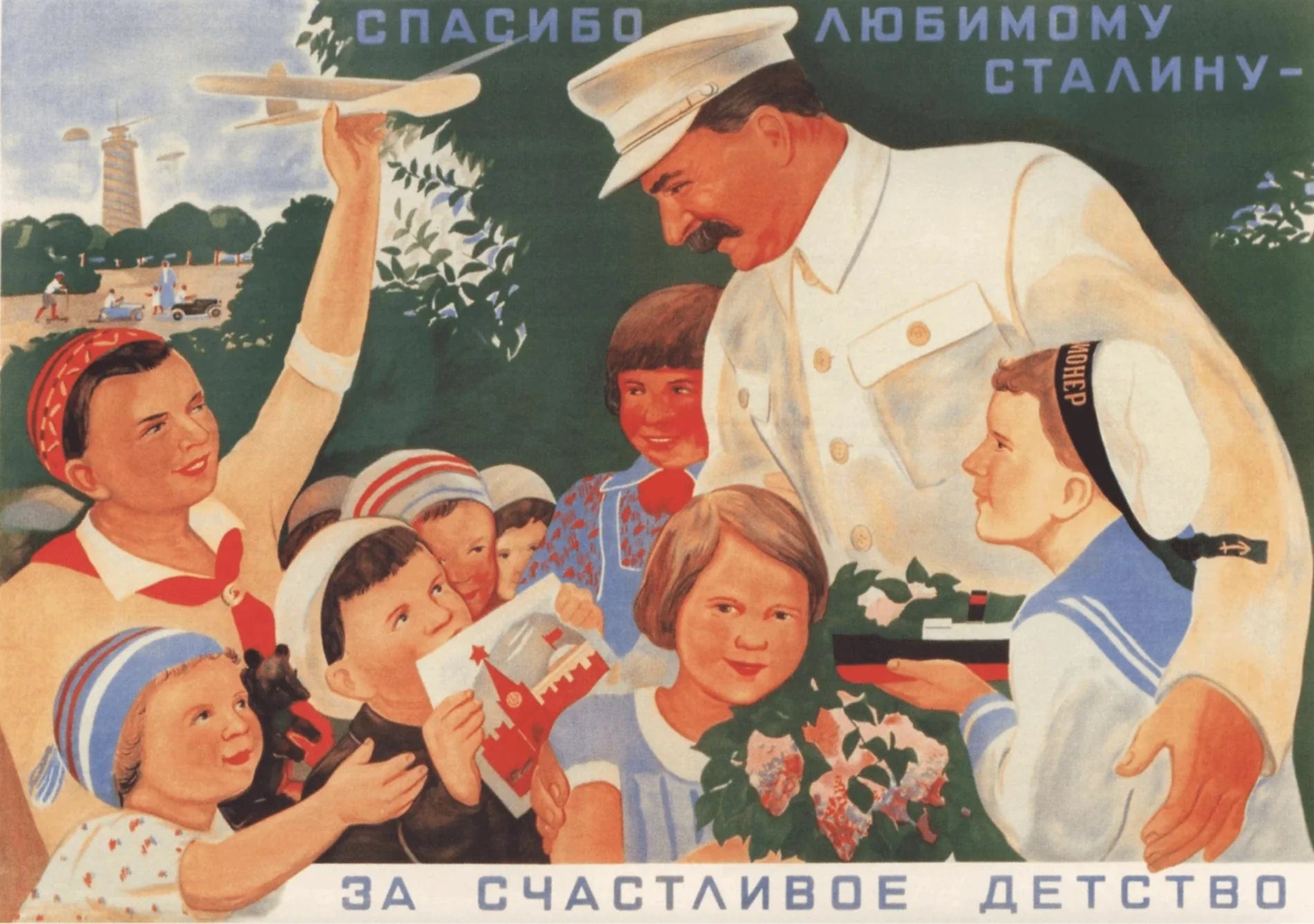
In modern media reporting on “extremism and social harm”, often framed as misinformation or disinformation, a common pattern emerges. First, a disturbing phenomenon or issue is placed into the public consciousness. Then, lines of association are connected, no matter how speculative or ludicrous. Finally, attention turns to institutions that have not responded as required. The decisive question is never what happened, but who has failed to repudiate whom.
This structure of suspicion and surveillance performs an essential cultural regulative function. It teaches that legitimacy depends on denunciation and distance, that righteousness is demonstrated by scolding and signaling, and that people or institutions that hesitate, distinguish, or proceed in a Christian manner are under suspicion and condemnation.
Less often noticed, but more revealing, is what this structure does not require. It does not need care for those said to be harmed, nor does it require evangelism. It does not even require engagement. Moral energy is expended almost entirely on the policing and punishment of insiders, while the supposed victims remain untouched by the Gospel.
This has been most visible in the fashion-forward growth of chastisement porn in the Church: insufficient cultural sensitivity, a worrisome tone, or failure to adopt the correct moral vocabulary, and so on. Leaders are warned that certain truths must be handled delicately, lest offense be given, and the Church is scolded for alienating outsiders.
And yet the outsiders themselves are almost never addressed.
The people invoked as the reason for caution — the marginalized, the offended, the estranged, the victimized — are never addressed as targets for evangelism. They function rhetorically, not pastorally, and are wielded as moral cudgels rather than as neighbors to be called to repentance and faith. Their supposed needs are used to discipline the Church, not to drive her outward in proclamation of the redeeming Gospel.
In the church, this is moral gatekeeping baptized as a great and new missiology.
The Church is trained to fear saying the wrong thing more than failing to say anything at all. We will expend entire Synod District Conventions and conferences on denunciation and gatekeeping to make silence preferable to honesty. Ambiguity and a lack of clarity are highly rewarded instead of crushed and expelled. Consequently, the highest good shifts from proclaiming Christ’s atoning sacrifice to avoiding rebuke from the patrolling commissars.
Once this logic is internalized, evangelism is no longer evaluated by whether sinners hear the Gospel, but by whether insiders have demonstrated sufficient moral awareness and social commitment. The goal is not conversion, but compliance and institutional docility when the Eye of Sauron lands upon it. We become a Synod of man pleasers, and promotion is a function of how pleasing we are.
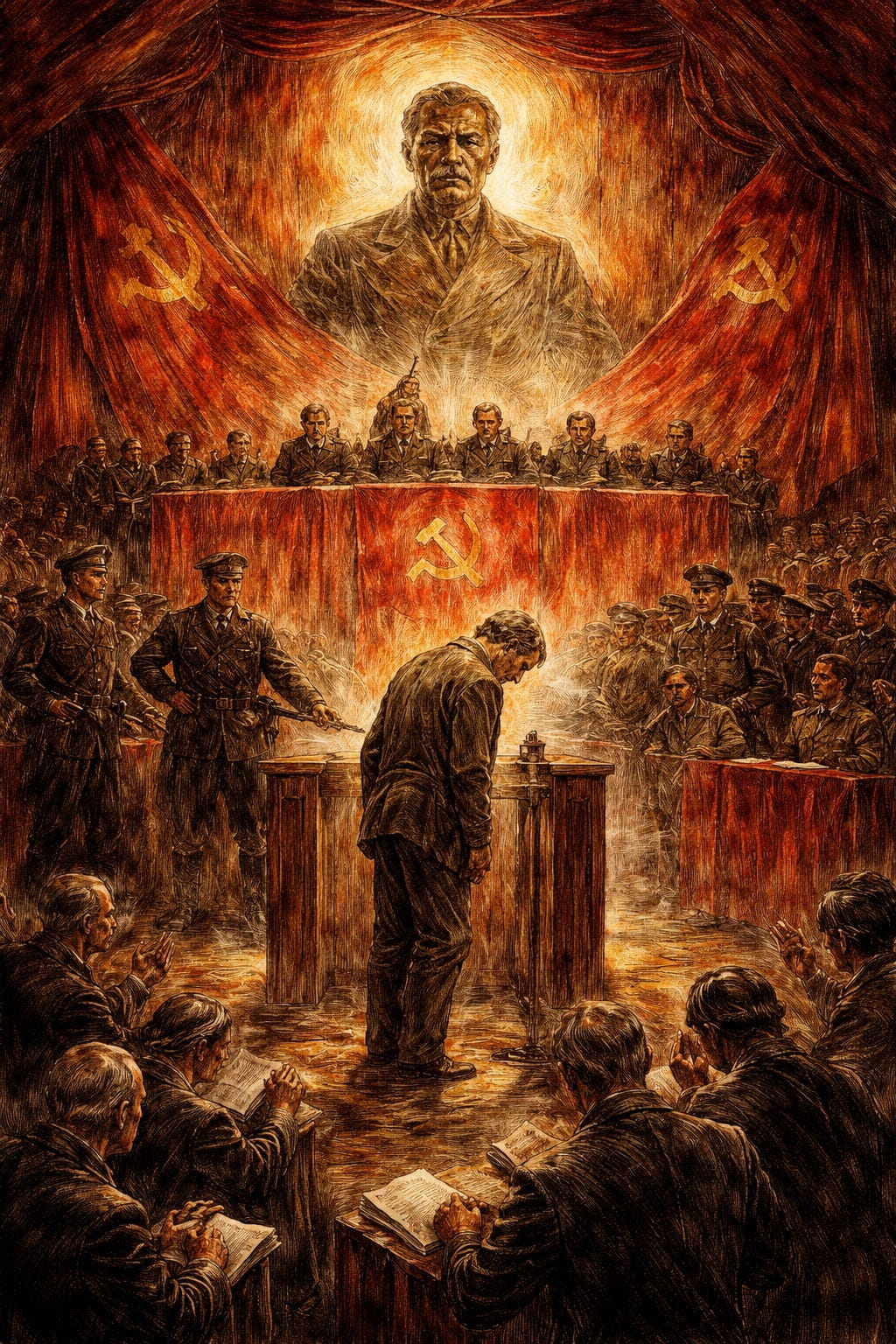
It produces a profound inversion, causing the Church to develop a highly rated fluency in condemnation and utter hesitancy in proclamation. She learns how to scold herself endlessly, while those she claims to be protecting remain unevangelized. It is highly prized for virtue signaling in the corridors of power, much as Rome clamps down on any formal evangelism of Jews and Muslims for fear of offending the World Economic Forum elite.
That inversion is hardly accidental. It is the predictable outcome of the politics of denunciation, which state agents have successfully wielded, including to infiltrate the visible church.
The whole point is to ensure that dread of external judgment will distort internal governance and confessional commitment. Consequently, discipline is delayed or diluted, and restoration is treated as a scandal. Sincere theological probes are no longer welcome, but they are managed for a political outcome. Those who raise such concerns are not answered; they are scrutinized for excommunication.
As a result, the LCMS has seen motives replace arguments and associations replace evidence, producing paralysis and conformity so that the Church retains her forms but loses her nerve and confession until she is captured.
The mainstream churches were fully captured long ago, not in a revolution, but through whorish guile and an invitation to join the new realities. Apostatization is always an arc, and we should be very vigilant about where on the spectrum the LCMS sits, given its susceptibility to ritual denunciation. At what point is the Synod captured rather than just being lured?
Under culture capture, moral clarity is redescribed as rigidity, and adherence to Scripture becomes “harm.” Public actions are detached from public meaning so that the language of love and tolerance, borrowed wholesale from late-modern therapeutic and political discourse, is imported to justify what would previously have been recognized as scandal.
This creeping capture is reinforced by the same denunciation logic already described. Those who raise theological objections are not answered on theological grounds, but they are quickly accused of lacking compassion, empathy, or cultural awareness. Concerns about maintaining doctrinal purity are dismissed as unsafe, which is worse than eternal life in hell.
Each incremental accommodation widens the gray zone. Each rejection of Christian judgment breaks a new barrier and invites tearing down the next and the next guardrail. Because the pressure is always framed as pastoral sensitivity rather than doctrinal revision, the Church convinces herself that nothing essential has been surrendered, even as her witness is steadily hollowed out. Her saltiness is diluted in an ocean of distilled water.
Before anyone realizes it, the church is completely hostage to modernism, even without ever voting to adopt it; “look how faithful our resolutions were!”
The Church Must Refuse the Ritual
The Church must refuse the ritual of denunciation, not because evil is absent from the world, but because Christ has already given her a better way to deal with it.
Denunciation is cheap and tawdry, but it brings so much approving applause because it signals the virtue of the world. On the other hand, loving discipline is costly because it risks misunderstanding and loud voices. Which one satisfies the crowd and which one serves the sinner and protects the flock?
To refuse the ritual is not the embrace of sin or the toleration of doctrinal error. Let judgment be exercised rightly, according to Christ’s institution, rather than outsourced to political categories and the commissars of the current thing. Truth is never credentialed by denunciation and false witness, and it will never be invalidated by ideological suspicion and institutional surveillance.
Just know, dear brothers and sisters in Christ, that to refuse the ritual will not be rewarded. It will be misunderstood, and you will be calumniated by the state's agents, especially the ones posing as the most confessional Feds. Your refusal to renounce, not Satan and all his works, but a mere sinner like you, will be framed as evasion or subscription or sympathy or rebellion.
However, know that the alternative is much worse. To undertake the ritual is to concede that the Church’s authority is derivative, contingent, and revocable. Once the concession is made, no amount of denunciation will ever be sufficient, and you may even be required to participate in a show trial or two.
In Soviet ideology:
Denunciation of others was proof of loyalty, and self-criticism was highly prized.
Ostracism functioned as punishment without due process, but sending dissenters to Siberia reinforced the fear.
Dissent was moralized into treason.
Truth was subordinated to ideological necessity.
Together, denunciation and ostracism formed a self-reinforcing system of social control, one that required no constant coercion because it enlisted ordinary citizens as its agents who could be relied on not only to police each other, but themselves.
Letter of an Old Bolshevik. The Key to the Moscow Trials, by Y. Z. (1936)
A more erudite response to such conduct than I am able to give. Let those who most need to hear this, hear it and not shut their ears. But more importantly, let those who are targeted for pressure for ritual distancing, denunciation, and disavowal, and who have their good work attacked and undermined as a result, remain resolute and firm against it.
Great analysis. Too often, the substance of a pastor’s actions are less important than the political allegiance of those challenging his errors.